



Edwardian Gold Stud Earrings
Edwardian gold stud earrings combine delicate period craftsmanship with wearable everyday elegance, offering collectors enduring charm.
Edwardian Gold Stud Earrings
Edwardian gold stud earrings are small, refined pieces designed to sit closely against the lobe, frequently taking the form of clusters, solitary stones, or simple floral motifs. When searching for edwardian gold stud earrings, buyers encounter items created during the early twentieth century alongside pieces reflecting later stylistic revivals from the 1920s and 1930s.
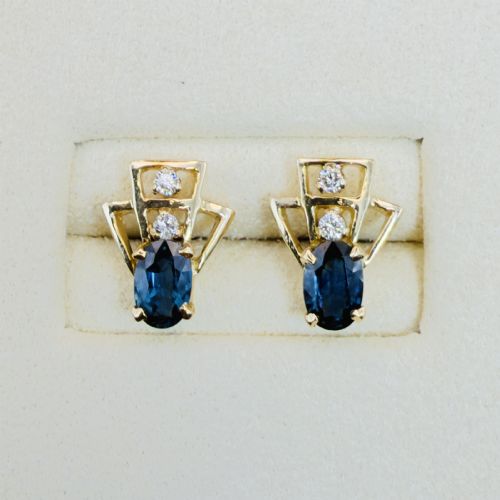
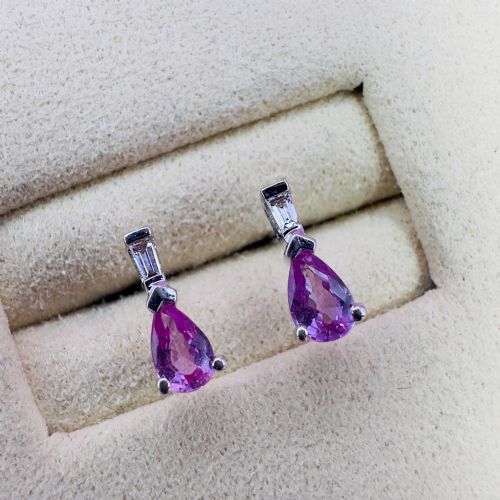
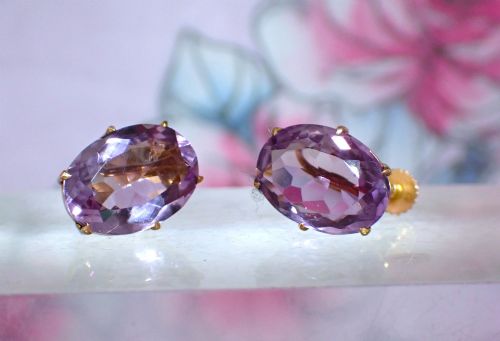
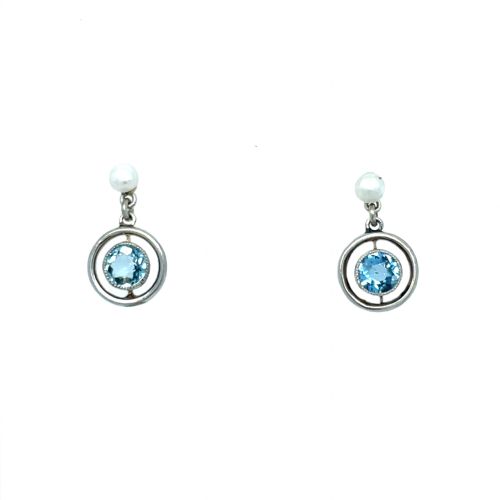
The selections span distinct materials including yellow gold, white gold, and platinum settings paired with precious gems. Amethysts, sapphires, garnets, pearls, and diamonds appear regularly across the available forms, often framed by smaller accent stones in cluster arrangements.
Screw-on mechanisms and traditional post fittings both serve to secure these pieces, reflecting the practical requirements of their era. Most examples date from the Edwardian period itself or the subsequent Art Deco decades, providing a tangible link to early twentieth-century jewellery design.
Materials and Construction
Gold forms the structural backbone of these pieces, utilised predominantly in nine-carat and eighteen-carat purities across both yellow and white varieties, alongside platinum for heightened durability in intricate settings. Metalsmiths combined traditional casting with hand-finished claws and bezels to secure stones tightly within constrained spaces.
Gemstones such as old-cut diamonds, rose-cut diamonds, and cabochon amethysts were shaped by hand to fit specific mountings, often resulting in subtle asymmetries that reveal their period origins. Seed pearls and faux pearls were threaded or mounted securely onto pins, completing compositions typical of the era's artisanal output.
Amethyst, garnet, and natural pearl frequently appear alongside diamonds within early twentieth-century cluster designs.
Distinctions in Quality
Quality rests heavily on the selection and matching of the central gemstones, where depth of colour and clarity elevate certain clusters above simpler counterparts. The integration of supporting stones, such as well-matched diamond chips framing a central sapphire or garnet, demonstrates higher workshop standards.
The finesse of the metalwork itself separates standard production from superior examples. Delicate claw settings, precise pierced work in white gold or platinum, and secure mechanical screw fittings indicate greater care taken by the original maker.
The Edwardian Gold Stud Earrings Glossary
- Cluster
- A gemstone setting where a central stone is encircled by a ring of smaller accent stones. This arrangement maximises visual impact and light reflection.
- Old Cut
- An early form of diamond cutting featuring a high crown, small table, and deep pavilion. These cuts were shaped by hand to catch candlelight.
- Cabochon
- A gemstone polished into a smooth, rounded shape rather than faceted. This style highlights the natural colour and opacity of stones like amethyst or opal.
- Rose Cut
- A flat-based stone with a domed top covered in triangular facets. It produces a soft, translucent glow rather than sharp brilliance.
- Screw-On
- A fastening mechanism utilising a threaded post and nut to secure the earring without piercing the lobe. This fitting was common during the early twentieth century.
Edwardian Gold Stud Earrings: Frequently Asked Questions
How do I wear screw-on earrings?
Screw-on backs require gentle rotation onto the threaded post until the fitting rests comfortably against the lobe without excessive pressure.
Adjust the tension carefully to ensure the piece stays secure throughout daily wear while avoiding any pinching of the skin.
What defines Edwardian jewellery style?
Edwardian design favours light, airy metalwork using platinum and gold to create lace-like motifs inspired by garlands and ribbons. Gemstones are frequently paired with small diamonds to enhance overall brightness.
This aesthetic moved away from heavy Victorian styles towards refined, feminine elegance that remains highly recognisable today.
Are these earrings suitable for daily wear?
Solid gold and platinum settings provide the durability needed for regular use, provided the fastenings remain secure and checked periodically.
Care should be taken with softer stones like pearls or opals to prevent surface scratching during routine activities.
How can I tell an original Edwardian piece?
Original pieces often display hand-cut stones, specific claw work, and traditional screw or post fittings typical of early twentieth-century manufacturing methods.
Stylistic cues such as platinum-topped gold and old-cut diamonds further point towards the Edwardian era.