







Edwardian Ruby Pendant
An edwardian ruby pendant brings together delicate openwork gold and platinum settings with deep red stones, offering genuine period charm.
Edwardian Ruby Pendant
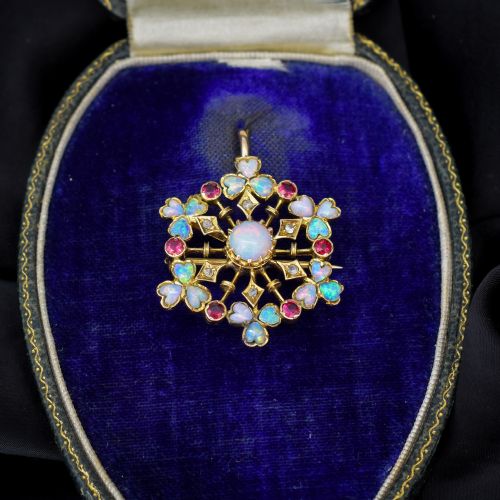
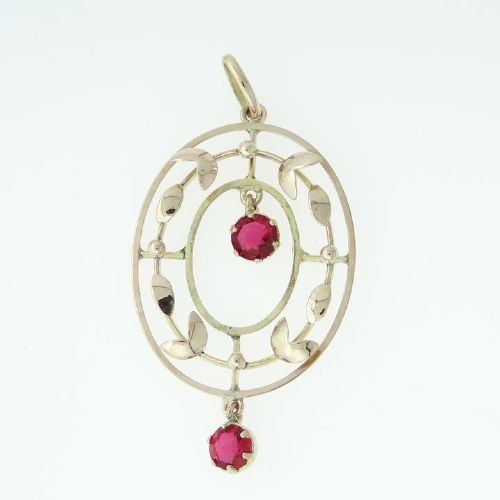
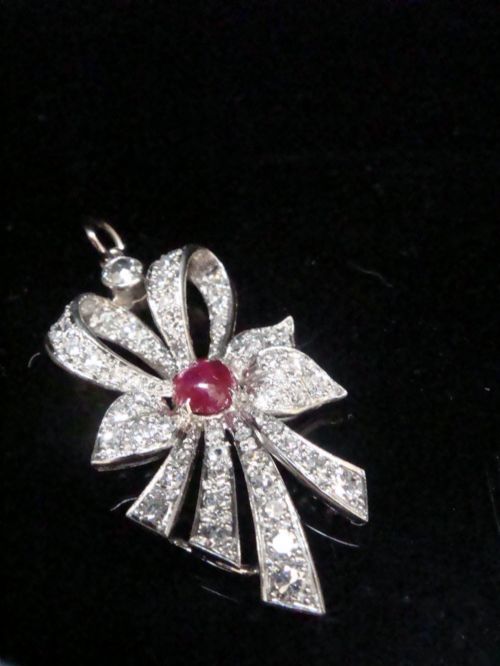
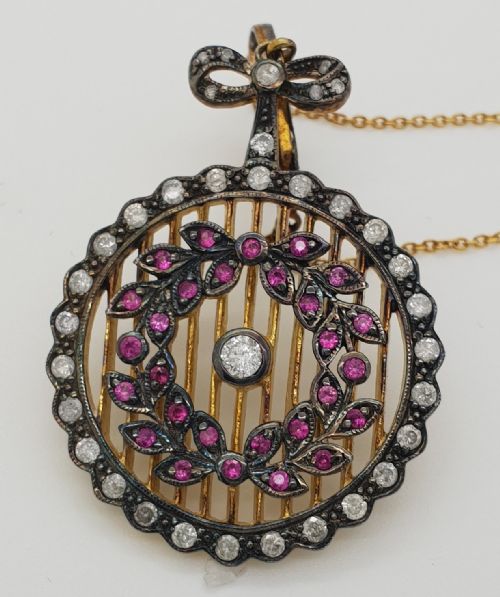
An edwardian ruby pendant draws on the light, graceful aesthetic of the early twentieth century, frequently combining red gems with diamonds and seed pearls. These jewels often take the form of bows, garlands, or drops set in yellow gold or platinum.
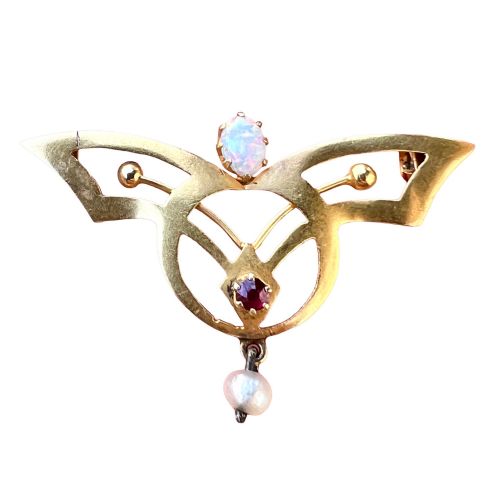
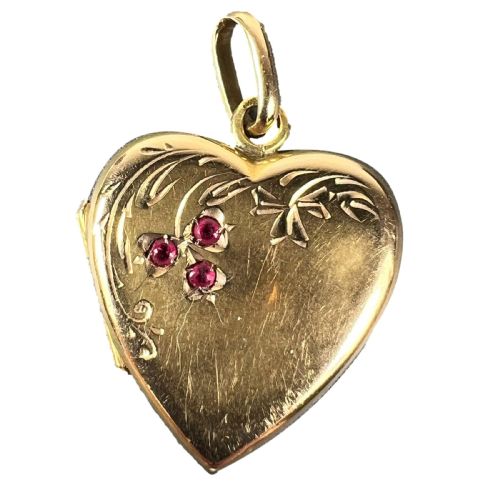
The pieces appearing on this page span the Edwardian era alongside overlapping Victorian, Art Nouveau, and Belle Epoque styles. Buyers will encounter conversions and hybrid forms such as pendant brooches alongside dedicated necklaces.
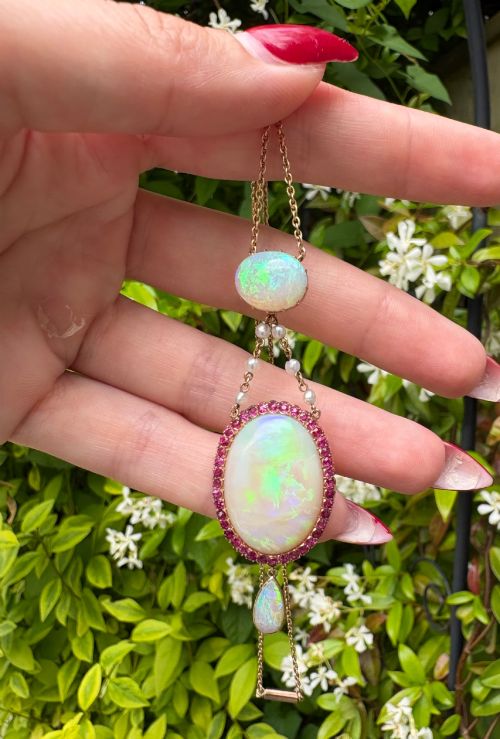
Makers of the period utilised high karat gold, silver gilt, and platinum to achieve airy, lace-like mounts. The red stones are balanced with rose-cut diamonds, natural pearls, and opals.
How they were made
Goldsmiths worked with nine carat, fifteen carat, and eighteen carat yellow and rose gold, often pairing the precious metal with platinum or silver to highlight white diamonds. Calibre cutting was utilised alongside traditional cabochon and faceted stone shapes.
Fine wirework, granulation, and pierced gallery settings formed the lightweight structures typical of the period. Stones were secured with meticulous claw and bezel settings designed to maximise light passage through the ruby.
A mischievous monkey brooch waits among the necklaces, proving Victorian jewellers enjoyed incorporating wildlife.
What varies in quality
The distinction between standard items and superior examples rests on the fineness of the metalwork and the integration of the stones. Pieces featuring platinum-topped gold or intricate millegrain edges demonstrate greater workshop skill.
Material combinations also dictate quality, with natural unheated rubies and well-matched old-cut diamonds marking the upper tier. The crispness of the piercing and the integrity of the original chains or findings further separate the grades.
The Edwardian Ruby Pendant Glossary
- Millegrain
- A decorative technique involving a row of tiny raised metal beads along the edge of a setting. It softens the appearance of platinum or gold mounts.
- Calibre cut
- Gemstones shaped and faceted specifically to fit flush within a channel or geometric border. This method creates continuous lines of colour.
- Cabochon
- A gemstone with a smooth, rounded, convex top rather than faceted planes. This cut is frequently seen on opals and certain historical rubies.
- Pendant brooch
- A versatile jewellery form fitted with both a pin and a loop. It allows the piece to be worn either on fabric or suspended from a chain.
Edwardian Ruby Pendant: Frequently Asked Questions
How do I wear an edwardian ruby pendant?
These pieces suspend neatly from fine gold or platinum chains at collar or princess length. Their delicate proportions pair well with evening wear or structured daytime attire.
Because many pieces began life as brooch conversions, ensure the bail or suspension loop is secure before daily wear.
Were these pendants made in platinum?
Platinum emerged as a favoured jewellery metal during the Edwardian period due to its strength and bright white lustre. Workshops often combined it with yellow gold to back diamonds and secure rubies.
This bi-metal technique allowed for thinner claws and lighter structural mounts than previously possible.
Can I tell if the ruby is natural?
Period pieces frequently incorporate natural rubies alongside seed pearls and diamonds. Laboratory certificates often accompany high-end stones to confirm origin and treatment status.
Examination under magnification reveals natural inclusions typical of stones mined during the nineteenth and early twentieth centuries.
How do I care for my pendant?
Clean these delicate gold and platinum settings using warm soapy water and a soft brush, avoiding harsh chemical dips. Seed pearls and opals require particular care to prevent moisture damage.
Store the necklace flat in a lined box to protect the intricate metalwork and prevent the chain from tangling.