


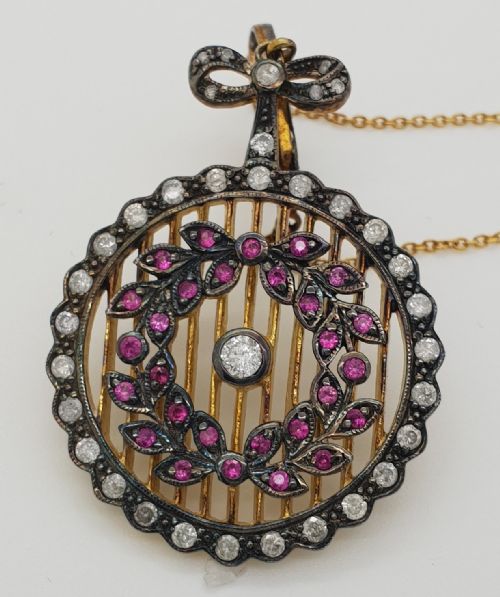


Silver Gilt Necklace
A silver gilt necklace brings together precious metal and glowing warmth, offering the brilliance of gold alongside the distinct weight of silver.
Silver Gilt Necklace
A silver gilt necklace combines a silver base with a layer of applied gold, giving the rich appearance of solid gold without the same weight or cost. When buyers search for a silver gilt necklace, they encounter various forms ranging from simple pendants to elaborate festoon designs.
The pieces on this page span several distinct periods including the eighteenth century, nineteenth century, Victorian era, Edwardian period, and nineteen-hundreds. Styles shift from Renaissance Revival and Central Asian Tribal to flowing Art Nouveau and structured Arts and Crafts designs.
Pendants dominate the object types, often suspended from delicate chains or cords. Many examples incorporate gemstones, enamel work, or pearls alongside the core metalwork.
How they were made
Makers utilised silver as the structural foundation for these items, applying a fine layer of gold through fire gilding or parcel-gilt techniques. This method highlighted specific decorative elements while leaving other areas in plain silver or contrasting tones.
Enamel work frequently appears alongside the metal, including plique-à-jour techniques that create stained-glass effects without a solid backing. Stones such as carnelian, rubies, diamonds, opals, turquoise, citrine, and amazonite were then bezel-set or collet-set into the design.
Workshops employed detailed wirework and granulation, drawing on historic Revivals and tribal traditions to shape the pendants and links. Seed pearls and larger pearls were often suspended as drops or strung directly into the chainwork.
Art Nouveau and Arts and Crafts styles appear alongside Central Asian tribal forms and Renaissance Revival designs.
What varies in quality
Quality rests primarily on the crispness of the metalwork and the depth of the gilding. Finer pieces display sharp details in the chasing and secure settings for every stone.
The complexity of the enamel work dictates the upper tier of craftsmanship, particularly where translucent plique-à-jour captures the light without flaws or cloudiness. Early workshop attributions and distinct maker signatures elevate certain examples above unmarked generic pieces.
The harmony between the stones, whether pearls, turquoise, or diamonds, and the surrounding silver gilt framework defines the overall success of the design.
Levinger & Bissinger·Otto Prutscher·Heinrich Levinger·Theodor Fahrner·Artificers Guild
The Silver Gilt Necklace Glossary
- Silver gilt
- Silver that has been coated with a thin layer of gold. This technique provides the appearance of solid gold while utilising silver as the core metal.
- Plique-à-jour
- An enamelling technique where enamel is applied within a cellular framework without a backing, allowing light to shine through the transparent or translucent colour.
- Parcel-gilt
- A method of decorating an object where only specific areas are gilded while other parts of the silver remain exposed, creating a two-tone visual contrast.
- Festoon necklace
- A necklace featuring a drape of chains, beads, or swags that sits across the collarbone, popular during the Victorian and Edwardian periods.
- Cordiform
- Heart-shaped, a descriptive term often applied to traditional pendants from Central Asian tribal maker traditions.
Silver Gilt Necklace: Frequently Asked Questions
How do I clean a silver gilt necklace?
Use a soft, dry microfibre cloth to gently remove oils and dust from the surface. Avoid liquid chemical dips or abrasive pastes, as these can strip away the delicate gold layer.
Store the necklace flat in a lined jewellery box away from other pieces to prevent the metal or stones from scratching.
Are these necklaces heavy to wear?
Because the base metal is silver rather than solid gold, most pieces remain relatively light against the skin. Larger pendants with multiple gemstones or dense enamel work will carry more weight.
Matching the necklace with a suitable sturdy chain ensures the weight distributes comfortably during wear.
How can I tell an Edwardian piece apart?
Edwardian items often feature light, airy openwork metal designs that mimic lace, combined with pearls, diamonds, and pale gemstones. The aesthetic leans toward refined elegance compared to the heavier styles of the nineteenth century.
Look for symmetrical arrangements and delicate millegrain edges on the metal settings.
What is Central Asian tribal work?
These pieces originate from nomadic and oasis communities, featuring bold geometric shapes, heavy silver gilt structures, and distinctive stones like carnelian. They emphasise symbolic motifs and substantial craftsmanship.
Such necklaces were traditionally worn as protective ornaments and status markers within the culture.