



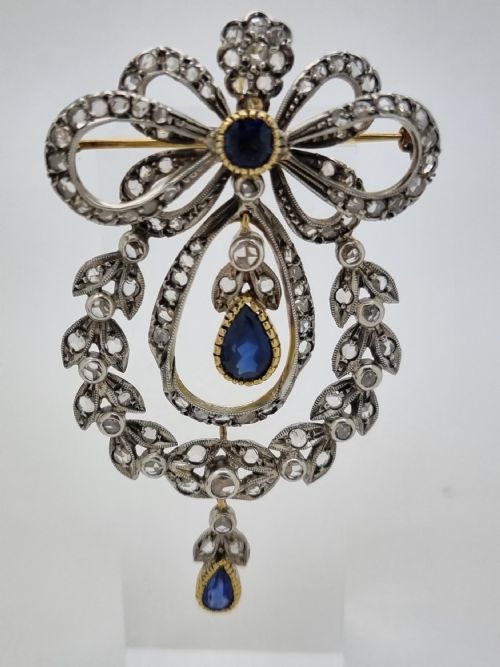


Edwardian Ribbon Pendant
An edwardian ribbon pendant holds the grace of a bygone era, combining delicate bow motifs with precious gems for a wearable piece of history.
Edwardian Ribbon Pendant
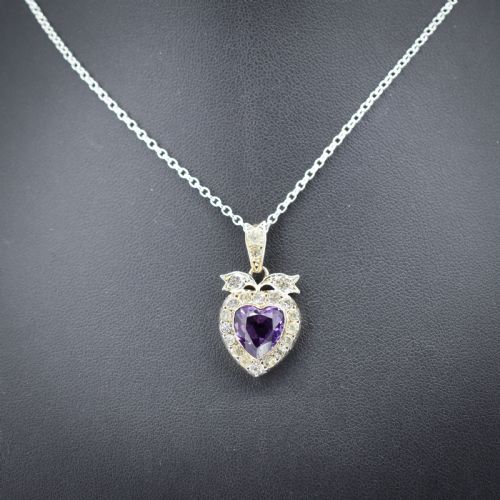
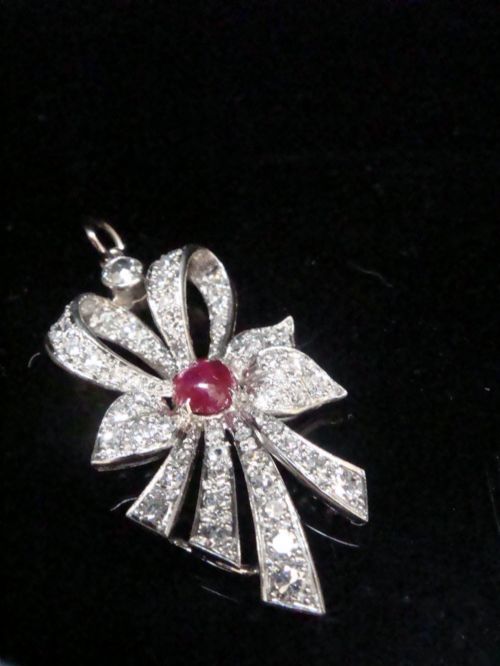
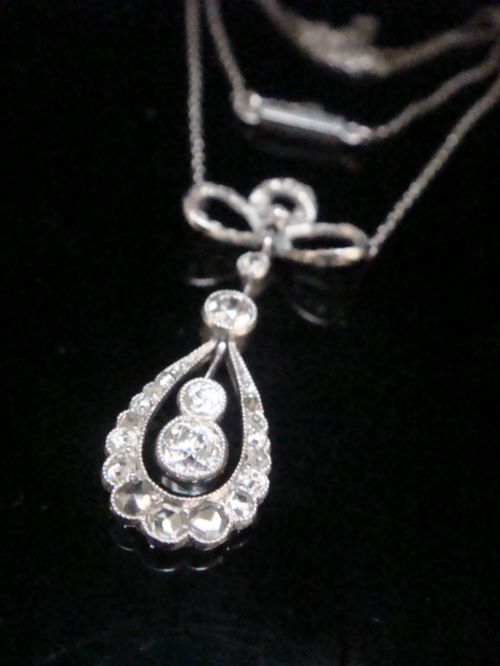
When you search for an edwardian ribbon pendant, you are looking at delicate, symmetrical jewel forms shaped like tied bows or ribbons. These pieces often incorporate articulated drops, hearts, or suspended stones that sway with movement.
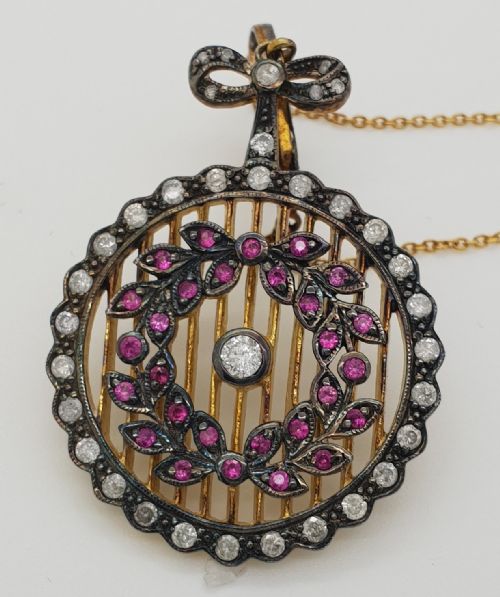
The versions you are most likely to meet on this page hail from the Edwardian and Victorian periods, spanning gold, silver, and platinum settings. Makers frequently combined these ribbon motifs with diamonds, rubies, sapphires, and paste glass.
Many of these designs double as versatile items, functioning simultaneously as pendants and brooches. This dual utility reflects the practical yet luxurious craftsmanship typical of the period.
How they were made
Goldsmiths and jewellers utilised precious metals such as 18ct gold, sterling silver, and platinum to shape intricate wirework and sheet metal. Platinum emerged strongly during this time, allowing for finer, stronger settings that held diamonds securely without heavy metal bulk.
Gemstones including old cut diamonds, rubies, sapphires, natural pearls, and paste glass were meticulously set into the metalwork. Enamel work and turquoise additions also provided vibrant colour contrast against the polished silver and gold.
Victorian Scottish pebble agate brooches brought Highland geology straight to London drawing rooms.
What varies in quality
The refinement of the metalwork defines the upper tier of these pieces, where bow loops appear fluid and natural rather than stiff. Pierced openwork demonstrates meticulous hand-piercing by skilled artisans.
Stone selection and matching dictate overall distinction, with well-matched old cut diamonds and vibrant natural rubies or sapphires elevating a piece. The integration of convertible elements, such as secure pendant loops hidden behind brooch pins, also indicates higher manufacturing thought.
The Edwardian Ribbon Pendant Glossary
- Edwardian
- A period spanning the reign of King Edward VII from 1901 to 1910, known in jewellery for light, airy platinum settings and diamond-heavy floral and ribbon motifs. Pieces from this era often prioritise grace and delicate proportions.
- Old Cut
- A precursor to the modern brilliant cut diamond, hand-faceted with a smaller table, higher crown, and open culet. These stones produce a softer, candlelit sparkle under low lighting.
- Silver Gilt
- Sterling silver that has been coated with a thin layer of gold. This technique offered the rich appearance of solid gold while utilising silver as a base metal.
- Platinum
- A dense, durable precious metal that gained widespread popularity in high-end jewellery during the Edwardian period. Its strength enabled jewellers to create gossamer-thin settings.
Edwardian Ribbon Pendant: Frequently Asked Questions
Can I wear my pendant every day?
These antique items require gentle care due to their delicate metalwork and age. It is best to remove them before engaging in physical tasks or swimming.
Storing them individually in soft pouches prevents scratching from other jewellery items.
How do I clean an antique ribbon pendant?
Use a soft microfibre cloth to gently wipe away surface oils and dust after wearing. Avoid harsh chemical dips, ultrasonic cleaners, or abrasive brushes that might damage foil-backed stones or pearls.
For stubborn grime, a damp cloth with mild soap followed by immediate drying is sufficient.
Are these pieces pendants or brooches?
Many examples from this era were designed to serve both purposes. They often feature a concealed pin on the reverse alongside a loop for a chain.
This versatility allowed Edwardian wearers to pin the bow to a bodice or suspend it from a ribbon or chain.
How do I identify an Edwardian piece?
Look for the characteristic use of platinum-topped gold, delicate milgrain edges, and motifs like bows, garlands, and ribbons. Gemstones are frequently old cut diamonds or natural pearls.
Proportions tend to be light and airy, distinguishing them from heavier Victorian designs.