




Edwardian Rosewood Writing Desk
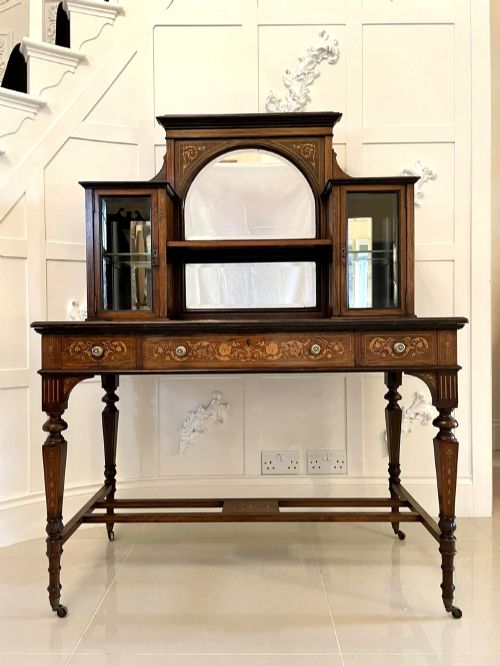
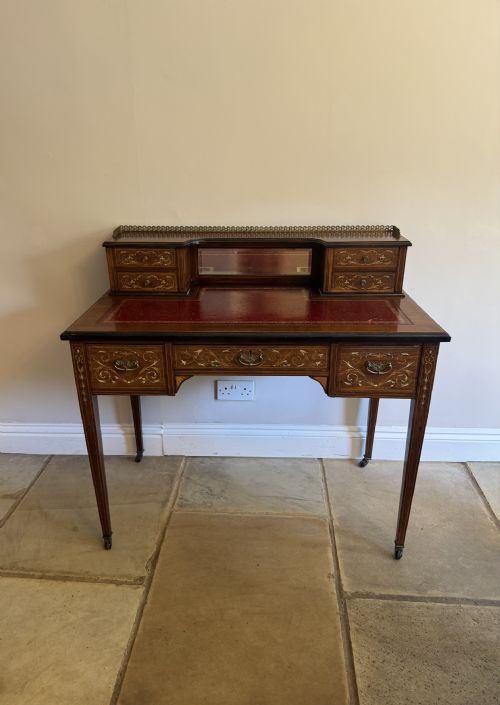
An edwardian rosewood writing desk combines compact proportion with delicate marquetry, offering a refined workspace suited for correspondence and light study.
Edwardian Rosewood Writing Desk
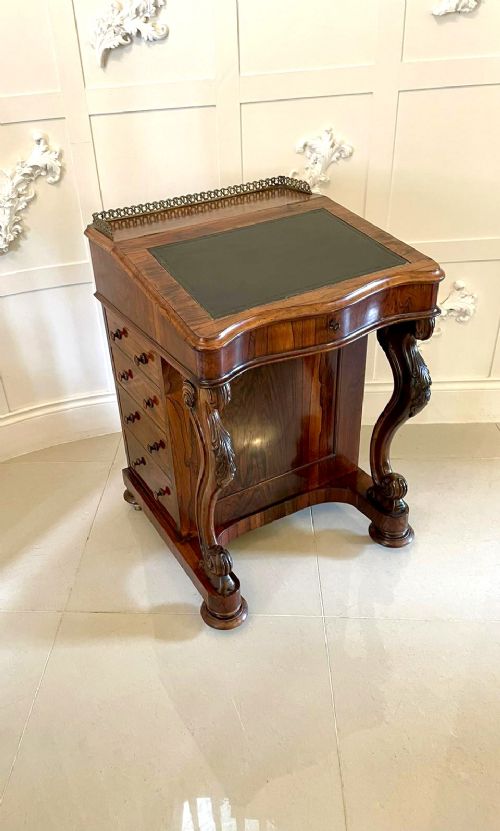
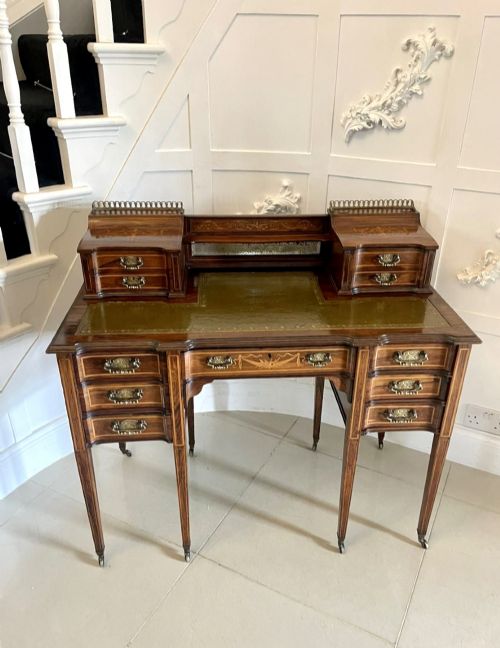
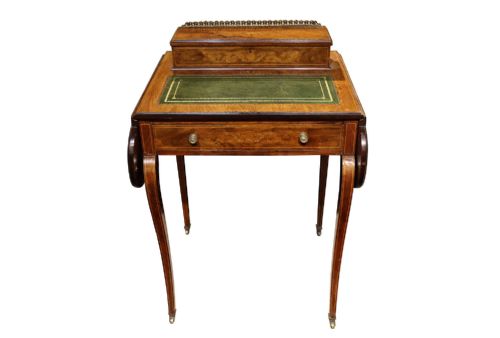
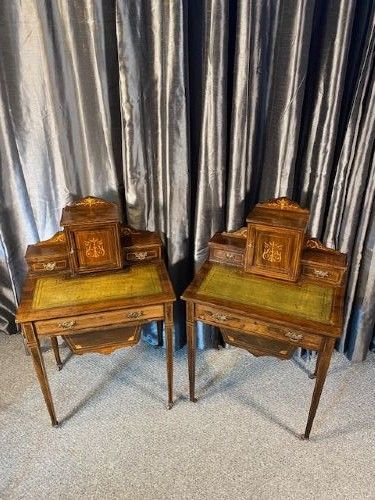
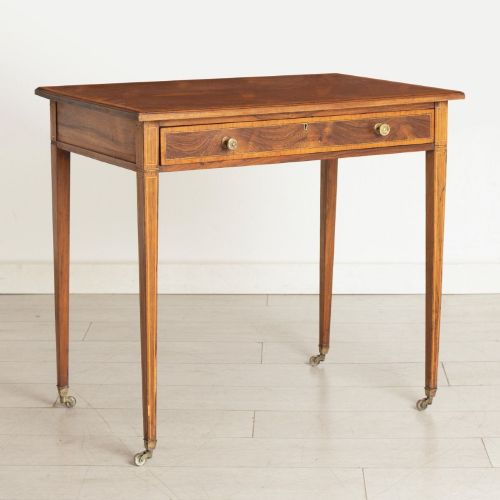
An edwardian rosewood writing desk is a sophisticated piece of antique furniture typically featuring slender legs, small drawer arrangements, and contrasting lighter wood details. These tables often appear in lady's writing desk formats, compact bon-heur-du-jour cabinets, and freestanding library or writing tables.
The pieces on this page heavily reflect Edwardian and late Victorian periods, alongside Sheraton Revival interpretations of earlier designs. Buyers encounter everything from simple freestanding writing tables to elaborate desks fitted with internal compartments and leather writing surfaces.
Materials and construction
Makers utilised dense rosewood timber as the primary carcass and surface material, prized for its rich grain and deep dark colour. This hardwood provided a stable canvas for intricate decorative work.
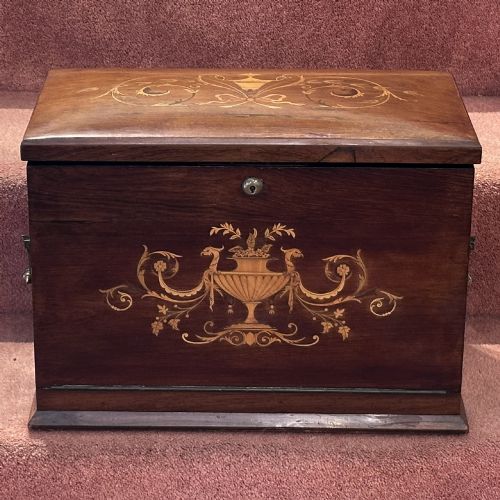
Satinwood inlay, boxwood stringing, and marquetry motifs were set directly into the rosewood surface to create contrasting geometric or floral patterns. Brass handles, hinges, and occasional brass stringing completed the hardware, while leather inserts provided a durable writing plane.
Edwardian Rosewood Writing Desk Retail Price Guide 2026
Typical asking prices for edwardian rosewood writing desk among the pieces listed under this phrase on Sellingantiques today, from the lower quarter to the upper quarter. They describe what is for sale here now, not the wider market.
Some bon-heur-du-jour desks conceal tiny, secret compartments behind miniature doors intended for the safekeeping of private correspondence.
What separates the grades
The standard of a piece depends heavily on the crispness and precision of the satinwood inlay and marquetry work. Sharp, tightly fitted joints and clean botanical or geometric motifs distinguish higher grade examples from simpler production items.
Fitted interiors also dictate quality, where intact stationery compartments, original leather inserts, and working locks elevate the piece. The overall balance of proportions, especially on lighter ladies' writing tables and smaller bon-heur-du-jour desks, marks the distinction between standard cabinetmaking and master workshop output.
Maple and Co·Edwards and Roberts·Jas Shoolbred·William H Vaughan and Co·Ray and Miles of Liverpool
The Edwardian Rosewood Writing Desk Glossary
- Bon-heur-du-jour
- A small, light writing desk featuring a raised superstructure of small drawers, pigeonholes, or a small cabinet above the main writing surface. This French form became particularly popular during revival periods in England.
- Marquetry
- The art of applying decorative pieces of veneer to a structure to form intricate pictorial or geometric designs. Craftsmen carefully cut contrasting woods such as satinwood and boxwood to fit flush into the rosewood background.
- Satinwood
- A pale, durable exotic hardwood utilised extensively for contrasting stringing and inlay work on dark rosewood furniture. Its bright yellow tone creates sharp visual definition against darker timbers.
- Sheraton Revival
- A late nineteenth and early twentieth century design movement that recreated the light, neoclassical elegance of eighteenth-century designer Thomas Sheraton. Pieces in this style typically feature slender tapered legs and delicate inlay.
- Writing Slope
- A portable or table-standing slanted box that opens to reveal a lined writing surface and internal storage for paper and ink. These pieces predate many freestanding desks but share similar internal stationery fittings.
Edwardian Rosewood Writing Desk: Frequently Asked Questions
What is an edwardian rosewood writing desk?
An edwardian rosewood writing desk is a compact, decorative piece of antique furniture designed for letter writing and light administrative tasks. These tables typically feature dark rosewood timber enhanced with lighter satinwood inlay and delicate brass hardware.
Most examples date from the turn of the twentieth century and incorporate Sheraton Revival design elements. They are built for domestic parlours and boudoirs rather than heavy commercial office use.
How do you tell an edwardian desk from a victorian one?
Edwardian desks generally display lighter proportions, finer inlay work, and a preference for Sheraton Revival styling with slender, tapered legs. Victorian counterparts often lean towards heavier construction, darker overall finishes, and more robust freestanding davenport or library table formats.
Cabinetmakers working in the Edwardian era favoured restrained neoclassical motifs over the more exuberant carving seen on mid-Victorian pieces. Examining the secondary timbers and internal drawer construction often clarifies the manufacturing decade.
Were these desks used for daily correspondence?
These pieces served as the primary household station for writing letters, managing personal accounts, and storing incoming post. Ladies and gentlemen utilised the fitted drawers, pigeonholes, and pull-out leather surfaces to keep correspondence organised before the widespread use of telephones.
Many incorporate specialised stationery boxes, pen trays, and inkwell compartments tailored specifically to nineteenth and early twentieth-century writing habits. Their delicate scale meant they lived in reception rooms and bedrooms rather than dedicated libraries.