



Edwardian Record Cabinet
An edwardian record cabinet keeps your collection organised with period charm, offering a dedicated home for records and music.
Edwardian Record Cabinet
When you search for an edwardian record cabinet, you are looking at practical furniture designed to house sheet music, rolls and recordings in the home. These pieces date principally from the Edwardian era and surrounding periods, reflecting the domestic musical pursuits of the early twentieth century.
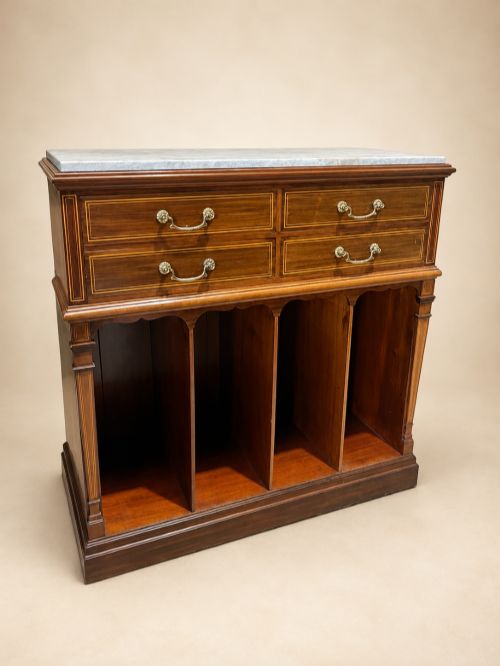
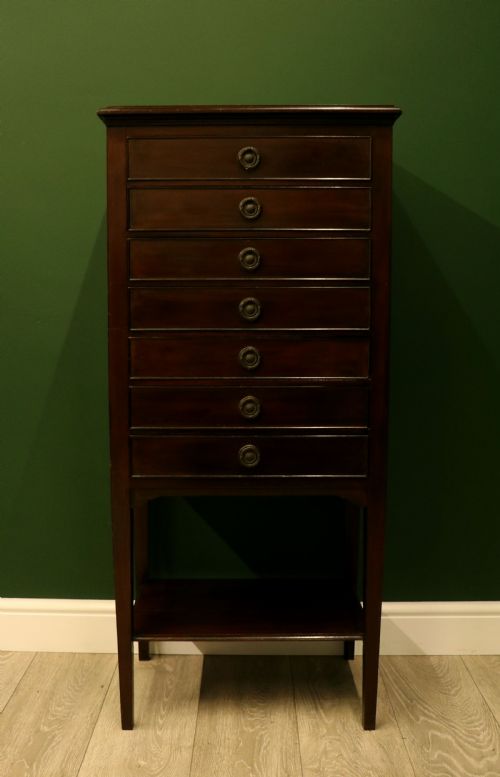
You will most commonly meet upright mahogany or walnut cabinets on this page, often featuring inlaid decoration and designated internal storage. They bridge the gap between functional storage and formal parlour presentation, suiting modern rooms just as well as traditional interiors.
How they were made
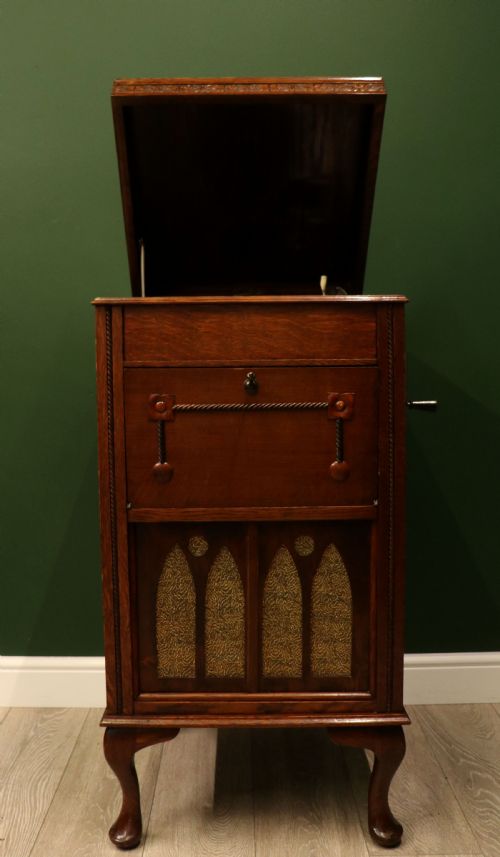
Cabinet makers utilised solid timbers and selected veneers like mahogany, walnut, rosewood and oak for the primary carcases, often incorporating contrasting stringing and shell inlays. Brass handles, hinges and drop-front mechanisms provide the mechanical operation necessary for daily use.
Glass panels appear on selected doors, allowing visibility of the contents while protecting the paper and shellac within. Surface finishes rely on traditional polish that highlights the natural grain and colour of the timber.
Listings feature periods from the Victorian era through the Edwardian years up to 1930, constructed in mahogany, walnut, oak, brass and glass.
What varies in quality
The standard of timber selection and complexity of inlay work largely distinguish the finer examples from simpler utilitarian pieces. Dense burr walnut or figured mahogany veneers demonstrate a higher grade of craftsmanship than plain utility woods.
Internal arrangement also dictates quality, with purpose-built filing partitions, drop-front drawers and robust brass hardware marking out superior workshops. Original fittings and well-preserved surface patination complete the better specimens.
U Phone of Leeds·Short and Mason London
The Edwardian Record Cabinet Glossary
- Inlay
- A technique where contrasting woods or other materials are inserted into recessed portions of the base timber to form decorative patterns. It adds visual refinement to the surface.
- Drop-front
- A hinged panel that folds downwards to reveal internal shelving or filing compartments. This mechanism allows easy access to stacked music or records.
- Veneer
- A thin slice of figured wood applied over a more stable secondary timber base. It provides decorative grain patterns without the structural instability of solid wide boards.
- Stringing
- Fine inlaid lines of contrasting timber used to outline panels and drawers. It defines the geometric proportions of Edwardian cabinetry.
Edwardian Record Cabinet: Frequently Asked Questions
What is an edwardian record cabinet?
An edwardian record cabinet is a piece of furniture built to store sheet music, rolls and early recordings in the home. They typically feature upright proportions with internal shelving or dedicated filing compartments.
These cabinets were essential items in parlours and drawing rooms during the early twentieth century, keeping domestic entertainment organised and close to hand.
How do I use one today?
You can utilise an edwardian record cabinet to store modern vinyl records, books or stationery in a living room or study. The internal partitions work well for keeping items upright and sorted.
Their compact footprints mean they fit easily into corners or beside seating areas while adding period character to your decor.
How do I tell Edwardian from Victorian cabinets?
Edwardian cabinets generally display lighter timbers, more restrained inlays and simpler geometric lines compared to heavier Victorian styles. They often incorporate satinwood stringing and brighter polished mahogany or walnut.
Victorian pieces tend to be darker and more heavily carved, reflecting the tastes of the preceding decades.
What woods were used?
Cabinet makers built these pieces using mahogany, walnut, oak and rosewood as primary timbers. Burr walnut and figured veneers frequently appear on the main display surfaces.
Secondary woods like pine or oak were used for internal framing and drawer construction to ensure stability.