

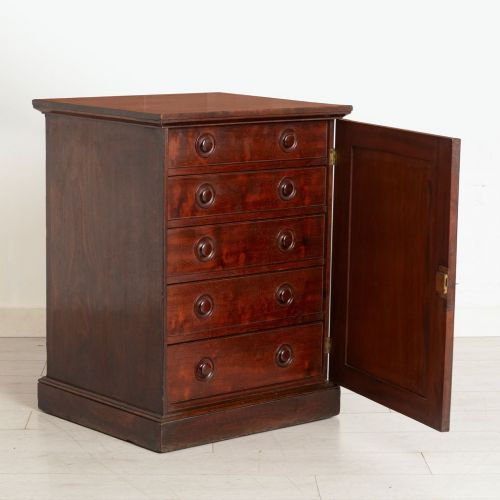


Vintage Music Storage Cupboard
A vintage music storage cupboard keeps sheet music and records tidy, offering neat compartmentalised shelving inside period timber cases.
Vintage Music Storage Cupboard
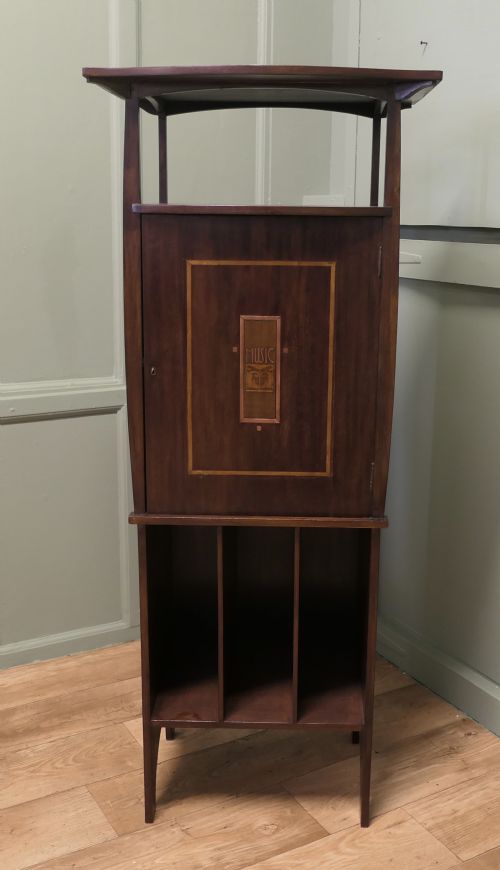
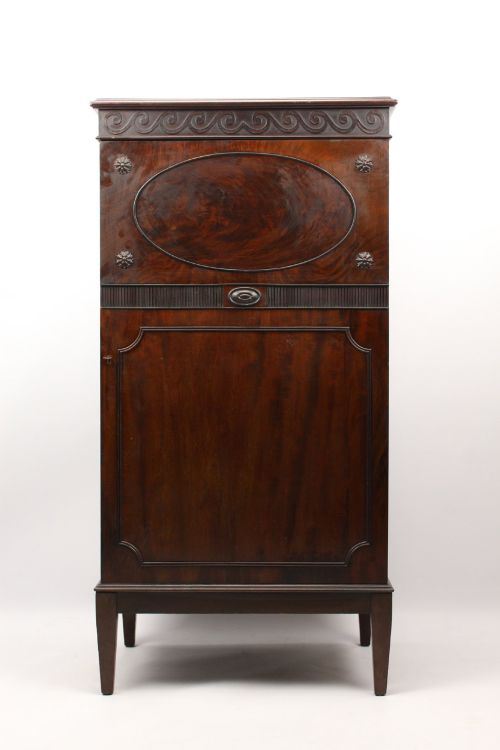
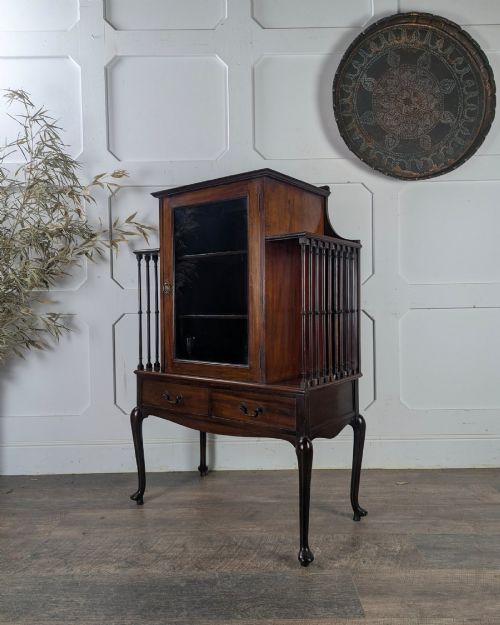
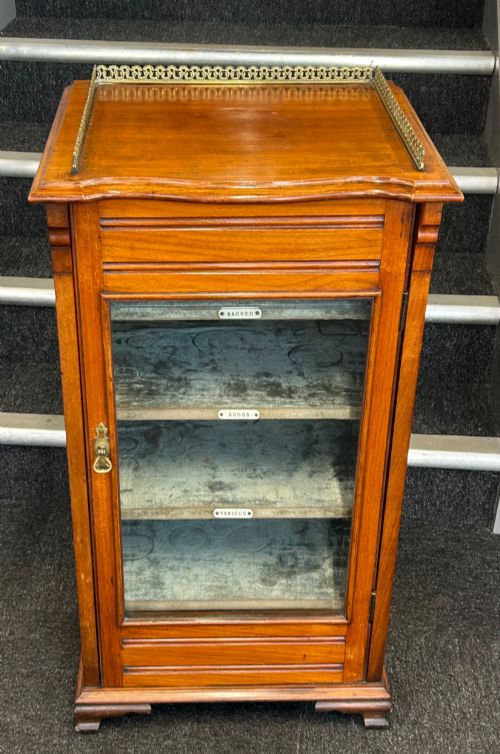
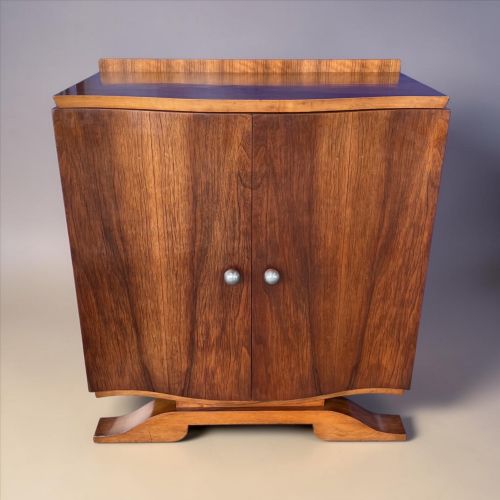
A vintage music storage cupboard is designed specifically to house sheet music, folios and later records, taking forms such as music cabinets, filing cabinets and record cabinets. The pieces on this page span the nineteenth century through the Edwardian period, 1900, 1910, 1920 and Art Deco 1930s.
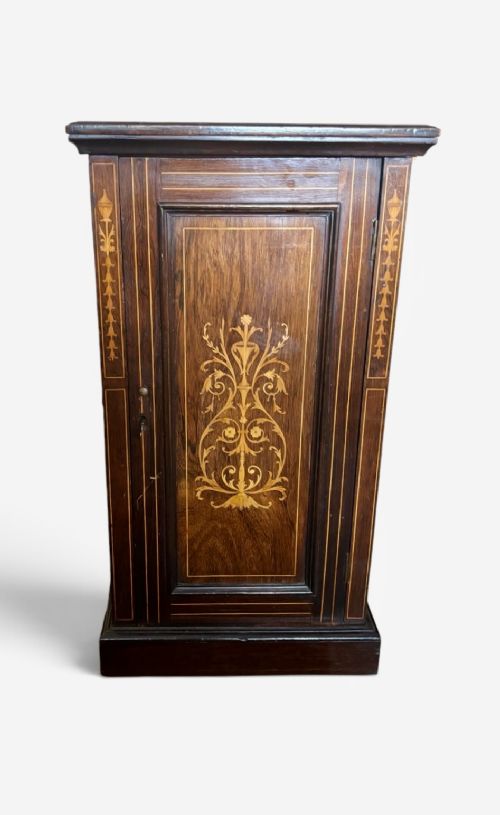
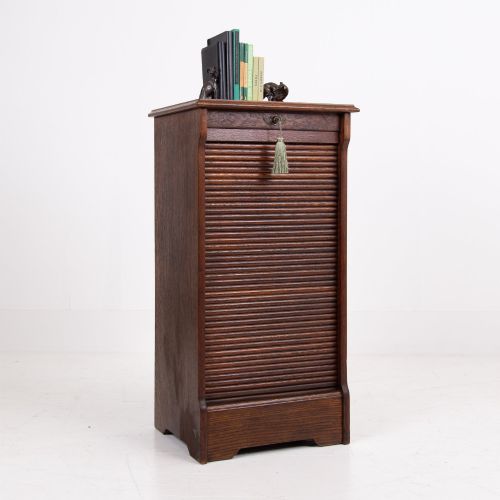
Edwardian mahogany and walnut examples dominate the selection, often featuring inlaid satinwood or marquetry details. Alongside these, buyers find Victorian rosewood and black walnut pieces, Arts and Crafts designs, and oak tambour door variants.
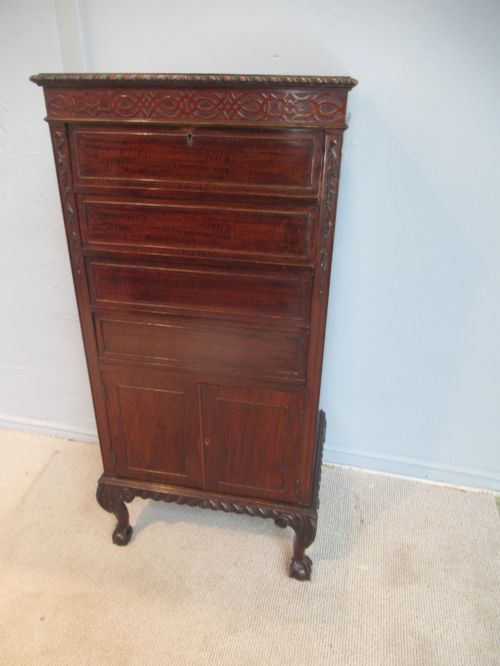
Cabinetmakers constructed these pieces as narrow side cupboards, pedestal units or multi-drawer folio cases to suit domestic parlours and drawing rooms. The internal configuration typically includes specialised drop-front drawers or vertical partitions designed to hold scores upright without bending.
Materials and construction
Workshops utilised solid and veneered timbers including mahogany, walnut, oak, satinwood and rosewood, applying glass panels, brass handles and metal fittings. Inlaid decoration in contrasting woods and marquetry motifs frequently embellish the primary surfaces.
Construction methods combined traditional joinery with specialised internal mechanisms such as tambour doors and drop-down drawer fronts. These timber enclosures relied on stable carcase building to support heavy stacks of paper and recordings over decades of daily use.
Listings feature music storage cupboards spanning the Victorian era, the Edwardian period, and the 1920s to 1930s Art Deco movement.
Distinguishing quality across the range
Quality shows in the choice of timber figure, the precision of satinwood inlay or marquetry, and the integration of maker-attributed brass hardware. Finer examples display meticulous grain matching across the doors and drawer fronts rather than plain utility cuts.
Construction integrity separates standard production from superior workshops, visible in the smooth action of tambour tracks, drop-front mechanisms and fitted internal dividers. Maker signatures, paper labels or branded stamps also elevate a piece by confirming its origin.
GM Elwood for JS Henry·Denby & Spinks·Keeble London
The Vintage Music Storage Cupboard Glossary
- Tambour door
- A flexible door made of narrow vertical strips of wood glued to canvas, allowing it to slide smoothly around a curved track. This mechanism permits access to internal compartments within a compact footprint.
- Marquetry
- The art of applying decorative veneer pieces in various woods to form pictorial or geometric patterns on a carcase surface. It appears on several Victorian and Edwardian music cabinets.
- Drop-front drawer
- A drawer front that folds downward when pulled open, granting easier access to stacked sheet music stored inside. It prevents paper edges from catching during retrieval.
- Satinwood
- A lustrous, hard timber native to Ceylon and India with a yellowish sheen, used extensively for stringing and floral inlay during the Edwardian period.
Vintage Music Storage Cupboard: Frequently Asked Questions
What is a vintage music storage cupboard used for?
These cabinets were originally built to organise and protect unbound sheet music, folios and scores in domestic settings. Internal partitions kept paper collections upright and sorted by composer or genre.
Today, many buyers repurpose them for modern vinyl records, files or general household storage while retaining their period aesthetic.
How do I date an Edwardian music cabinet?
Edwardian music cabinets usually date between 1901 and 1910, identifiable through characteristic styling such as mahogany or walnut timbers combined with satinwood stringing. Look for lighter proportions compared to heavy Victorian furniture.
Maker labels inside the drawers or stamped hardware can also help narrow down the exact decade of manufacture.
Are tambour door cabinets practical for daily use?
Tambour doors slide smoothly along concealed tracks, making them practical for tight spaces where swinging doors would obstruct walkways. The slatted wood construction offers secure closure for contents.
Properly maintained tracks ensure the wooden slats glide without binding during opening and closing.
What woods were commonly used for music cabinets?
Mahogany and walnut serve as the primary woods for the majority of surviving music storage cupboards across the Victorian and Edwardian eras. Oak appears frequently in Arts and Crafts and filing variants.
Exotic timbers like rosewood and satinwood were reserved for decorative inlay work and higher-end cabinet production.