



Edwardian Porch Light
An edwardian porch light brings welcoming character to an entrance, combining period metalwork with practical glass protection.
Edwardian Porch Light
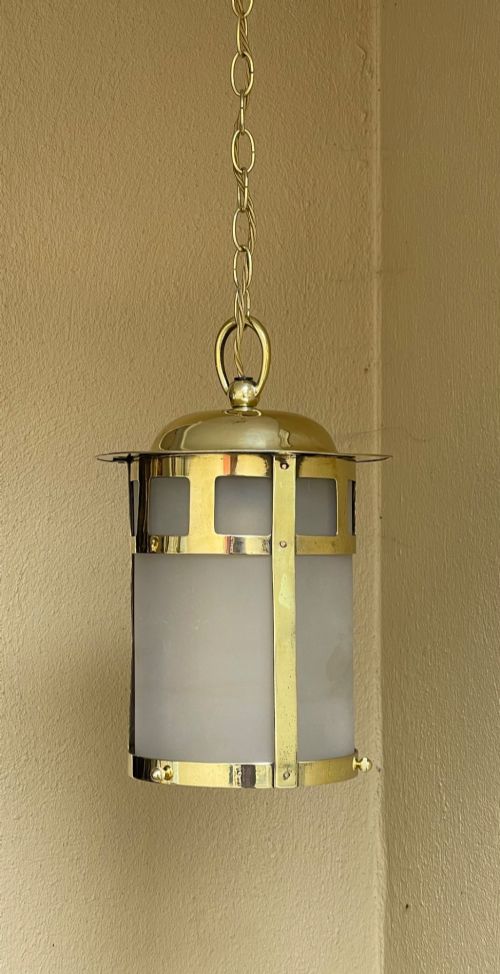
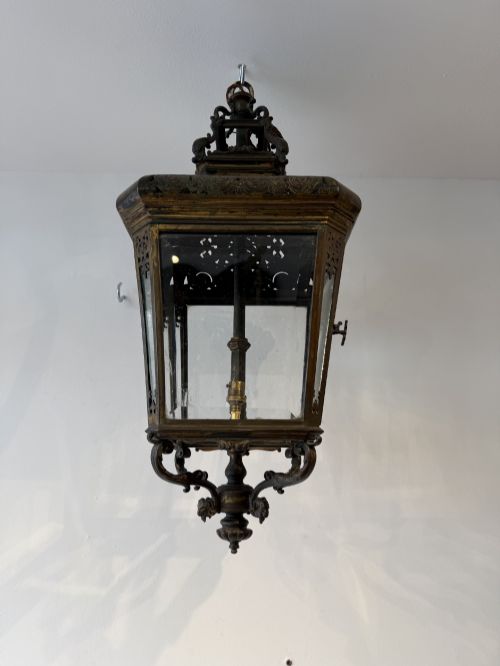
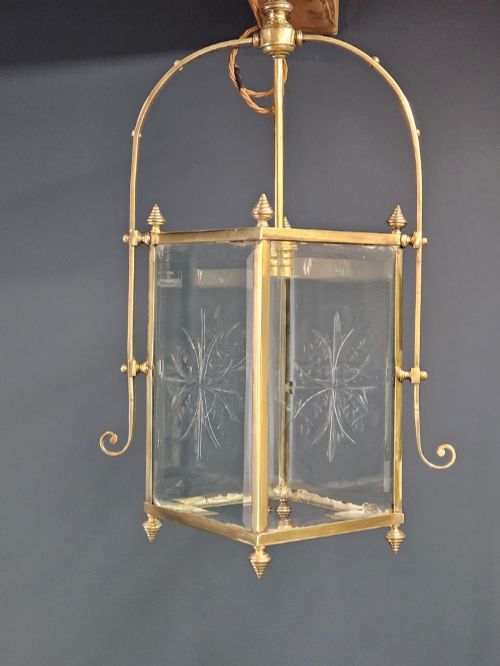
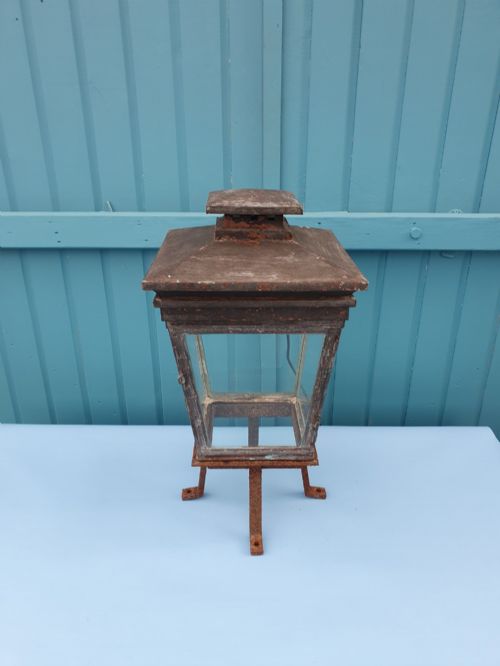
An edwardian porch light takes the form of a hanging pendant, a ceiling lantern, or a wall sconce designed to illuminate an entranceway. Most examples originate from the early twentieth century, spanning the late Victorian era through to the nineteen-twenties.
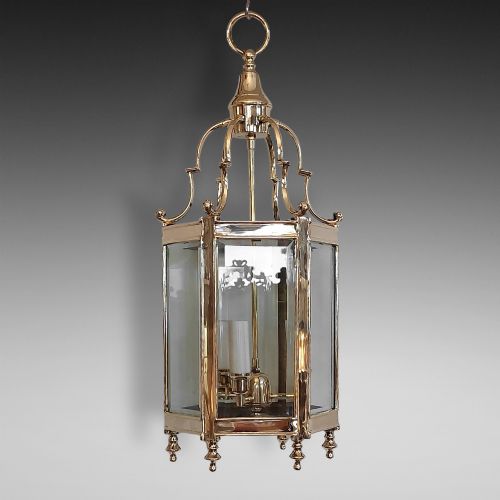
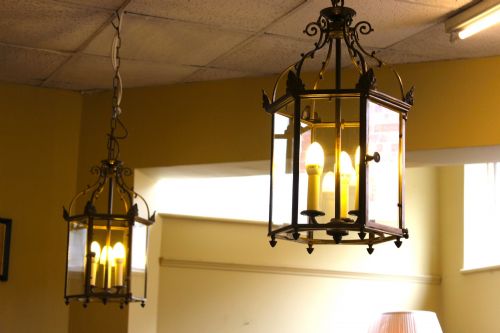
The prevailing design on this page is the hexagonal or octagonal brass hall lantern, often suspended by chains or mounted directly against an exterior wall. These fixtures reflect the domestic architecture of their period, when entrance illumination became both decorative and necessary.
Materials and construction
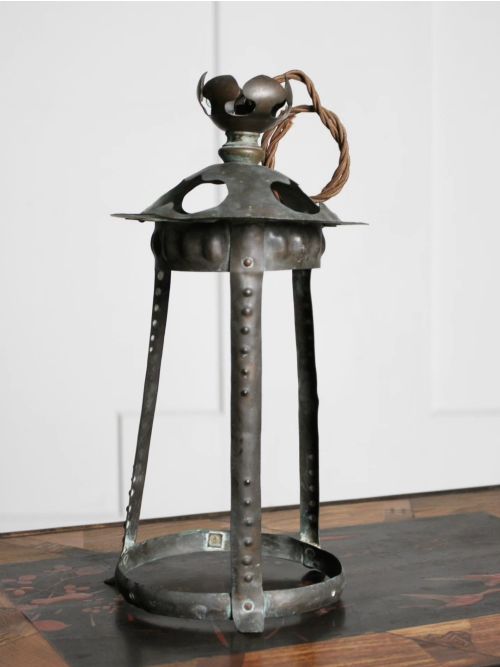
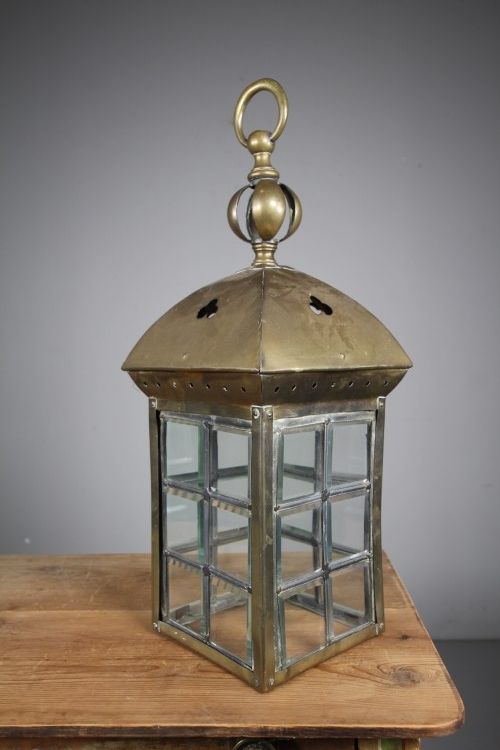
Makers utilised durable metals including brass, copper, bronze, iron, and steel to build structural frames capable of withstanding external conditions. Copper and brass components were frequently hand-beaten or soldered together to form geometric housings.
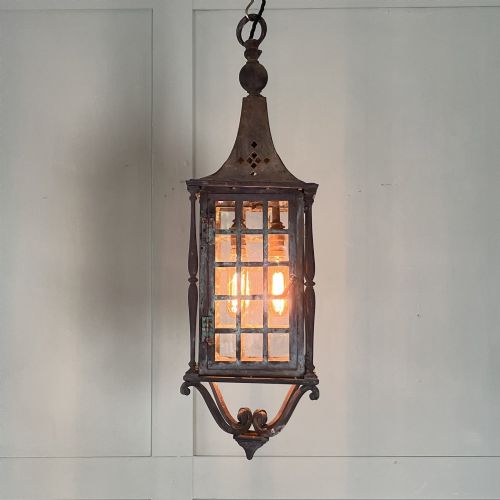
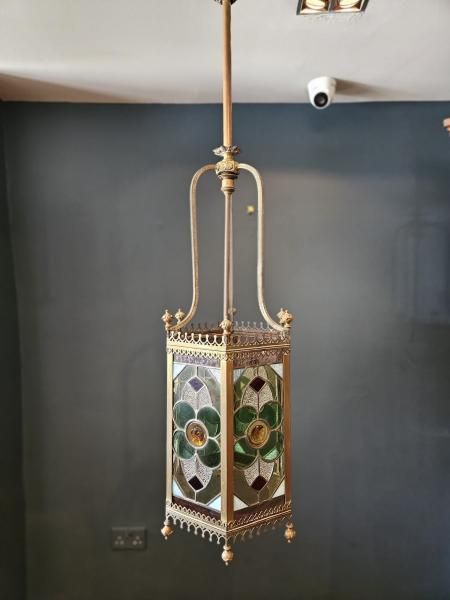
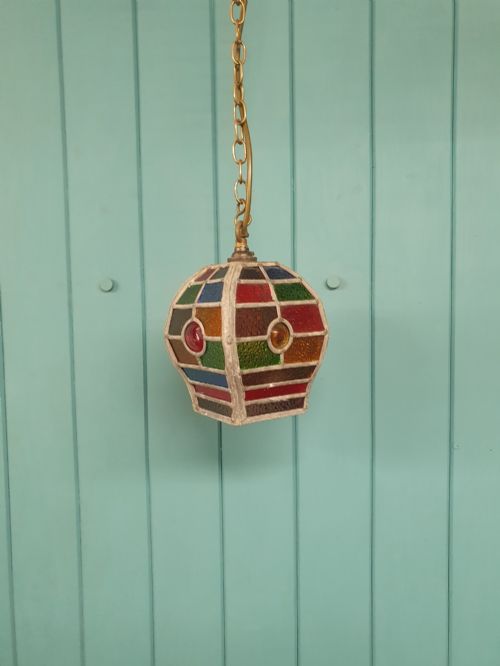
Panels of clear, cut, or leaded stained glass enclose the metal frames, protecting the internal burner or bulb from wind and rain. Many copper and brass examples began life as gas fixtures before undergoing later conversion to electricity.
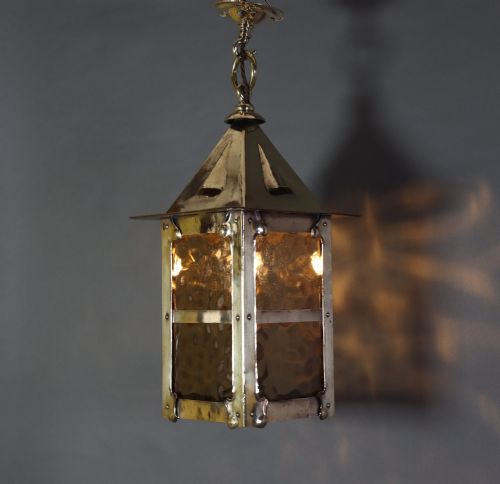
Listings demonstrate a strong presence of brass and copper constructions, frequently associated with Edwardian and Arts and Crafts design styles.
What separates examples
Quality rests in the weight of the metal gauge and the precision of the frame's construction, distinguishing robust architectural hardware from lighter domestic pieces. Heavier brass castings and complex leaded glass configurations indicate superior craftsmanship.
Design influences also set pieces apart, particularly those incorporating distinct Arts and Crafts movement details or Gothic Revival motifs. The integrity of the original solder joints and the condition of the glass panels dictate the overall desirability.
The Edwardian Porch Light Glossary
- Hexagonal lantern
- A six-sided hanging or wall-mounted lighting fixture. This geometric form allows light to disperse evenly across an entrance hall.
- Leaded glass
- Individual panes held together within lead cames. This technique permits intricate stained or clear window arrangements.
- Hall lantern
- An enclosed ceiling pendant used specifically in corridors and entryways. These fixtures typically feature hinged access doors for maintenance.
- Arts and Crafts
- A design movement prioritising traditional craftsmanship and simple forms. Pieces from this tradition often display honest structural fixings and hand-worked metal surfaces.
Edwardian Porch Light: Frequently Asked Questions
Can these lights go outside?
Many copper and brass examples were originally built for exterior installation, though modern wiring and weatherproofing determine current suitability.
Consulting a professional electrician ensures the fitting meets current safety standards for outdoor exposure.
How do I clean the glass?
Careful removal of dust using a soft cloth preserves both the metal frame and the fragile leaded or cut glass panels.
Harsh chemical cleaners should be avoided to protect the aged patina accumulated on the brass and copper surfaces.
Are they converted from gas?
Several period lanterns originally functioned on gas supply before being adapted for electrical illumination during twentieth-century renovations.
Evidence of this conversion often appears near the top fitter or internal burner assembly.
How do I date a lantern?
Stylistic clues such as heavy cast brass frames, leaded stained glass, or specific Arts and Crafts motifs point toward the early twentieth century.
Comparing construction techniques with dated Victorian and Edwardian examples helps narrow the decade of manufacture.