





Edwardian Porcelain Ewer
These Edwardian porcelain ewer pieces bring hand painted elegance and classical form into your interior, offering the refined craftsmanship of the early twentieth century.
Edwardian Porcelain Ewer
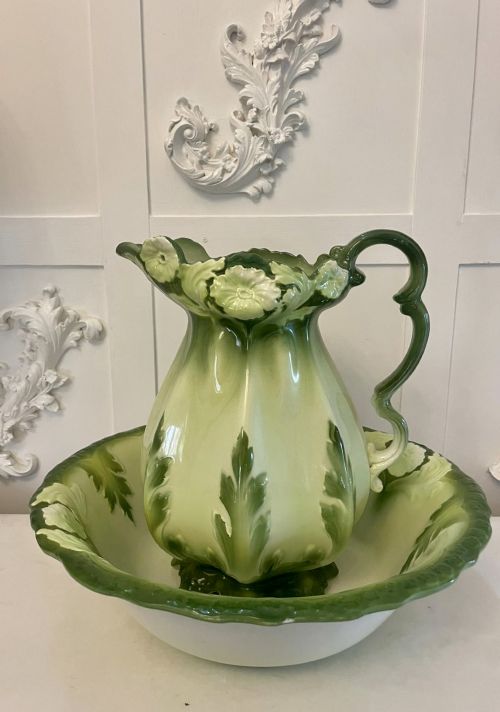
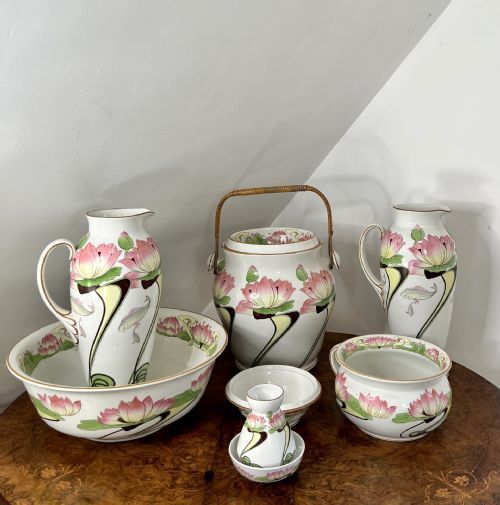
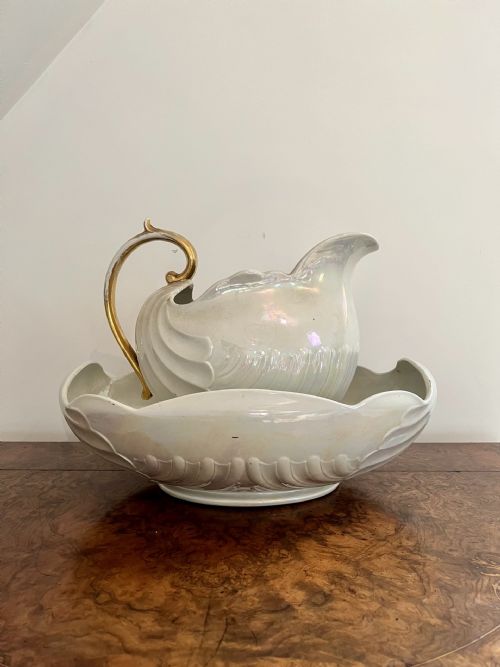
When you search for an edwardian porcelain ewer, you are looking at decorative vessels, jugs, and wash sets originating primarily from the Edwardian period alongside pieces dated between 1890 and 1920. The versions you are most likely to meet on this page include Royal Worcester painted ewers, matching jug and bowl sets, and decorative pedestal vases.
The evidence shows forms ranging from standalone decorative ewers to large bathroom sets by makers such as Medway, Shelley, Coalport, and Royal Doulton. These objects reflect both the domestic utilitarian needs of their era and the height of ornamental ceramic design.
How they were made
These pieces are constructed from porcelain and earthenware, often finished with a smooth glaze and enriched with enamel colours. Makers applied gold leaf and gilding to accentuate handles, rims, and moulded motifs.
Surface decoration frequently relies on hand painted artistry, capturing botanical or avian subjects directly onto the ceramic body. The combination of delicate paste bodies and applied metallic leaf defines the technical approach of the period.
Edwardian Porcelain Ewer Retail Price Guide 2026
Typical asking prices for edwardian porcelain ewer among the pieces listed under this phrase on Sellingantiques today, from the lower quarter to the upper quarter. They describe what is for sale here now, not the wider market.
Listings feature works in porcelain and earthenware from the Edwardian period, 1900, 1910, 1920, and 1890.
What varies in quality
Quality in these pieces is dictated by the fineness of the porcelain body and the skill of the hand painted decoration. Signed artistic work by known hands elevates a piece far above standard factory output.
The crispness of the moulding, the preservation of the gilding, and the complexity of the enamel palette separate ordinary domestic wares from exceptional display items.
Royal Worcester·Coalport·Royal Doulton·Shelley·Medway
The Edwardian Porcelain Ewer Glossary
- Ewer
- A large jug with a wide spout and a curved handle, traditionally used for holding water or simply for display. These decorative versions often feature classical silhouettes.
- Gilding
- The application of gold leaf or gold paint to the surface of ceramics. This technique highlights rims, handles, and moulded details.
- Enamel
- Opaque vitreous material fused to the ceramic body through firing. It provides the vibrant, lasting colours seen in floral and avian motifs.
- Pedestal
- A raised base supporting a vase or ewer. This architectural feature lifts the vessel to create a more commanding display presence.
- Soft paste
- A type of ceramic body composed of clay and glass frit fired at lower temperatures than hard paste. It yields a warm, slightly porous texture prized in fine antique wares.
Edwardian Porcelain Ewer: Frequently Asked Questions
How were these ewers used?
While many served a functional purpose within bedroom wash sets alongside matching bowls, others were purely decorative showroom pieces. They sat on mantelpieces or pedestals to display wealth and artistic taste.
Over time, their primary role shifted entirely to interior decoration and collection.
How do I display an ewer?
An ewer looks best placed on a sturdy console table, sideboard, or within a dedicated display cabinet where its profile can be appreciated from multiple angles. Pairing a single ewer with complementary vases creates a balanced arrangement.
Keep them away from direct sunlight to preserve the vibrancy of the hand painted enamel and gold leaf.
How do I tell periods apart?
Identifying the period involves examining the maker marks stamped on the base and stylistic clues such as blush ivory grounds. Edwardian pieces often lean towards neoclassical or transitional floral decoration, while earlier Victorian items can feature heavier rococo revival moulding.
Comparing glaze characteristics and signature styles helps narrow down the exact decade of manufacture.