


Edwardian Platinum Diamond Pendant
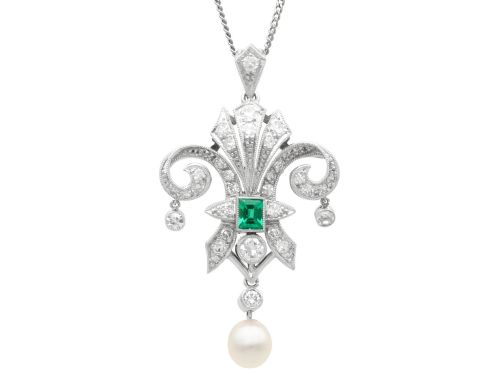
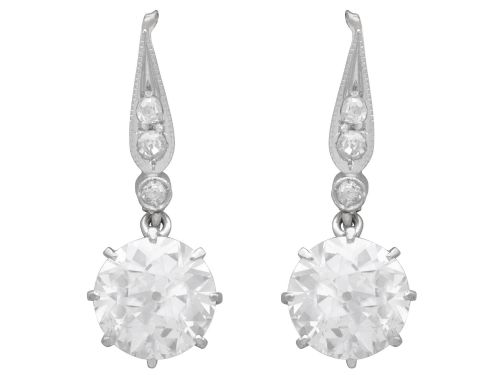
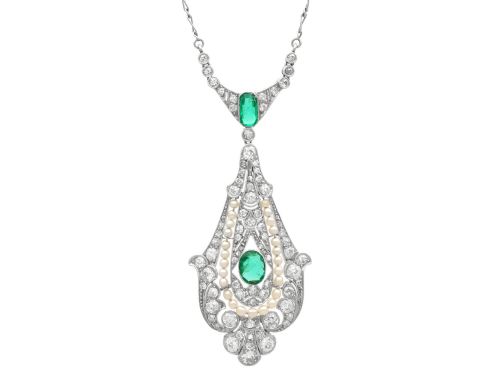
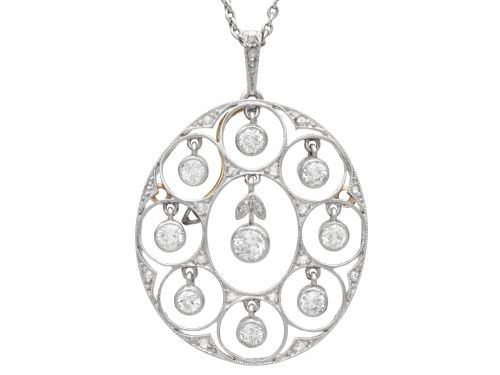
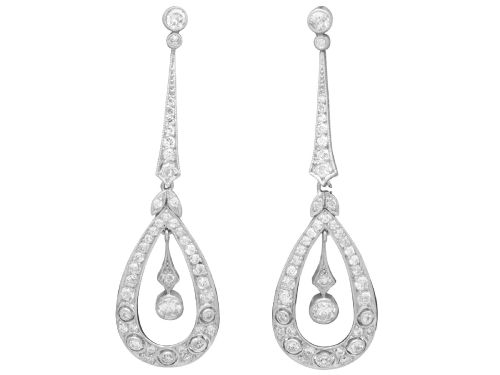
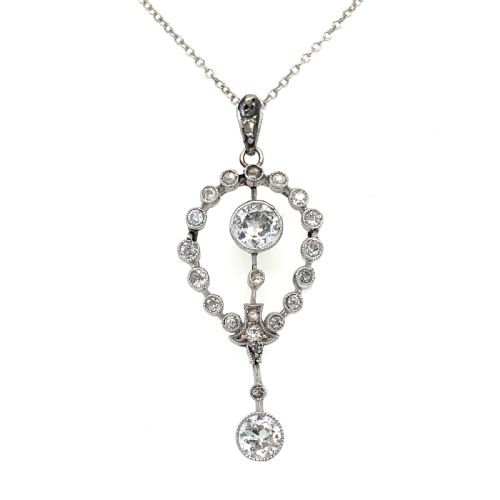
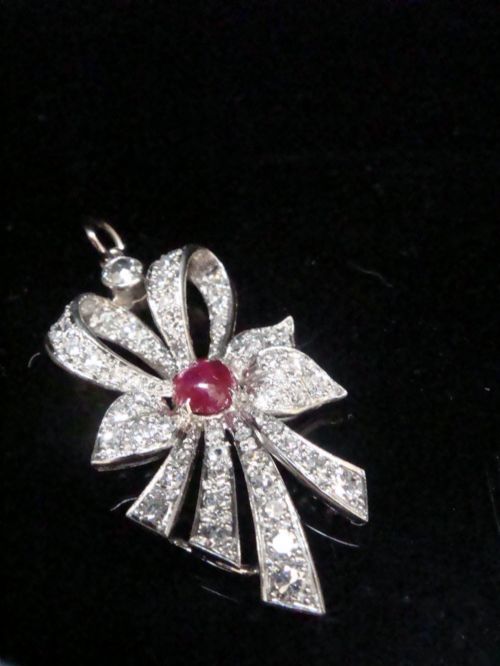
An edwardian platinum diamond pendant combines delicate lace-like metalwork with the quiet fire of old cut stones.
Edwardian Platinum Diamond Pendant
An edwardian platinum diamond pendant sits at the intersection of graceful early twentieth-century design and the advent of platinum as a premier setting material. The pieces on this page span the Edwardian era through to the 1920s, incorporating related Art Nouveau and Art Deco sensibilities alongside classic drop and lavaliere forms.
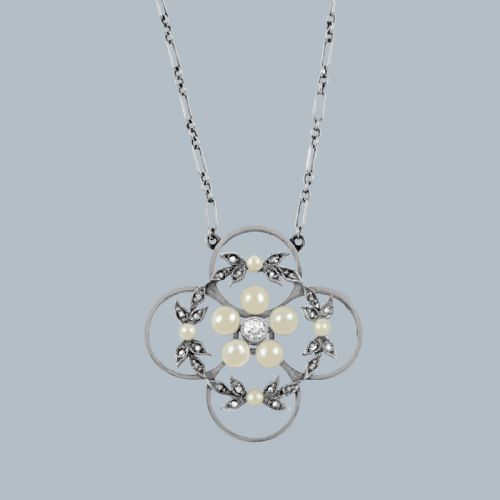
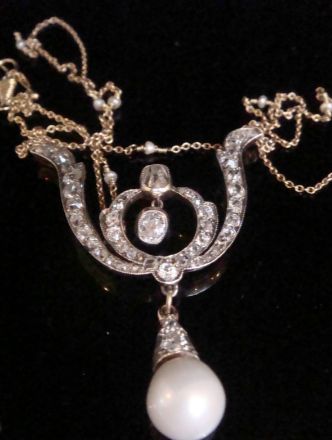
Most examples rely on a strong central diamond accented by pearls, sapphires, aquamarines, or rubies, mounted on fine gold or platinum chains. Buyers frequently encounter geometric bows, garlands, and symmetrical drop configurations that define the period's aesthetic.
Materials and construction
The introduction of platinum allowed jewellers to work with unprecedented structural strength while using minimal metal, resulting in airy, pierced openwork that frames the stones rather than dominating them. Old cut diamonds, including rose cuts and early brilliant cuts, are meticulously bezel or pave set to maximise light return under artificial illumination.
Backings often combine 15ct or 18ct yellow and white gold with a platinum face, reflecting a transitional manufacturing period where traditional goldsmithing met advanced platinum torch techniques. Fine millgraining along the edges of the metal softens the profile and adds texture to the geometric layouts.
Several items on this page retain their original fitted presentation boxes, preserving the complete antique ensemble.
Markers of distinction
Quality rests in the precision of the piercing and the symmetry of the hand-formed platinum mounts, where fluid lines distinguish superior bench work from stiffer production. The choice of supporting gems - whether natural saltwater pearls, deep Ceylon sapphires, or substantial aquamarines - alters the visual weight and historical importance of the piece.
Original fitted boxes and convertible elements, such as detachable bales or brooches that transform into pendants, elevate the desirability of a piece. The regularity and fineness of the millgrain work and the absence of clumsy metal repairs indicate how carefully the jewellery was maintained.
Eduard Foehr
The Edwardian Platinum Diamond Pendant Glossary
- Old cut diamond
- A hand-faceted diamond cut before the standardisation of the modern brilliant, typically featuring a smaller table, higher crown, and open culet that creates a softer candlelit sparkle.
- Platinum
- A dense, durable, and naturally white metal that rose to prominence during the Edwardian period because its strength enabled ultra-fine wirework and knife-edge settings.
- Lavaliere
- A pendant necklace featuring a central drop stone or suspended element that dangles freely below the main neckline.
- Millgrain
- A decorative technique involving tiny raised metal beads bordering the edge of a setting, characteristic of Edwardian fine jewellery.
- Openwork
- Pierced metal designs where portions of the background are cut away to create a lace or trellis effect.
Edwardian Platinum Diamond Pendant: Frequently Asked Questions
How do I wear a delicate pendant safely?
Pair your pendant with smooth-textured fabrics to prevent the fine platinum claws or openwork from catching. Storing the piece flat in a lined box when not in use protects the delicate chain and drops from twisting.
Inspect the jump rings and bale periodically to ensure the security of the suspension, especially if the piece converts into a brooch.
How do I distinguish Edwardian from Art Deco pieces?
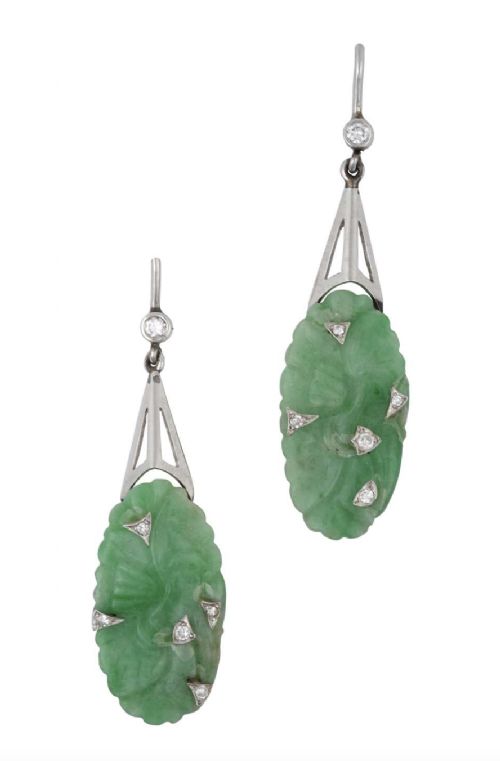
Edwardian designs lean towards organic garlands, bows, ribbons, and softer curvilinear motifs inherited from Art Nouveau. Art Deco pieces on this page introduce rigid symmetry, sharp angles, and strong geometric patterns.
Platinum and diamonds remain constant across both eras, but the architectural layout of the metalwork reveals the stylistic shift.
Are coloured stones in these pendants natural?
Many pieces feature untreated sapphires, aquamarines, rubies, and natural pearls typical of early twentieth-century high-end jewellery production. Gemstone reports or period hallmarks often accompany significant stones to confirm their origin.
Examining the stones under magnification reveals natural inclusions that separate them from modern synthetics.