


Vintage Blue Topaz Pendant
A vintage blue topaz pendant catches the light with crisp maritime colour, offering an easy way to wear mid-century or period silver and gold.
Vintage Blue Topaz Pendant
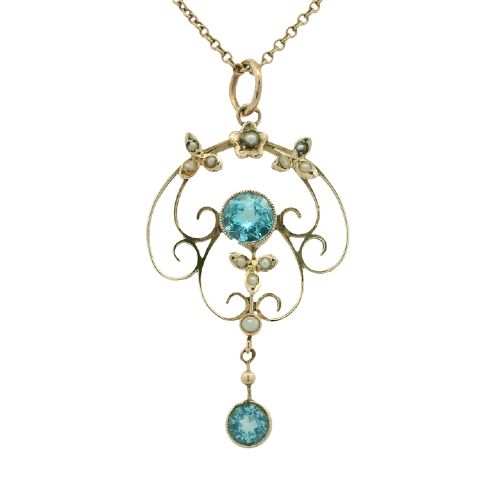
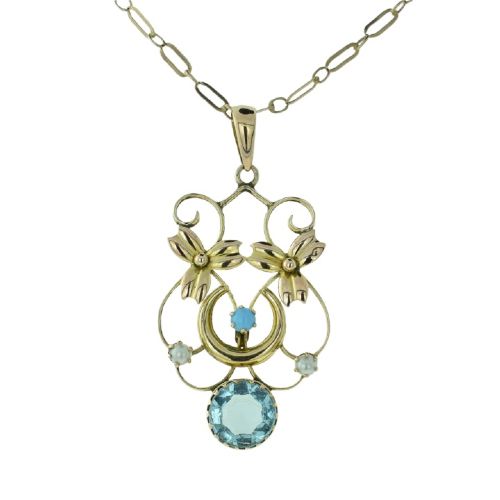
When you search for a vintage blue topaz pendant, you encounter jewels spanning the Victorian era through to the 1960s. The most common forms on this page pair the central blue stone with nine carat yellow or rose gold, often accompanied by seed pearls or diamonds.
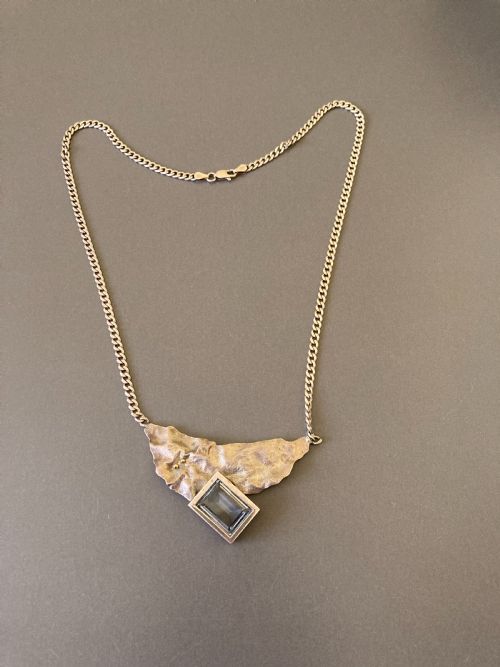
Necklaces and pendants dominate the selection, though earrings occasionally appear alongside them. The aesthetic shifts from ornate Edwardian and Victorian clusters to clean modernist lines from the mid-twentieth century.
How they were made
Makers set the stones primarily in nine carat yellow, rose, or white gold, alongside sterling silver. Metalsmiths utilised traditional claw settings and bezel mounts to secure both the main blue topaz and any accent gems.
Accompanying stones such as seed pearls, turquoise, and small diamonds add textural contrast to the smooth facets of the topaz. These construction methods reflect the prevailing jewellery workshops of each respective decade, from the early twentieth century onwards.
Certain pendants arrive accompanied by their original chains, preserving the exact length a previous owner selected decades ago.
What varies in quality
The distinction between ordinary and superior examples lies in the depth of the gemstone's hue and the precision of the metalwork. Stones with vibrant, even saturation command greater attention than paler or unevenly coloured crystals.
Fabrication details also separate the pieces, particularly the delicacy of the mounts and the integration of secondary gems like pearls or diamonds. Heavier gold gauges and secure, balanced suspension from the chain indicate superior craftsmanship.
C'est Laudier
The Vintage Blue Topaz Pendant Glossary
- Topaz
- A silicate mineral of aluminium and fluorine that occurs in various colours, with the blue variety treated or selected for jewellery. It provides a durable centre stone for daily wear.
- Seed pearl
- A very small natural or cultured pearl, often half-drilled and glued or pegged onto a backing. They appear frequently in Victorian and Edwardian clusters.
- Bezel setting
- A method of holding a gemstone in place by a narrow metal strip that wraps around the stone's girdle. This technique offers a smooth outline distinct from traditional prongs.
- Rose gold
- An alloy of gold and copper known for its warm pinkish tint. It gained popularity during the Victorian era and the 1930s.
Vintage Blue Topaz Pendant: Frequently Asked Questions
How do I date my pendant?
Dating relies on stylistic clues, metal types, and hallmarks stamped onto the gold or silver. Victorian and Edwardian pieces often feature intricate metalwork and seed pearls, while 1950s and 1960s items lean toward cleaner modernist designs.
Examining the shape of the stone cut and the construction of the bail also helps narrow down the decade of manufacture.
Can I wear this every day?
Topaz rates eight on the Mohs hardness scale, making it durable enough for regular daily wear. Care should still be taken to avoid sharp knocks against hard surfaces.
Removing the pendant during swimming or heavy manual tasks protects the surrounding gold or silver settings from unnecessary strain.
Are these stones natural colour?
Many blue topaz gemstones undergo treatment to achieve their characteristic bright hue. This practice is standard across the jewellery industry for this mineral.
The natural untreated forms are typically colourless or pale yellow, meaning irradiation and heating produce the vivid blues seen in mid-century pieces.
How should I clean my gold pendant?
Cleaning requires only warm soapy water and a soft brush to remove everyday oils and dust from behind the stone. Harsh chemical dips risk damaging softer accent materials like pearls.
Dry the metal and gemstone thoroughly with a soft cloth before storing the necklace in a dedicated box.