
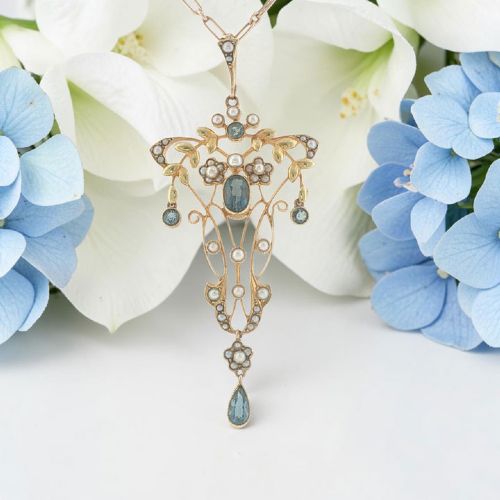
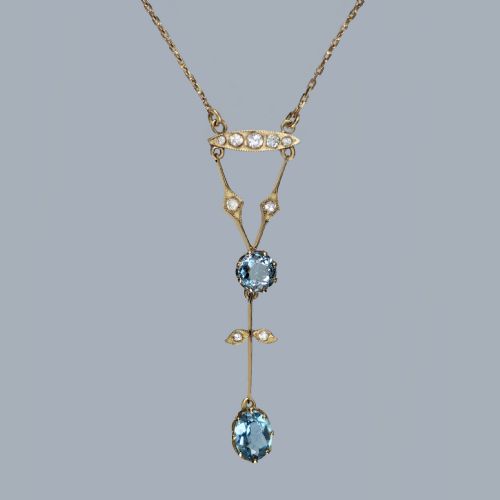


Yellow Gold Aquamarine Pendant
A yellow gold aquamarine pendant catches the light with cool, watery blues set in warm precious metal, bringing timeless grace to the neckline.
Yellow Gold Aquamarine Pendant
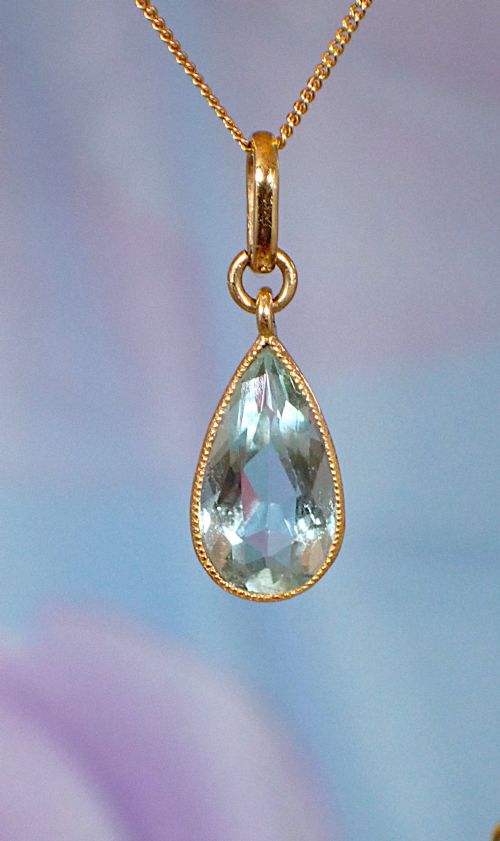
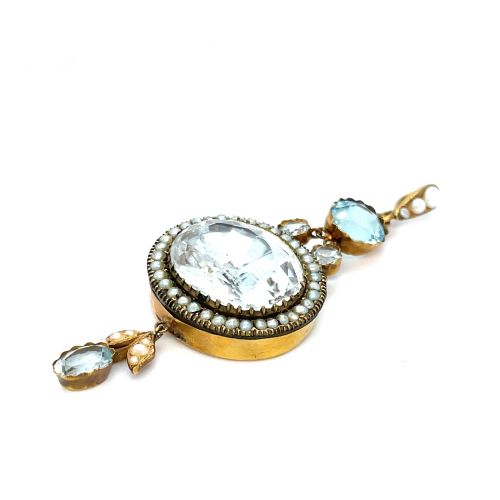
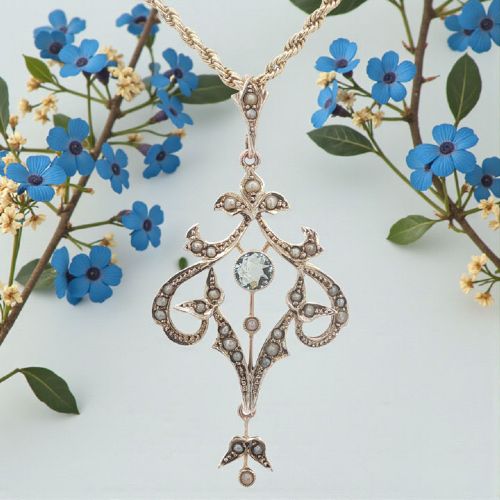
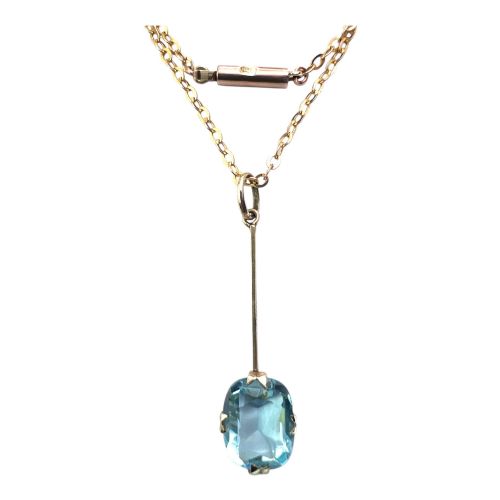
A yellow gold aquamarine pendant is a necklace ornament centred on a pale blue beryl crystal mounted in gold, appearing frequently across Edwardian and Victorian designs. These pieces span delicate drop necklaces and lavaliers, often incorporating secondary stones like seed pearls and diamonds.
The Edwardian era dominates the selection, bringing airy openwork mounts and pear-shaped aquamarines suspended from fine chains. Victorian examples introduce foil-backed stones and richer gold purities, while mid-century vintages scale up to substantial carat weights.
Most items combine 9ct or 15ct yellow gold with pastel blue aquamarines, presenting either as standalone pendants or integrated necklace drops. Buyers encounter everything from simple solitaire beryls to elaborate multi-stone compositions featuring garnets or tourmalines.
Materials and construction methods
Goldsmiths constructed these pendants using rolled, cast, or hand-beaten yellow gold, frequently employing 9ct and 15ct alloys to hold the central gems securely. Seed pearls and diamonds appear as complementary accents, threaded onto fine wire or grain-set into the surrounding gold framework.
Stone setting relied on traditional collet and claw mounts, allowing maximum light to pass through the transparent aquamarines. Open-backed settings predominated in later periods, though occasional Victorian pieces utilised foil-backing to enhance the colour depth of the beryl.
The selection includes delicate seed pearl drop necklaces alongside substantial mid-century aquamarines exceeding forty carats.
Judging quality in vintage and antique pendants
Quality rests upon the saturation and clarity of the aquamarine, alongside the delicacy and integrity of the gold work. Stones with a strong, even blue tone and minimal inclusions command greater appreciation than paler, heavily included crystals.
The fineness of the metalwork distinguishes superior pieces, particularly in Edwardian and Art Nouveau designs where intricate wirework and balanced proportions matter. Original matching chains and intact seed pearls further elevate the standing of a pendant.
The Yellow Gold Aquamarine Pendant Glossary
- Aquamarine
- A pale blue to greenish-blue variety of beryl, valued for its transparent crystal clarity and watery hue.
- Seed pearl
- A very small, naturally formed saltwater pearl, frequently used in delicate clusters around central gems in Edwardian jewellery.
- Lavalier
- A pendant necklace featuring a central stone with one or more smaller drops suspended loosely below it.
- Foil-backed
- A technique where a thin sheet of reflective metallic foil is placed beneath a gemstone to enhance its brilliance and colour.
Yellow Gold Aquamarine Pendant: Frequently Asked Questions
How do I date a yellow gold aquamarine pendant?
Dating relies on stylistic clues, such as the garland motifs and airy filigree typical of the Edwardian era, contrasted against the heavier geometric lines of Art Deco pieces. Maker marks, gold purity stamps, and accompanying chains also provide reliable chronological markers.
Examination of the stone cuts yields further evidence, as early twentieth-century pieces often utilise cushion or pear-cut aquamarines with distinct facet arrangements compared to later mid-century creations.
Are seed pearls durable for daily wear?
Seed pearls are delicate organic gems that require gentle treatment, as cosmetics, perfumes, and water exposure can damage their nacre over time. Historic settings often hold them on thin wire, meaning frequent impact should be avoided.
Owners preserve these pieces by putting them on last when dressing and storing them away from harder metal items that might scratch the pearl surface or bend the mounting.
What gold purity should I expect?
Pendants from this category primarily utilise 9ct and 15ct yellow gold, reflecting British standards of the Victorian and Edwardian periods, alongside occasional 14ct or 18ct examples. The alloy composition determines the warmth of the metal tone surrounding the blue beryl.
Lower carat golds offer greater durability for delicate wirework, while higher carats present a richer, deeper yellow colour that complements pastel gemstones.
Can I replace the chain on an antique pendant?
Many antique and vintage pendants survive without their original neckchains, making period-appropriate replacement chains a common and acceptable solution. Matching the gold colour and purity ensures the overall aesthetic remains harmonious.
Collectors prefer replacement chains that mirror the fineness and style of the pendant mount, avoiding overly modern links that clash with antique craftsmanship.