




Antique Light Blue Necklace
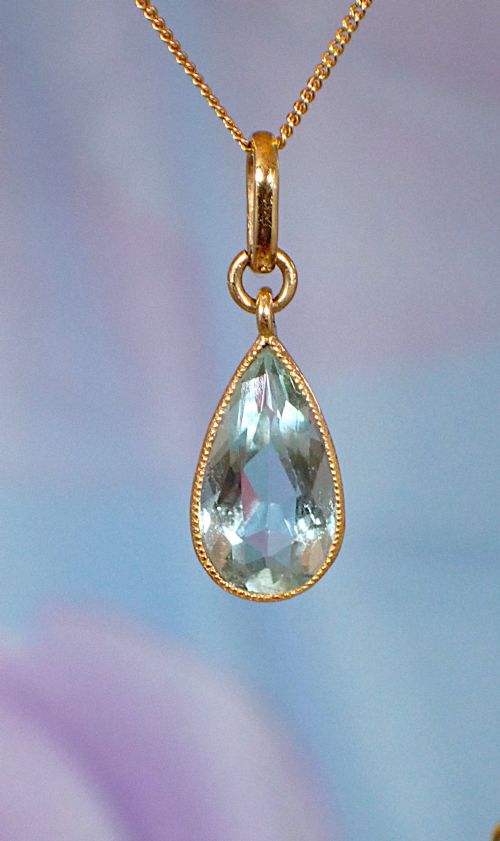
An antique light blue necklace brings soft, cool colour to the skin through gems like aquamarine, turquoise and topaz set in yellow gold, rose gold and platinum.
Antique Light Blue Necklace
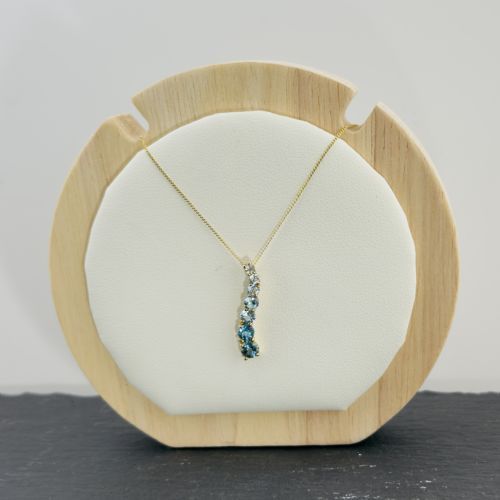
An antique light blue necklace spans several distinct design eras, most notably the Edwardian period, Victorian era, and Art Deco years. Pendants and drop necklaces dominate the current selection, suspended on fine matching chains.
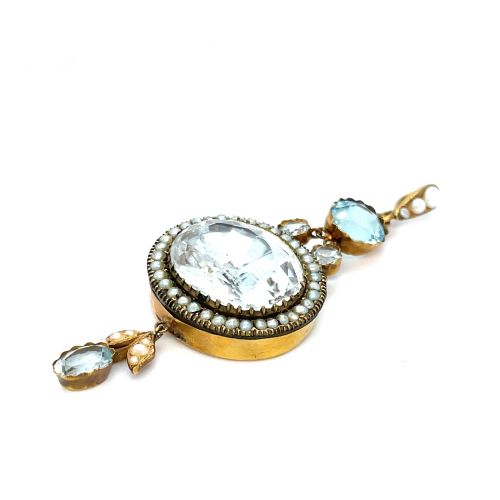
Makers of these pieces utilised pale blue stones such as aquamarine, blue topaz, and turquoise, often pairing them with seed pearls, rock crystal, or diamonds to catch the light.
Materials and construction
Goldsmiths worked primarily in nine-carat yellow gold, fifteen-carat gold, eighteen-carat gold, and platinum. Stones were typically collet-set or claw-set, with foil backs appearing in Victorian examples to enhance the depth of the pale blue stones.
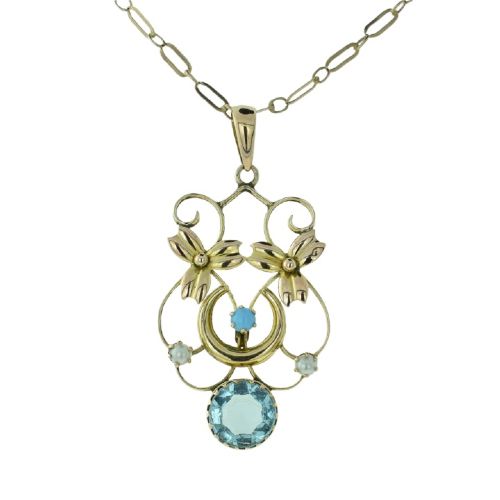
Intricate openwork metal frames define Edwardian and Art Nouveau designs, incorporating flowing curves and delicate millegrain edges around seed pearls and central blue gems.
Precious metals represented include platinum alongside nine, fifteen, and eighteen-carat yellow and rose gold.
Judging quality and design
Quality rests upon the clarity and cut of the central aquamarine or blue topaz, alongside the crispness of the surrounding gold or platinum wirework. Finer examples retain intact seed pearls and original chains that complement the pendant geometry.
The sophistication of the period metalwork sets finer pieces apart, distinguishing hand-finished Edwardian scrolls from simpler later mounts.
The Antique Light Blue Necklace Glossary
- Aquamarine
- A pale blue variety of beryl that forms the primary gemstone in many early twentieth-century pendants. Its watery hue defines the visual appeal of these jewels.
- Seed pearl
- A very small natural or cultured pearl used extensively in Edwardian and Victorian jewellery. They are often strung or set closely to frame larger stones.
- Millegrain
- A decorative technique featuring a row of tiny metal beads along the edges of a setting. It softens the transition from metal to stone.
- Collet setting
- A band of metal that encircles the girdle of a gemstone to hold it securely in place. This method was widely used before modern prong settings became standard.
Antique Light Blue Necklace: Frequently Asked Questions
How do I date an antique light blue necklace?
Dating relies on stylistic clues, metal purity marks, and gemstone cuts. Edwardian pieces often feature platinum-topped gold with delicate millegrain, while Art Deco items display geometric symmetry.
Victorian necklaces tend to incorporate heavier gold work and foil-backed stones. Examining the clasp and chain construction also helps determine the era.
What metals were used in these necklaces?
Jewellers used various gold purities, including nine-carat rose and yellow gold, fifteen-carat gold, and eighteen-carat gold. Platinum emerged as a favoured mounting metal during the Edwardian period.
These metals were chosen for their strength and colour contrast against pale blue aquamarines and white pearls.
Are the chains original to the pendants?
Many pendant necklaces survive with contemporary chains from the same era, though some are matched pairs assembled later. Examining the wear on the jump rings and the colour match of the gold helps indicate originality.
Finding a matched period chain completes the piece historically.
How should I care for an antique aquamarine necklace?
Clean these necklaces gently using warm soapy water and a soft brush, avoiding harsh chemical dips that can damage pearls or foil-backed stones. Store them flat in a lined box to prevent the chain from tangling.
Routine checks by a jeweller will ensure the claw settings remain secure.