






Edwardian Pearl Choker
An edwardian pearl choker brings together lustrous pearls and brilliant diamond-set clasps to sit high on the neck with unmistakable period elegance.
Edwardian Pearl Choker
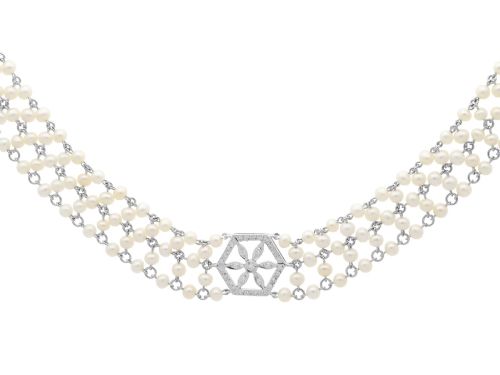
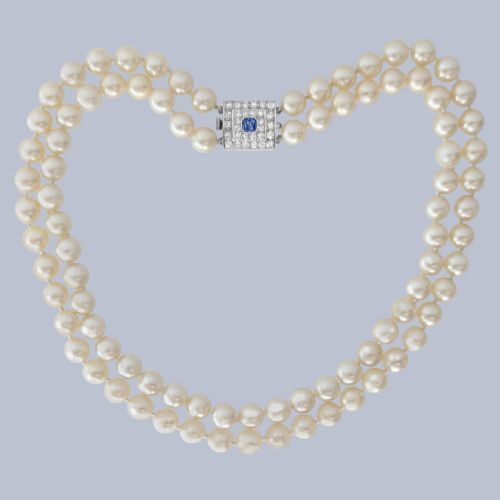
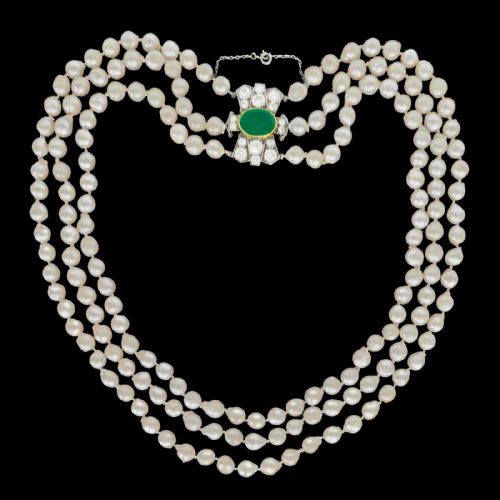
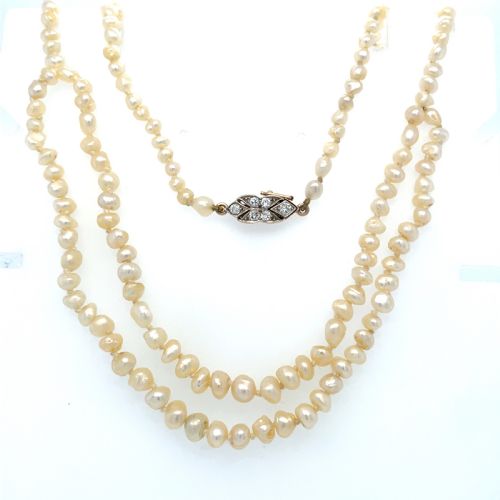
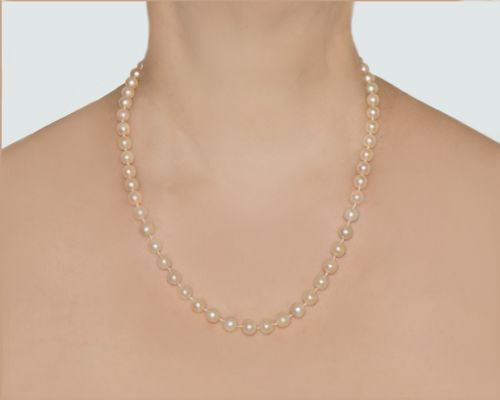
An edwardian pearl choker is a short necklace designed to fit closely around the throat, emerging primarily from the Edwardian period alongside pieces spanning the Georgian, Victorian, and 1920s eras. These necklaces appear as single, double, or triple strand arrangements featuring natural saltwater pearls, seed pearls, and cultured pearls.
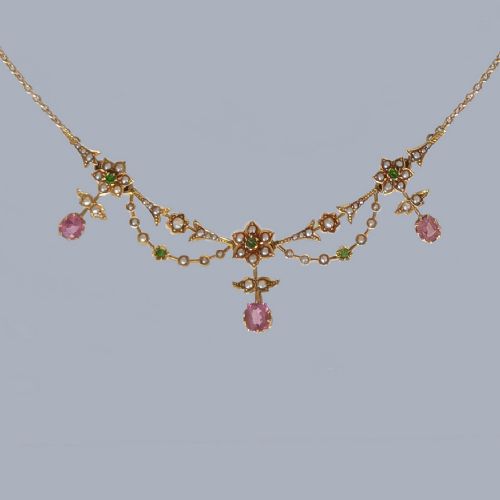
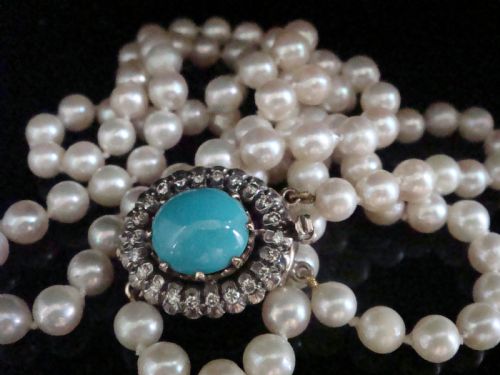
The defining characteristic of an edwardian pearl choker is its elaborate clasp, which frequently incorporates diamonds, sapphires, rubies, turquoise, or jadeite mounted in platinum, gold, or silver. Alongside traditional strands, makers produced fringe necklaces and pendant drops incorporating amethyst, garnet, and enamel.
Buyers seeking this phrase encounter multi-strand chokers secured by intricate precious metal clasps alongside delicate fringe necklaces. The materials range from foundational seed pearls to certified natural saltwater specimens paired with old-cut diamonds.
What separates the finest examples
Quality in an edwardian pearl choker rests upon the origin and uniformity of the pearls themselves, where natural saltwater specimens command the highest regard compared to cultured or seed pearl alternatives. The lustre, matching, and skin smoothness across a multi-strand layout dictate the overall refinement of the piece.
Edwardian Pearl Choker Retail Price Guide 2026
Typical asking prices for edwardian pearl choker among the pieces listed under this phrase on Sellingantiques today, from the lower quarter to the upper quarter. They describe what is for sale here now, not the wider market.
Listings for this phrase feature periods spanning the Georgian era, Victorian times, the Edwardian period, and the 1920s.
Mikimoto
The Edwardian Pearl Choker Glossary
- Seed pearl
- A very small, naturally formed pearl, typically under two grains, often used in multi-strand layouts or delicate fringe necklaces. These tiny gems create a textured, shimmering surface unlike uniform cultured pearls.
- Old-cut diamond
- A diamond cut by hand before the advent of modern machinery, featuring a small table, high crown, and open culet. These stones catch candlelight and low illumination with a softer, broader fire.
- Saltwater pearl
- A pearl formed within an oyster inhabiting marine waters rather than freshwater environments. Natural saltwater pearls possess a distinctive orient and density valued by collectors.
- Platinum
- A dense, ductile precious metal introduced into fine jewellery making for its strength and bright white lustre. It permits ultra-fine wirework and secure prong settings for diamonds.
- Fringe necklace
- A necklace style featuring drops or pendants suspended at intervals along the main chain. This configuration allows gemstones and seed pearls to articulate with movement.
Edwardian Pearl Choker: Frequently Asked Questions
How do I wear an edwardian pearl choker?
An edwardian pearl choker is designed to sit high on the throat, making it well-suited for evening wear and formal necklines that leave the collarbone and neck exposed. Pairing it with period-appropriate attire enhances its historical proportion.
Because these chokers often feature intricate diamond clasps, many wearers position the clasp at the front as a decorative pendant element rather than hiding it at the nape of the neck.
What is the difference between natural and cultured pearls?
Natural pearls formed organically without human intervention within saltwater oysters, whereas cultured pearls involve human assistance to stimulate the pearl-making process inside the mollusc. Natural saltwater examples from the Edwardian era are scarcer and highly sought after by collectors.
Gemological laboratories examine pearl composition using specialised equipment to certify whether pearls grew naturally or through cultivation.
How can I tell an Edwardian choker from a 1920s piece?
Edwardian chokers, dating roughly from 1901 to 1910, often exhibit organic floral motifs, garlands, and lace-like platinum settings that reflect a softer, romantic aesthetic. Seed pearls and delicate fringe drops frequently characterise this decade.
In contrast, 1920s pieces often embrace Art Deco geometric designs, stronger lines, and bolder jadeite or sapphire accents alongside multi-strand configurations.