

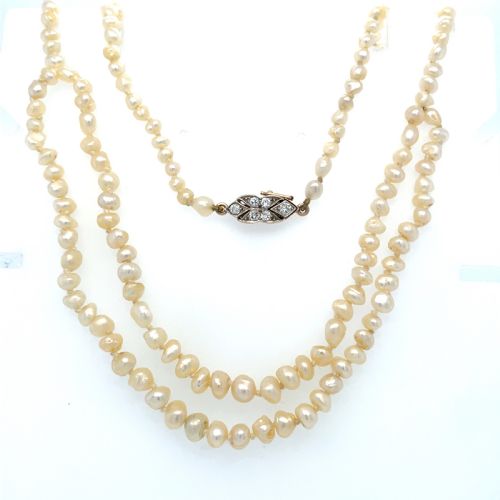


Real Pearl Choker
These real pearl choker options bring together classic necklaces featuring cultured and natural saltwater pearls alongside precious metals.
Real Pearl Choker
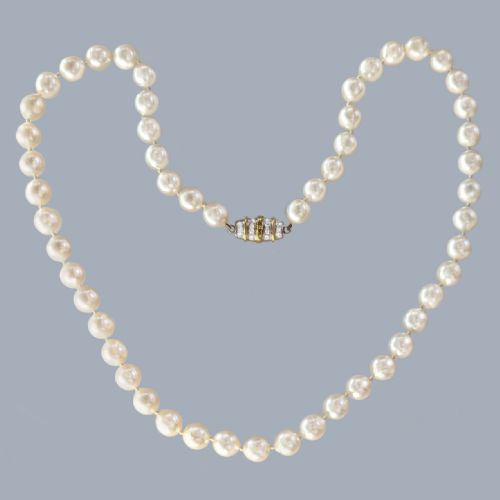
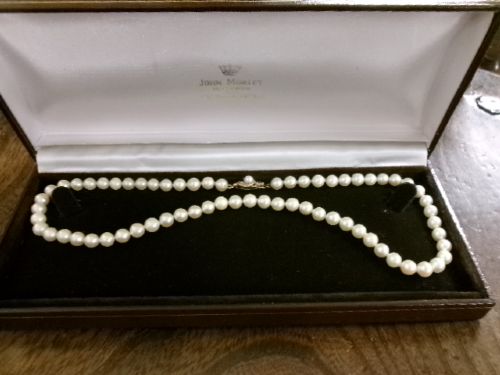
A real pearl choker sits close to the throat, presenting strands selected from both natural saltwater and cultured sources. These pieces range from Georgian and Edwardian examples to mid-century designs featuring secure clasps.
Most items encountered on this page date from the 1950s and 1960s, offering vintage cultured pearls alongside earlier Edwardian and Georgian iterations. Forms include double strands, ropes, and graduated lengths paired with various precious clasps.
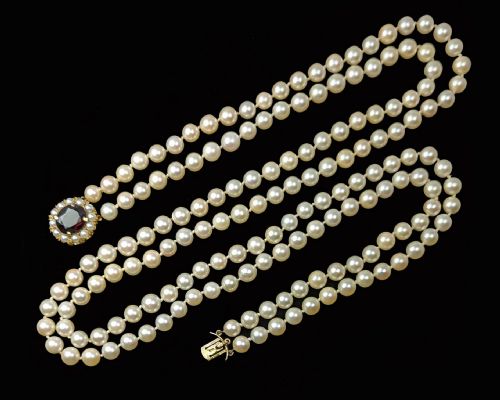
Makers and designers incorporated garnets, rose quartz, paste stones, and diamonds into these necklaces, often mounted in platinum or 9ct gold. The resulting variety spans simple classic strands to elaborate multi-gem ornaments.
Materials and Construction
Makers strung natural saltwater and cultured pearls onto durable threads, frequently finishing the compositions with custom clasps. These fastenings utilise 9ct gold, 18ct white gold, platinum, or silver settings.
Gems such as diamonds and garnets appear alongside pearls in secure bezel or claw settings within the clasps. Some necklaces incorporate contrasting materials like rose quartz beads and paste stones to alter the visual rhythm.
Real Pearl Choker Retail Price Guide 2026
Typical asking prices for real pearl choker among the pieces listed under this phrase on Sellingantiques today, from the lower quarter to the upper quarter. They describe what is for sale here now, not the wider market.
Some strands come with an Anchorcert report, proving even pearls appreciate a formal qualification.
Markers of Distinction
Graduation and uniformity dictate the visual harmony of a strand, where matching pearl size and lustre elevate the piece. The choice between cultured pearls and certified natural saltwater origins shifts the underlying substance.
Clasp complexity and precious metal selection separate standard mountings from finer work. Incorporating diamonds, platinum, or high-carat gold into the fastening elevates the overall composition beyond simple metal barrels.
The Real Pearl Choker Glossary
- Cultured Pearl
- Pearls formed through human intervention by inserting an irritant into an oyster or mollusc. They form the majority of mid-century strands found in these listings.
- Natural Saltwater Pearl
- Pearls formed entirely by wild molluscs in marine environments without human assistance. These specimens appear in Edwardian and Georgian examples.
- Graduated
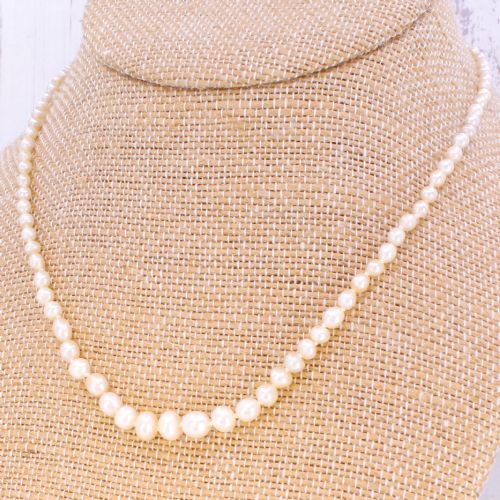
- Describing a strand where pearls increase in size toward the centre. This traditional arrangement draws the eye downward.
- Clasp
- The mechanical fastening securing the ends of the necklace together. They range from simple 9ct gold barrel designs to diamond-set platinum pieces.
Real Pearl Choker: Frequently Asked Questions
How do I date these necklaces?
Dating relies upon the materials, clasp construction, and accompanying certificates where applicable. Edwardian and Georgian examples display older mounting techniques compared to mid-century pieces.
Clasps set in platinum with old-cut diamonds point towards earlier Edwardian origins, while simpler 9ct gold barrel fixings often align with the nineteen-fifties and sixties.
What is the difference between cultured and natural pearls?
Cultured pearls grow after human seeding within an oyster farm, whereas natural pearls develop entirely by chance in the wild. Natural saltwater specimens command specific attention in older pieces.
Examining the internal structure under magnification reveals the core differences to specialists. Both varieties appear across different periods in these listings.
How should I care for pearl necklaces?
Pearls require gentle cleaning with a soft cloth and protection from harsh chemicals, perfumes, and cosmetics. Storing them flat prevents unnecessary stretching of the internal thread.
Regular restringing maintains the integrity of the strand, particularly for older necklaces that see frequent wear. Keeping them separate from harder gemstones prevents surface scratching.
What clasp metals are used?
Clasps utilise yellow gold, white gold, platinum, and silver depending on the period of manufacture. Many mid-century pieces employ nine-carat gold alongside platinum or silver settings for stones.
The metal choice frequently matches the accompanying gemstones, such as diamonds or garnets, integrated into the fastening mechanism.