



Graduated Pearl Choker
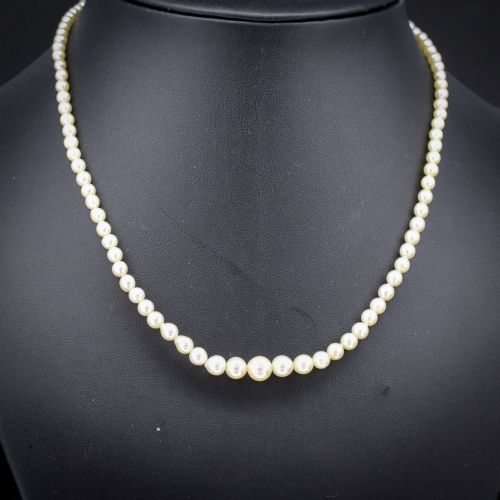
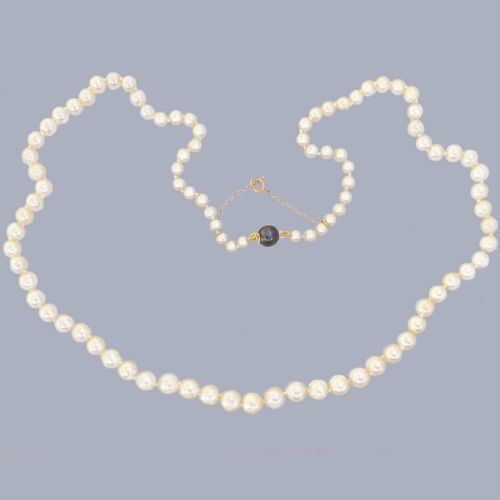
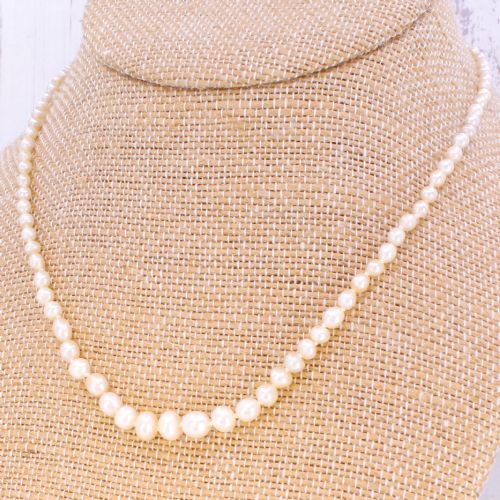
A graduated pearl choker sits close to the collar, drawing the eye upwards through carefully proportioned spheres.
Graduated Pearl Choker
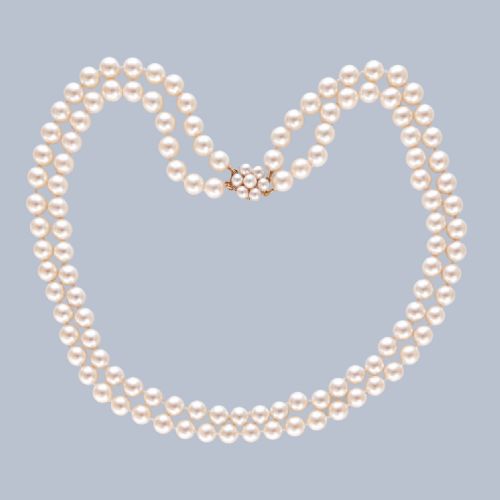
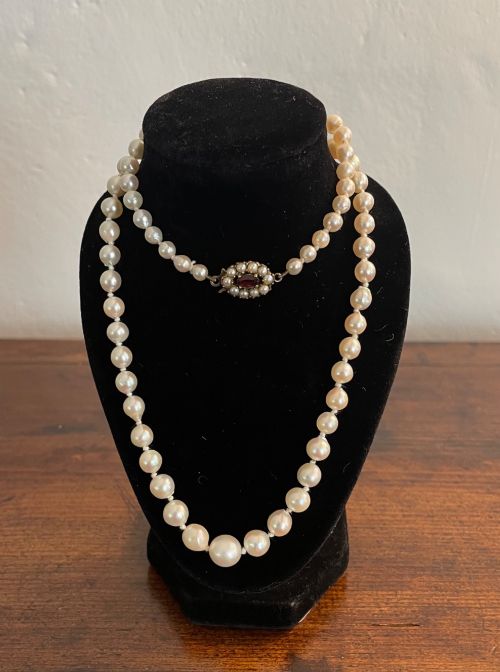
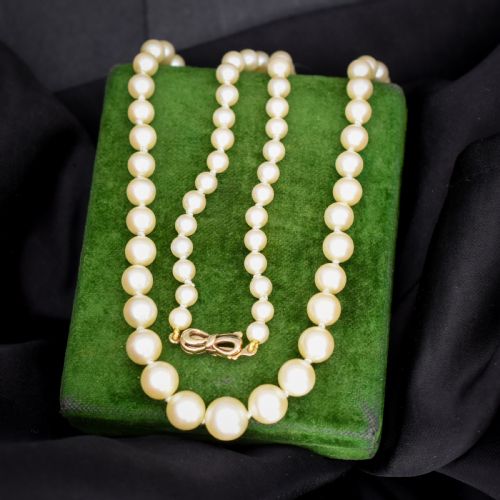
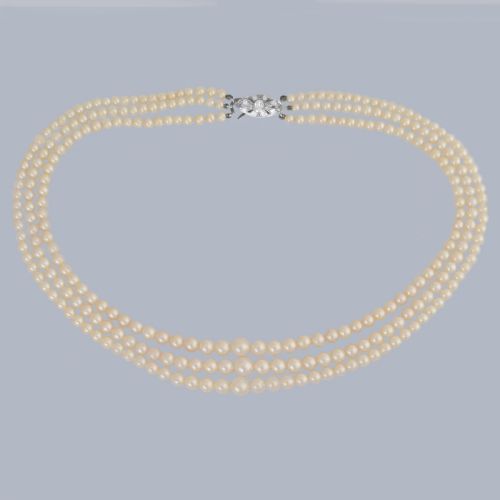
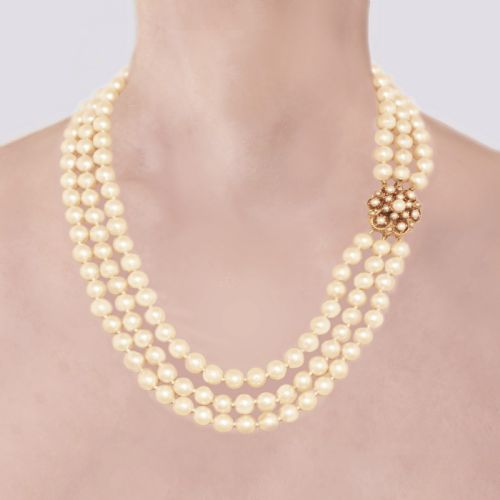
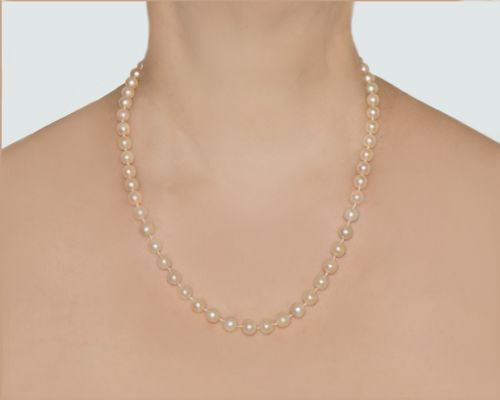
A graduated pearl choker arranges smaller pearls near the clasp and larger ones at the centre, creating a balanced curve around the neck. The selection spans single strands and multi-strand arrangements, often secured by decorative clasps.
Examples on this page draw from the Georgian, Edwardian, Art Deco, and Mid-Century periods, reflecting shifting tastes in length and mounting. These pieces range from simple 9ct gold fastenings to intricate diamond and sapphire clusters.
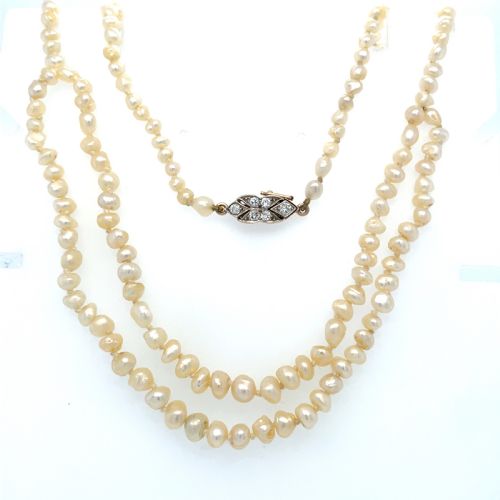
Both natural saltwater pearls and cultured pearls appear across the inventory, strung carefully on silk thread. Each piece relies on the natural lustre of the material to define its presence.
Materials and Construction
Makers threaded pearls onto silk thread, frequently knotting the cord between individual spheres to protect the surface from friction and to maintain the line if the silk snapped.
Clasps utilise 9ct gold, 18ct white gold, or silver, often set with diamonds, sapphires, rubies, or emeralds. These fastenings frequently double as decorative elements designed to be worn visibly at the side or front of the neck.
Graduated Pearl Choker Retail Price Guide 2026
Typical asking prices for graduated pearl choker among the pieces listed under this phrase on Sellingantiques today, from the lower quarter to the upper quarter. They describe what is for sale here now, not the wider market.
Some mid-century clasps hide tiny secret hinges so the wearer could swap out interchangeable gemstone centres depending on the evening gown.
Distinctions in Quality
The uniformity of the nacre, the subtlety of the graduation, and the matching of overtone and lustre determine the standing of a graduated pearl choker. Saltwater pearls generally exhibit a deeper, warmer orient compared to freshwater varieties.
Clasp craftsmanship and gemstone selection elevate certain strands above standard daily wear. The integration of old-cut diamonds or precious coloured stones into the metalwork indicates higher workshop ambition.
Mikimoto
The Graduated Pearl Choker Glossary
- Graduation
- The deliberate transition of pearl sizes along a strand, placing smaller pearls near the clasp and the largest at the front centre.
- Cultured pearl
- A pearl formed after human intervention introduces an irritant into an oyster or mollusc, allowing layers of nacre to build up over time.
- Natural saltwater pearl
- A pearl formed entirely without human intervention within marine molluscs, highly prized for its scarcity and organic formation.
- Nacre
- The crystalline substance secreted by molluscs that builds up in layers to form the pearl body, responsible for its characteristic lustre.
- Silk thread
- The traditional cord used for stringing fine pearls, chosen for its flexibility and softness against the drill holes.
Graduated Pearl Choker: Frequently Asked Questions
How do I care for a pearl choker?
Pearls are organic and vulnerable to acids, cosmetics, and perfumes, so they should be put on last when dressing and wiped gently with a soft cloth after wearing.
Store them flat in a lined box away from hard jewellery to prevent scratching, and have the strand checked periodically for stretched or worn silk thread.
Were these always worn short?
Choker lengths typically measure between sixteen and eighteen inches, designed to sit directly against the collarbone.
Historical fashions dictated different necklines, meaning Edwardian and Art Deco lengths suited high collars and evening gowns alike.
How can I tell natural from cultured pearls?
Natural saltwater pearls show irregular growth patterns under magnification and possess a deep, layered orient unique to wild formation.
Cultured pearls often display more uniform dimensions and a bead nucleus visible through specialised gemological testing.
What is the significance of the clasp position?
Many vintage clasps feature diamonds or coloured gemstones, transforming a functional fastening into a decorative focal point.
Wearers often turned the clasp to the front during the Art Deco and Mid-Century periods to display the precious metalwork alongside the pearls.