



Edwardian Parlour Seat
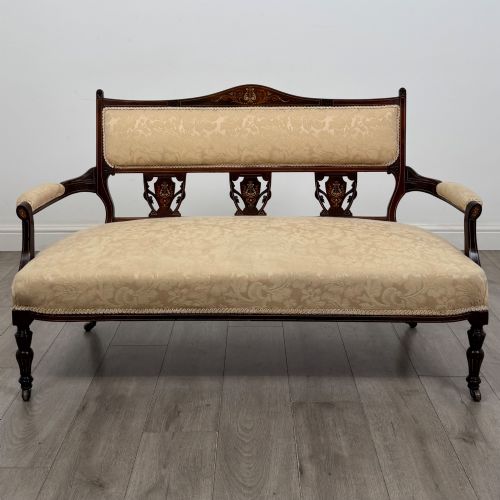
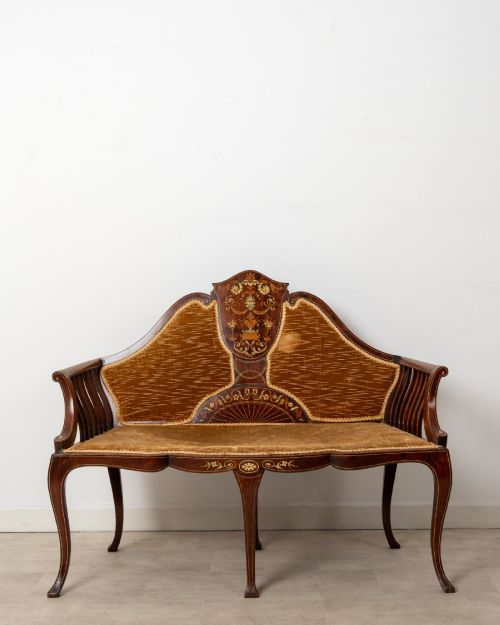
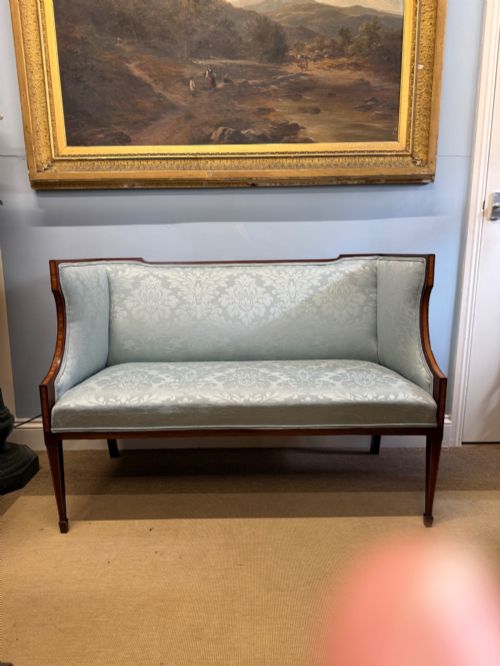
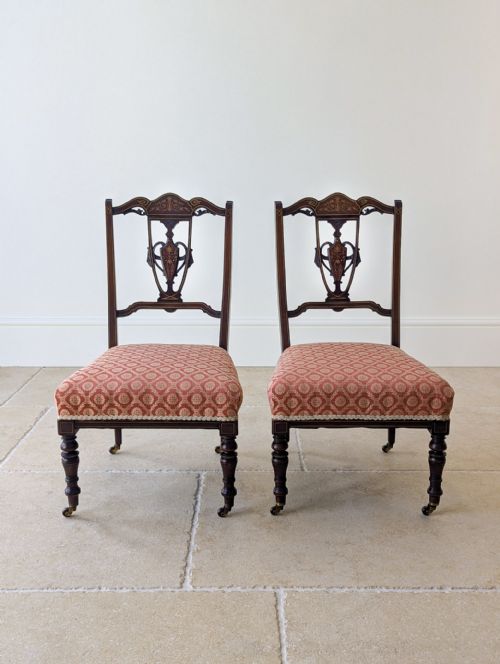
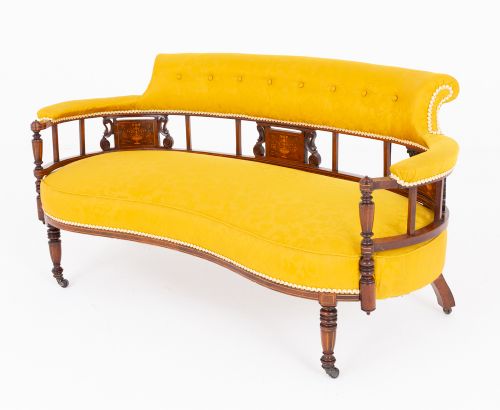
When you want an Edwardian parlour seat, you look for mahogany and satinwood framed settees or salon chairs.
Edwardian Parlour Seat
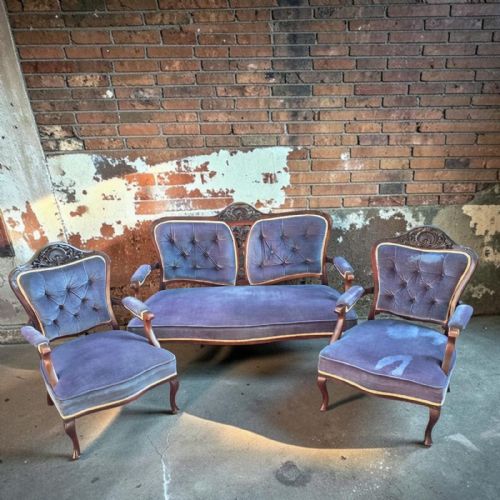
An edwardian parlour seat encompasses a range of seating built for formal reception rooms, running from single salon chairs to two-seater settees and large multi-piece salon suites. The majority of pieces met on this page date from the Edwardian period and the late Victorian era, spanning the late nineteenth century into the opening decades of the twentieth century. Forms include corner chairs, armchair pairs, and upholstered sofas designed to furnish principal entertaining spaces.
Makers of the period worked within distinct design currents, producing Edwardian Sheraton Revival satinwood inlaid pieces alongside Arts and Crafts oak furniture and Edwardian Art Nouveau seating. You find everything from compact musician chairs and nursing chairs to wide settees intended for dual seating. Construction balances decorative appeal with domestic utility, suiting both period drawing rooms and contemporary reception spaces.
How They Were Made
Cabinetmakers constructed the frames primarily from dense hardwoods, selecting mahogany, rosewood, walnut, and oak to provide structural stability for carved and turned components. Many examples incorporate contrasting timber details, applying satinwood inlay, bone elements, or delicate marquetry directly into the main frame surfaces. Joinery techniques relied on traditional mortise and tenon joints to secure uprights, arms, and legs under daily weight loads.
Upholstery completed the framework, utilising sprung bases, webbed supports, and traditional stuffing materials covered in fabric, velvet, or patterned textiles. Brass castors occasionally appear on larger settees to ease movement across heavy carpets. Carving, turning, and applied wood inlays provided the principal surface ornamentation without compromising the core wooden structure.
Musician and nursing chairs designed with unusually low seats let Victorian performers manage heavy skirts without tipping over.
What Varies in Quality
The standard of a parlour seat rests upon the crispness of its woodwork and the integrity of its decorative details. Superior examples display sharply defined carving, precise marquetry, and clean satinwood inlay that remains flush with the surrounding mahogany or rosewood ground. Lesser pieces rely on painted imitation details or sluggish, rounded timber carving that lacks definition.
Proportion and structural harmony separate ordinary seating from exceptional parlour furniture. Fine versions maintain balanced frames where every leg, arm, and back rail relates correctly to the whole composition. Material selection also dictates rank, with figured rosewood and meticulously matched mahogany veneers marking out the finest commissions.
The Edwardian Parlour Seat Glossary
- Edwardian
- Pertaining to the reign of King Edward VII, spanning from 1901 to 1910, though the broader Edwardian style often encompasses furniture made from the late 1890s to the First World War. This aesthetic favours lighter woods and refined classical revivals.
- Satinwood
- A durable, lustrous timber imported from tropical regions, valued for its yellow-gold colour and natural sheen. Cabinetmakers utilised it extensively for veneers and stringing lines on mahogany furniture.
- Marquetry
- The art of forming decorative patterns on wooden furniture using thin veneers of different coloured woods, shells, or ivory. Craftsmen arranged these elements to create floral or geometric motifs.
- Sheraton Revival
- A late nineteenth and early twentieth century design movement that reinterpreted the elegant, neoclassical furniture styles associated with eighteenth-century designer Thomas Sheraton. It relies on tapered legs, satinwood, and subtle inlay work.
- Salon Suite
- A matched set of reception room furniture comprising a settee and multiple matching armchairs or side chairs. These suites provided uniform seating for formal hosting.
Edwardian Parlour Seat: Frequently Asked Questions
What is an edwardian parlour seat?
An edwardian parlour seat is a piece of wooden reception room furniture, such as a settee, sofa, or salon chair, built around the start of the twentieth century.
These pieces served as formal seating in domestic drawing rooms and parlours, combining decorative woodwork with upholstered comfort.
How do I spot sheraton revival style?
Sheraton revival pieces feature light mahogany or satinwood timbers, tapering legs, and delicate inlaid stringing or classical motifs.
This style looks back to eighteenth-century elegance, favouring slender proportions and refined decorative restraint over heavy carving.
Were these seats used in bedrooms?
Certain specialised forms, such as end-of-bed sofas and twin bedroom settees, were indeed intended for private chambers rather than public reception rooms.
Such pieces offered convenient seating for dressing areas, matching the refined woodwork found in contemporary drawing room furniture.
What is the difference between a settee and a sofa?
In historical furniture terms, settees generally feature exposed wooden frames with lighter upholstery, while sofas often incorporate more extensive padding.
Both forms provided multi-person seating in period parlours, though settees frequently showcased more intricate inlaid woodwork.