




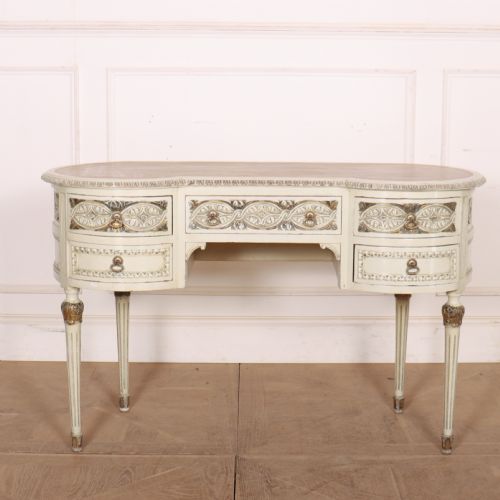


Edwardian Painted Vanity
Edwardian painted vanity pieces combine delicate hand-painted decoration with the refined woodwork characteristic of the period.
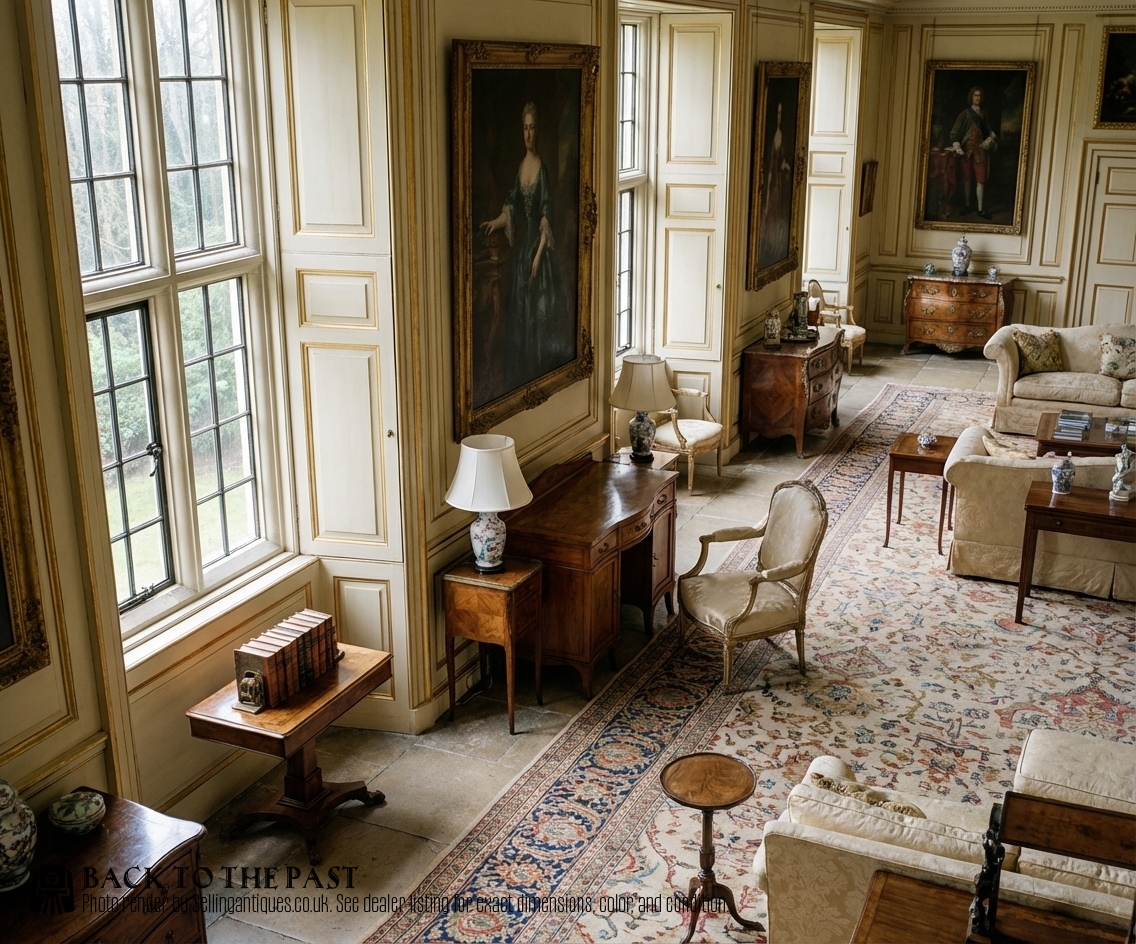
Edwardian Painted Vanity
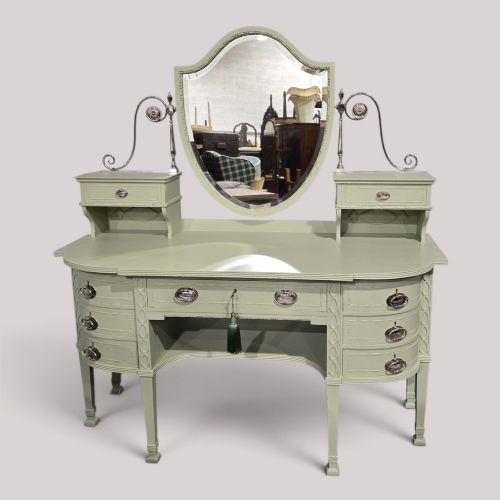
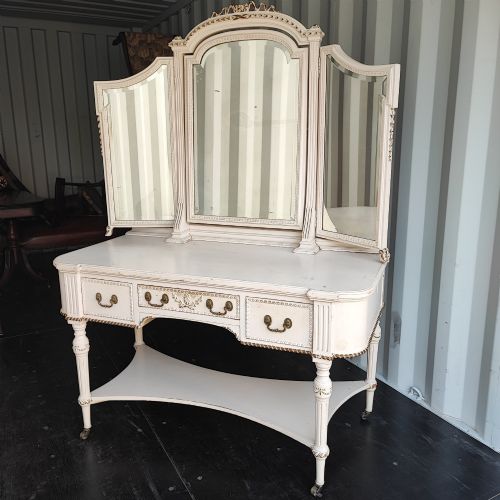
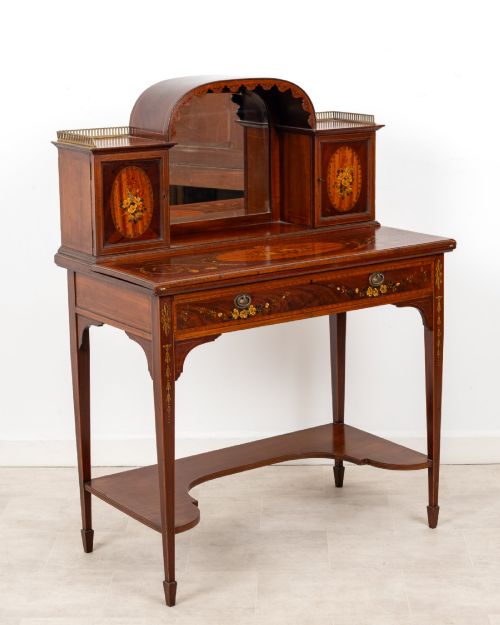
An edwardian painted vanity brings together dressing tables, writing desks with mirrored superstructures, and small decorative boxes from the late nineteenth and early twentieth centuries. These pieces reflect the lighter, more elegant domestic tastes that followed heavy Victorian furnishings.
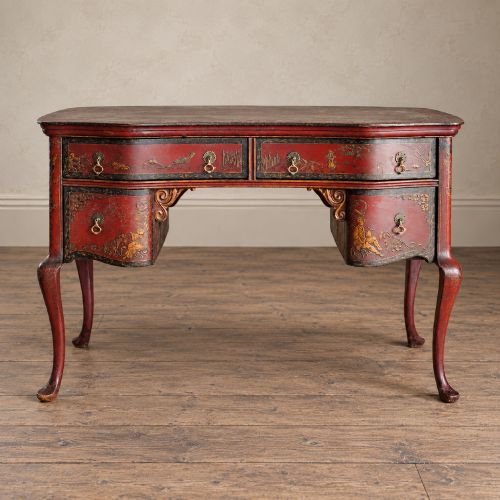
The selection here draws primarily upon Edwardian examples alongside late Victorian predecessors, featuring painted satinwood, mahogany, and pine forms. Pieces range from kidney-shaped desks to marble-topped washstands and tabletop cheval mirrors.
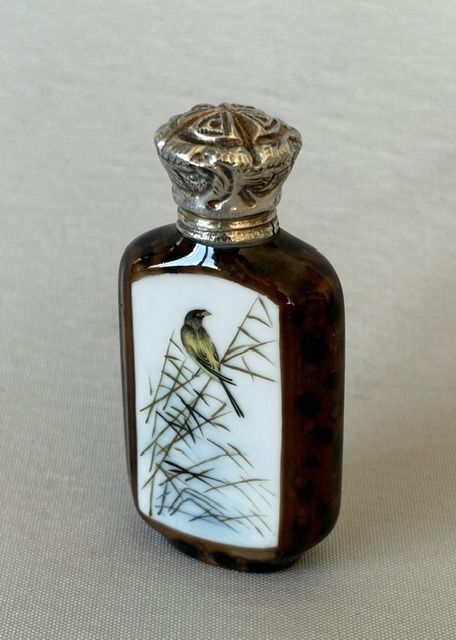
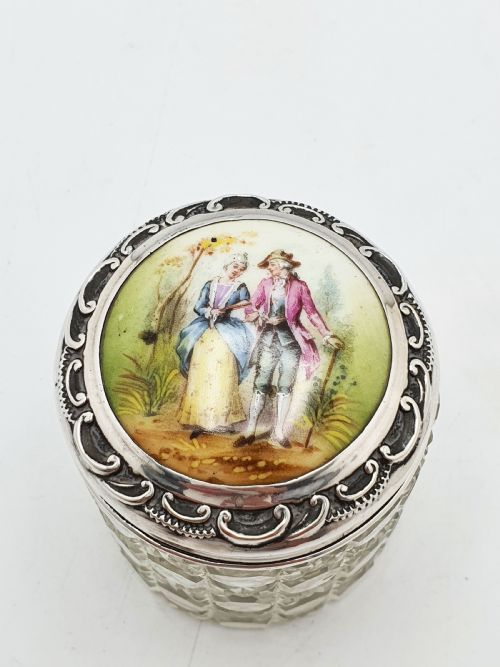
Buyers will encounter both larger functional furniture and smaller personal items such as enamel boxes and powder containers. Satinwood and painted wood dominate the furniture forms, while brass, glass, and sterling silver appear in smaller dressing table accessories.
How They Were Made
Cabinet makers utilised satinwood and mahogany as primary timbers, often applying hand-painted floral motifs and delicate inlay directly onto the polished wood surfaces. Scumble glazing and black lacquer also appear on specific pine and wood pieces to achieve distinct decorative finishes.
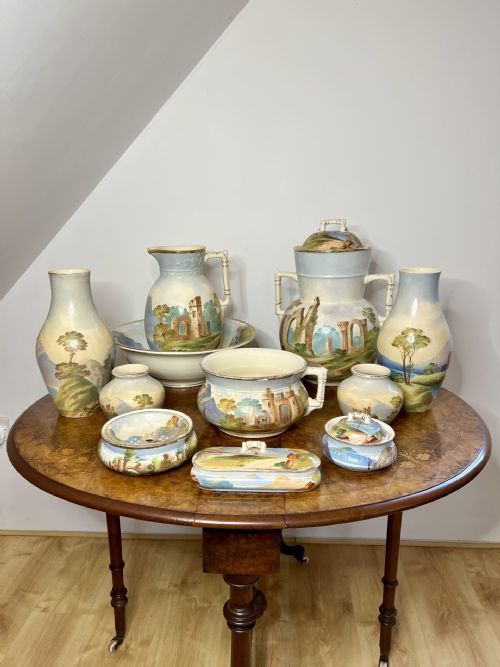
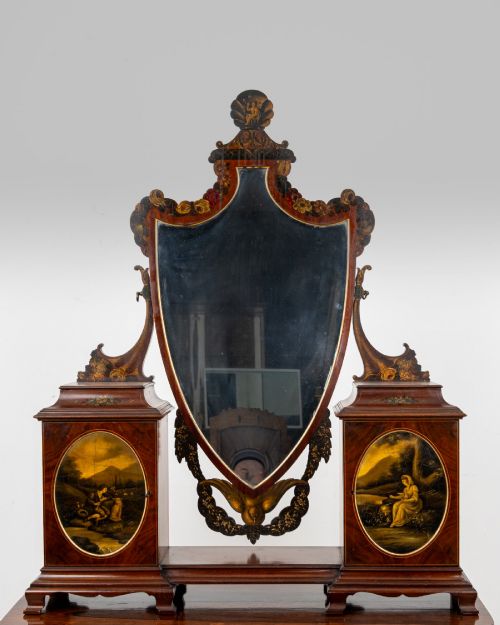
Smaller vanity accessories combine sterling silver and brass mounts with guilloche enamel and ceramic components. Mirror frames incorporate carved gesso and floral decorations, while washstands integrate marble tops for practical daily use.
Edwardian Painted Vanity Retail Price Guide 2026
Typical asking prices for edwardian painted vanity among the pieces listed under this phrase on Sellingantiques today, from the lower quarter to the upper quarter. They describe what is for sale here now, not the wider market.
Several pieces combine multiple materials including sterling silver, enamel, and majolica panels, creating miniature showcases of decorative arts.
What Varies in Quality
The refinement of the hand-painted decoration marks the principal distinction between standard production and exceptional work. Fine pieces display delicate brushwork and balanced floral compositions that complement the underlying satinwood grain.
Structural integrity and the retention of original glass or mirrors significantly influence the character of each piece. Superior examples preserve their original painted surfaces and hardware without heavy restoration.
The Edwardian Painted Vanity Glossary
- Satinwood
- A light-yellow timber valued for its lustrous grain, frequently utilised as a primary surface for painted Edwardian furniture. It provides a bright ground for floral motifs and decorative borders.
- Superstructure
- A raised set of shelves, drawers, or a mirror attached to the top of a desk or dressing table. This element adds vertical elegance and functional display space.
- Cheval mirror
- A freestanding full-length mirror mounted on a frame that permits the glass to swing at an angle. Tabletop versions allow adjustment for close grooming.
- Guilloche enamel
- A decorative technique where transparent enamel is layered over engine-turned metalwork. It creates repeating geometric patterns beneath a glossy coloured surface.
Edwardian Painted Vanity: Frequently Asked Questions
What defines an edwardian painted vanity?
These pieces comprise dressing tables, desks, and mirrors characterised by light timber construction and hand-painted decorative details. They emerged during a period favouring brighter, more graceful interiors.
Craftsmen often utilised satinwood and mahogany as bases for delicate floral artwork and inlaid borders.
How do I care for painted wooden surfaces?
Painted furniture requires gentle dusting with a soft, dry cloth to protect the decorative finish from abrasion. Avoid placing pieces in direct sunlight to prevent fading of the delicate pigments.
Keep humidity levels stable in the room to protect both the timber substrate and the historic paint layers.
Where were these pieces typically used?
Such items belonged primarily in bedrooms and boudoirs of substantial homes during the late nineteenth and early twentieth centuries. They served practical purposes for writing, grooming, and personal storage.
Their decorative quality meant they were displayed prominently within private domestic spaces.
How can I distinguish Edwardian from Victorian pieces?
Edwardian designs generally favour lighter proportions, brighter woods like satinwood, and restrained ornamentation compared to earlier Victorian styles. Late Victorian examples often retain darker finishes and heavier structural forms.
Painted details on Edwardian furniture tend to reflect Neoclassical and Sheraton Revival influences.