




Hand Painted Satinwood
Hand painted satinwood furniture brings together bright timber and delicate brushwork, offering a refined focal point for period interiors.
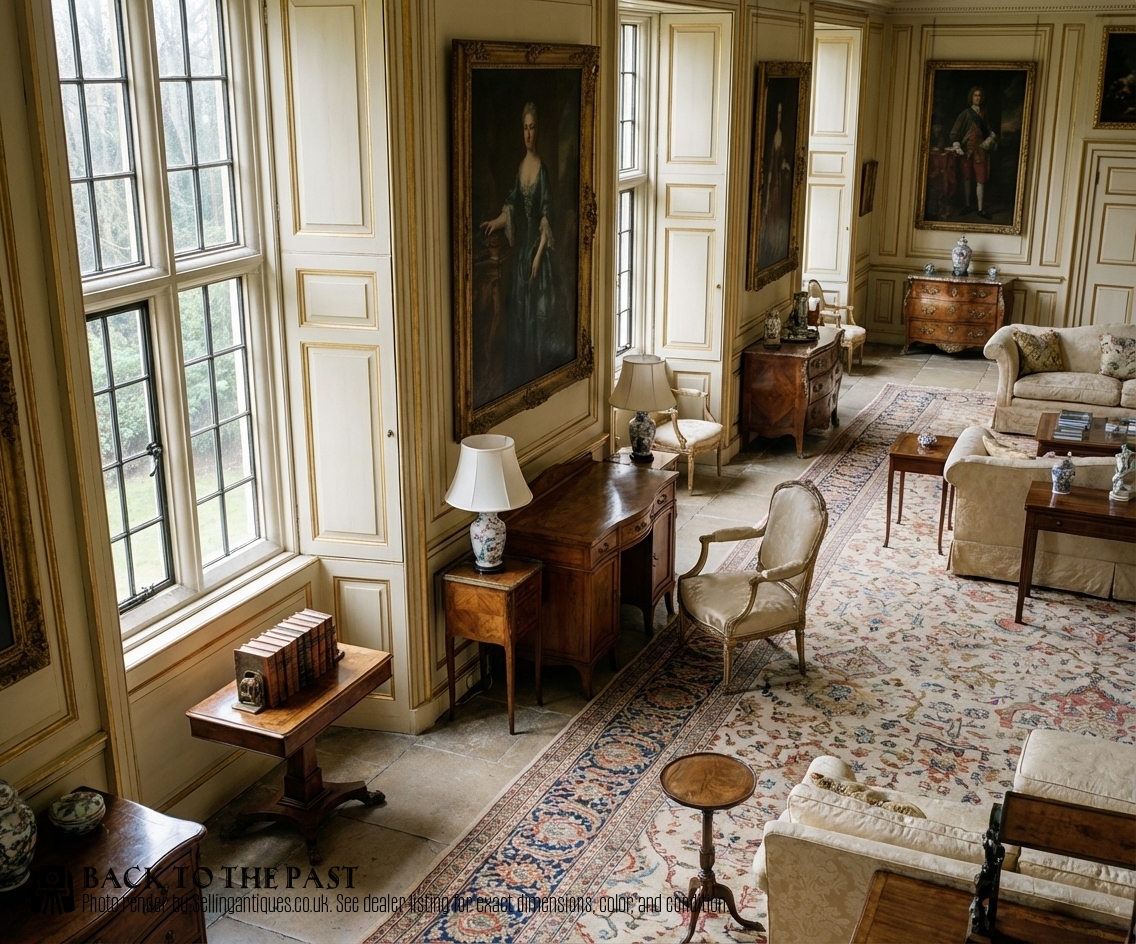
Hand Painted Satinwood
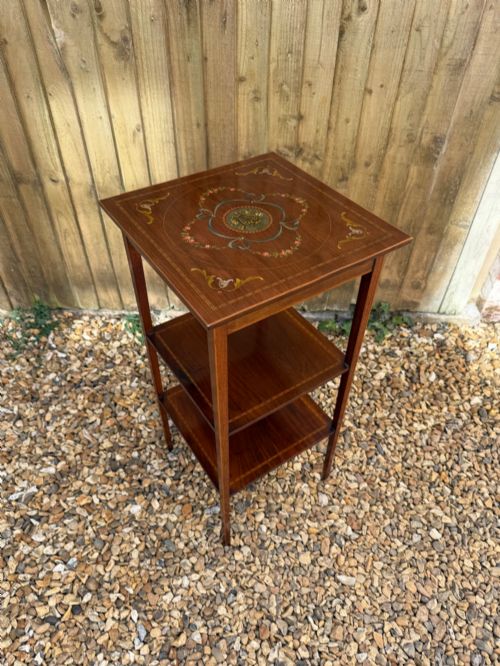
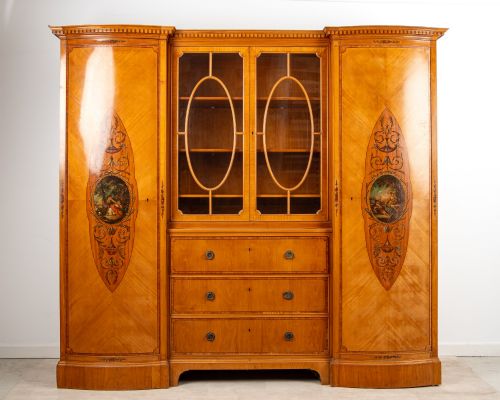
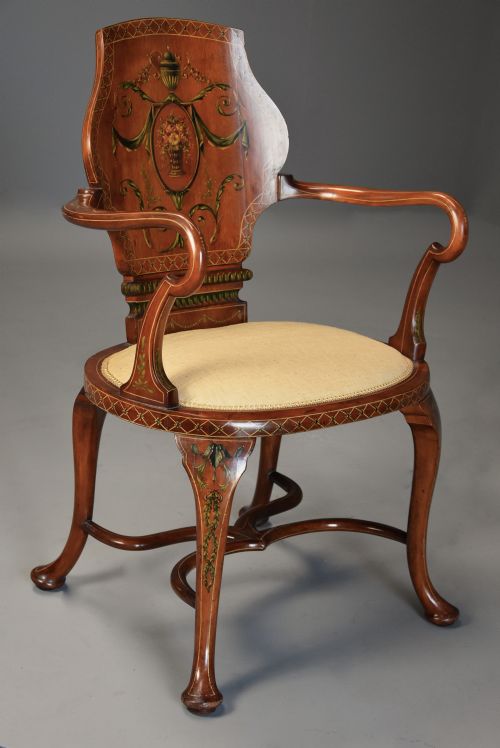
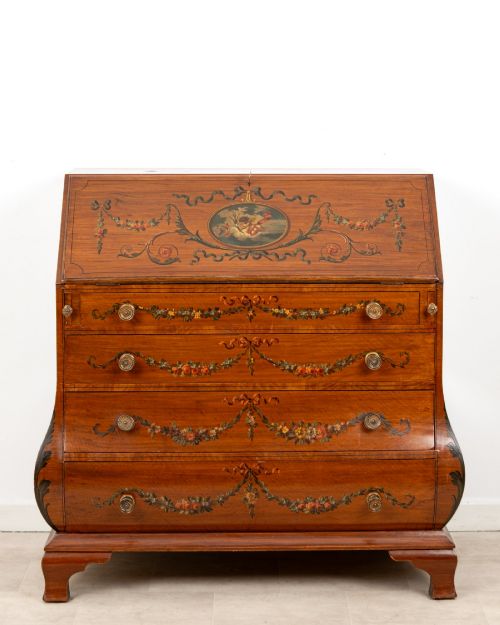
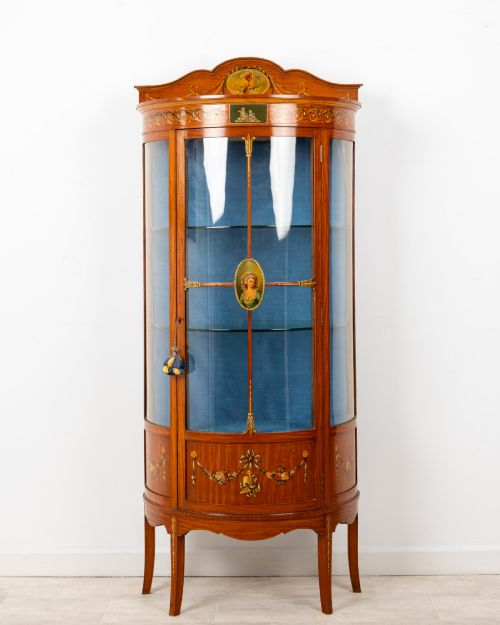
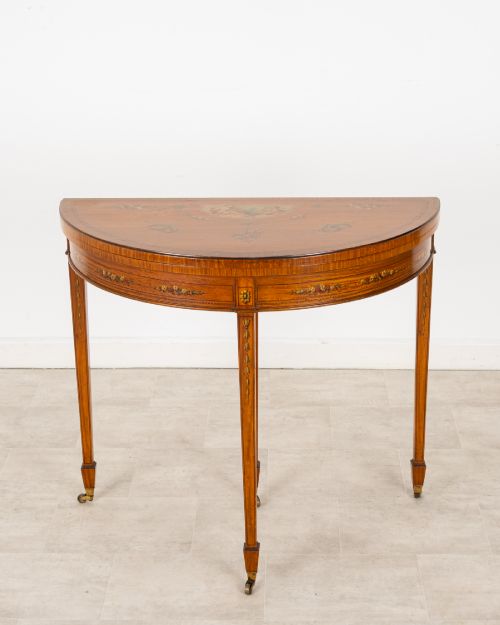
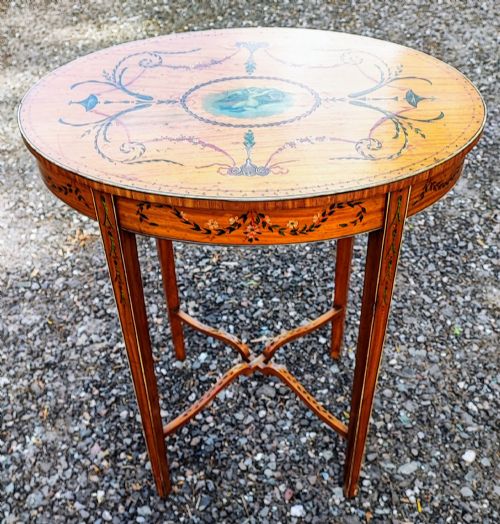
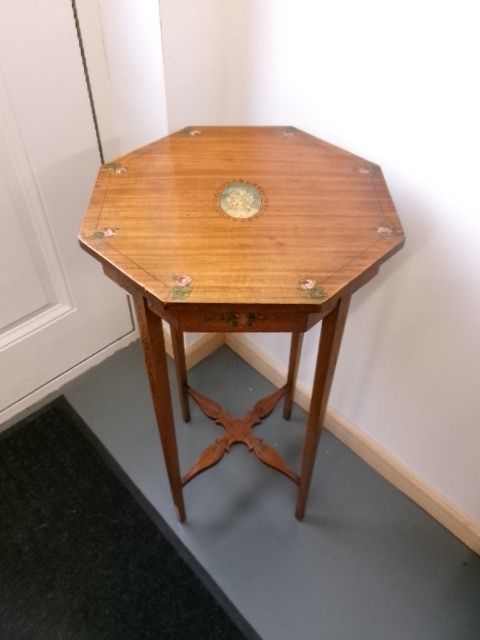
When you search for hand painted satinwood, you encounter refined English furniture primarily from the Victorian and Edwardian eras, alongside select George III and later revival pieces. The Edwardian period yields many of the smaller tables, writing desks, and display cabinets seen here, often executed in the Sheraton Revival style.
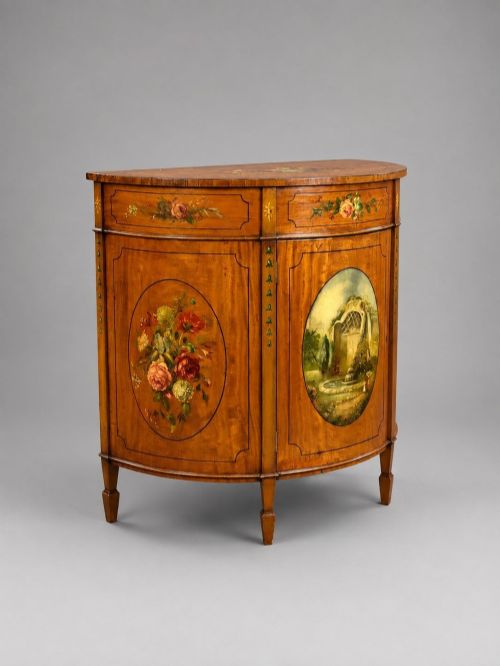
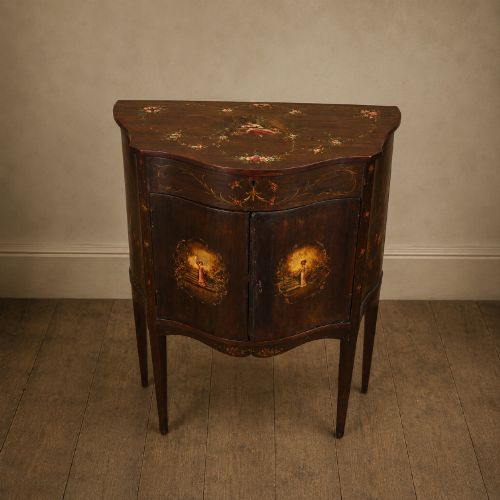
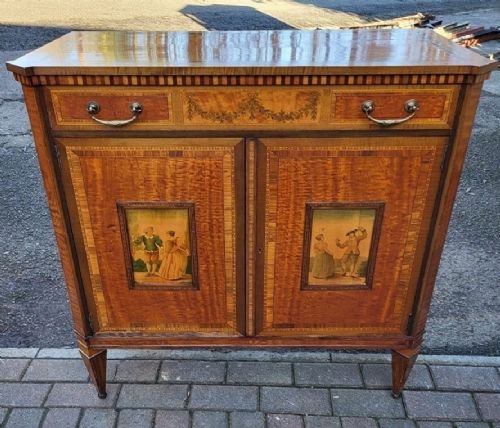
Larger case pieces include demi-lune commodes, side cabinets, and wardrobe bookcases, frequently embellished with floral swags, classical figures, or musical trophies. Alongside these stand seating forms, ranging from single bedroom chairs and armchairs to complete settees.
Makers utilised the pale, light-reflecting grain of satinwood as a canvas for polychrome painted decoration, creating domestic items intended for principal reception rooms and private boudoirs.
Materials and construction methods
Cabinet makers built carcasses using timber foundations like mahogany or timber panels faced with fine veneers of satinwood, occasionally accented with crossbanding in contrasting woods. They applied decorative painting directly onto the prepared wood or onto inset panels, sealing the delicate pigments with clear varnishes.
Brass handles, locks, and glass panes appear across display cabinets and writing desks, while occasional tables and seating incorporate fabric upholstery and turned or tapered supports in the Neoclassical taste.
Listings feature satinwood combined with brass, glass, and fabric across forms ranging from compact tea caddies and folding card tables to large wardrobe bookcases.
Differentiating quality across pieces
Quality rests principally on the crispness and skill of the hand-painted decoration, where fine brushwork and detailed figurative or floral motifs elevate a piece well above simpler, more mechanical stencilling. The choice of underlying timbers and the precision of the cabinet work, including tight veneer joints and well-fitted drawers, further distinguish superior examples.
Pieces originating from established workshops show greater attention to proportion, subtle inlay work, and robust internal construction that survives intact through successive generations.
Maple and Co·S and H Jewell
The Hand Painted Satinwood Glossary
- Satinwood
- A lustrous, hard timber native to the tropics, prized for its golden-yellow colour and natural sheen when polished. It serves as both a solid structural wood and a decorative veneer.
- Demi-lune
- A half-moon shape commonly seen in the design of side tables, commodes, and console tables. This profile allows pieces to sit flush against a wall while offering surface display area.
- Sheraton Revival
- A late nineteenth and early twentieth century design movement that reinterpreted the lighter, neoclassical forms associated with the eighteenth-century designer Thomas Sheraton. It relies on painted decoration, satinwood veneers, and tapered legs.
- Etagere
- A set of open shelves arranged in tiers, used for displaying ornaments or books. These freestanding display pieces often feature slender upright supports and decorated wood surfaces.
- Superstructure
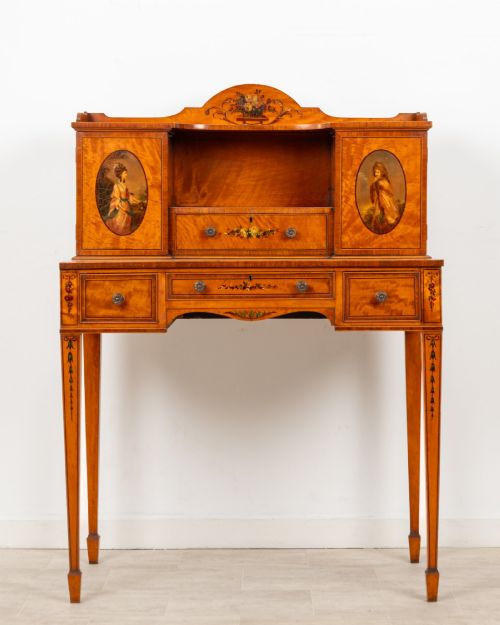
- A raised arrangement of small drawers, shelves, or mirrors positioned on top of a desk or table. This addition provides compartmentalised storage and ornamental framing for writing surfaces.
Hand Painted Satinwood: Frequently Asked Questions
How do I care for satinwood?
Keep these polished surfaces away from direct sunlight and excessive moisture to prevent the wood from fading and the varnish from crazing. Regular dusting with a soft, dry cloth maintains the natural lustre without harming delicate painted details.
Avoid using silicone-based polishes or chemical sprays, which can penetrate hairline cracks in the varnish and lift the underlying pigments over time.
Were these pieces meant for daily use?
Most surviving items were created for formal reception rooms, drawing rooms, or private boudoirs rather than heavy domestic labour. Writing desks, games tables, and display cabinets served light social functions for affluent households.
Today, they function well for similar light duties, though care should be taken with writing surfaces and occasional tables to protect the decorative painted scenes from heavy wear.
How can I tell Edwardian from Victorian pieces?
Victorian examples often lean towards heavier proportions, richer tones, and robust construction, frequently drawing on revival styles like the Adam or Sheraton idioms. Edwardian pieces generally display a lighter touch, with brighter satinwood grounds and more delicate, airy painted swags and ribbons.
Examining internal drawer construction, timber secondary woods, and hardware styles helps confirm the specific era of manufacture.
What is a Carlton House desk?
A Carlton House desk is a distinctive writing table featuring a curved superstructure of small drawers and compartments that encloses the back and sides of the writing surface. This form provides organised storage while maintaining an elegant silhouette finished on all sides.
Examples executed in satinwood with hand-painted details represent some of the most elaborate and desirable writing furniture of the period.