

Edwardian Open Book Shelves
Edwardian open book shelves offer practical display and storage, bringing period character and sturdy timber construction into domestic rooms.
Edwardian Open Book Shelves
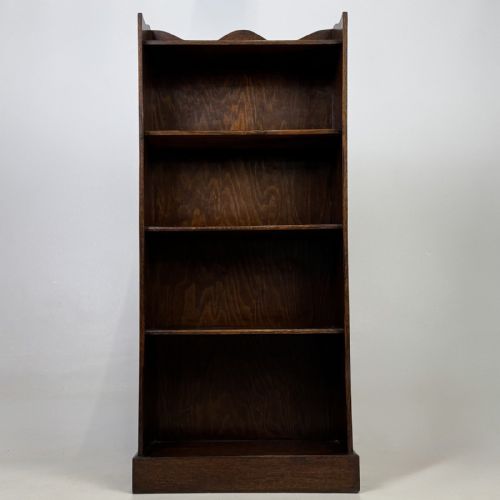
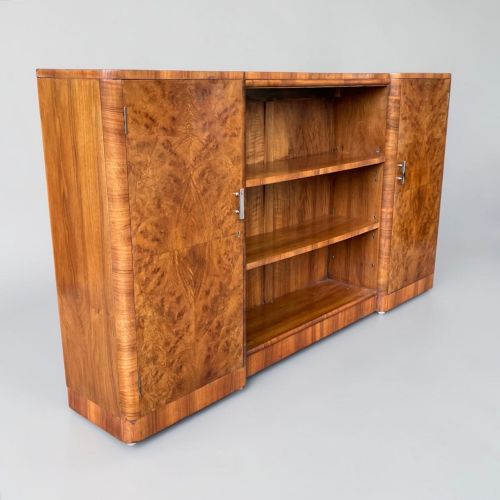
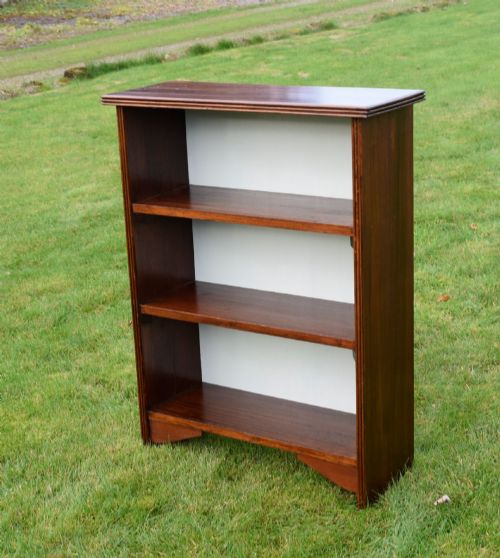
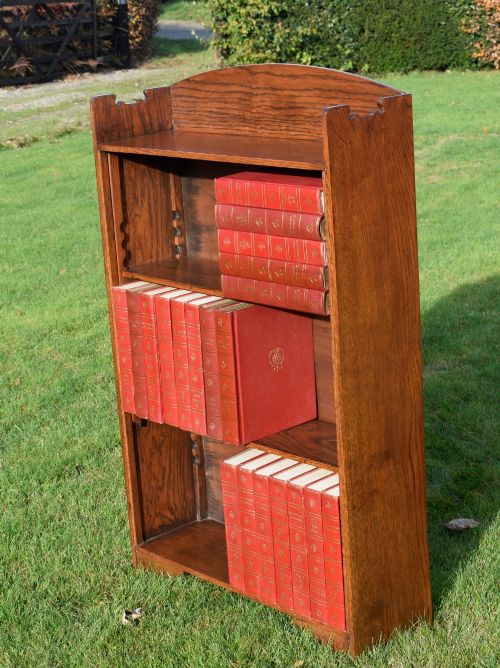
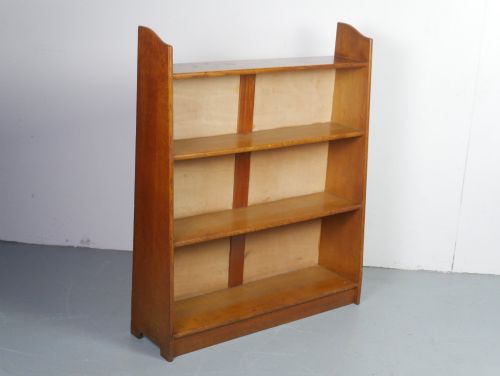
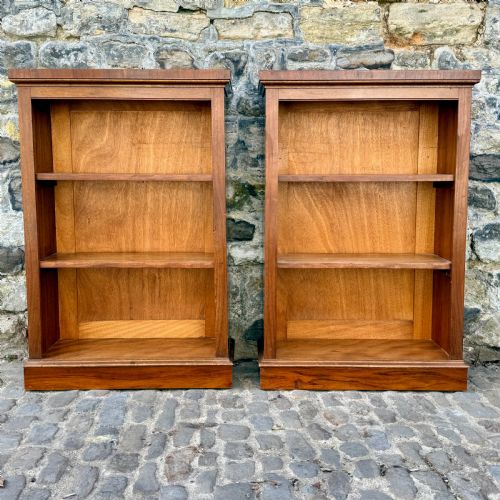
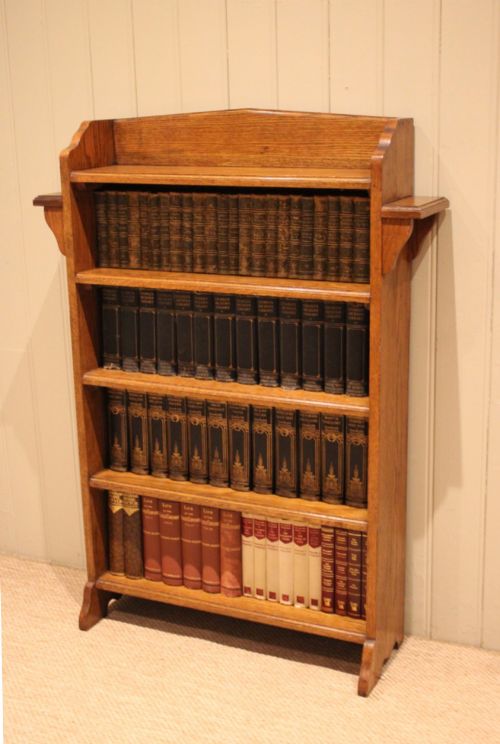
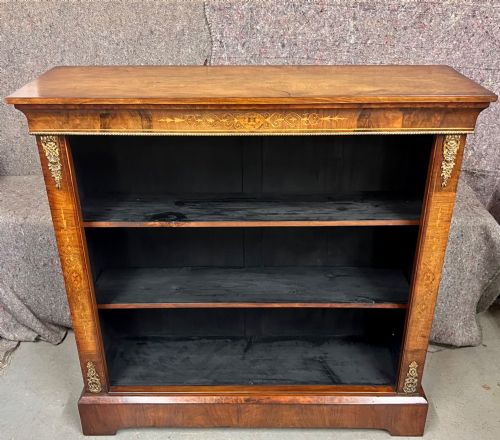
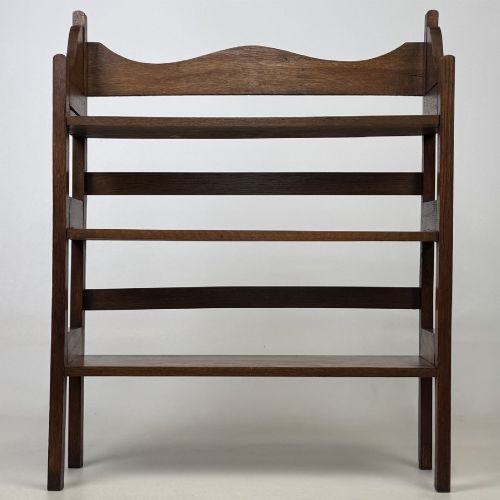
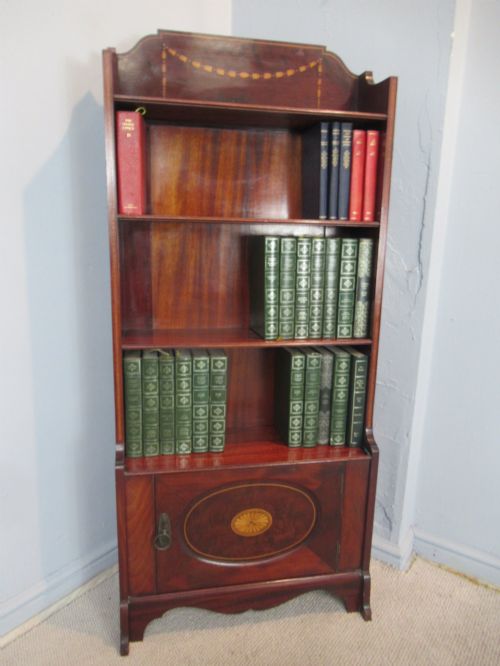
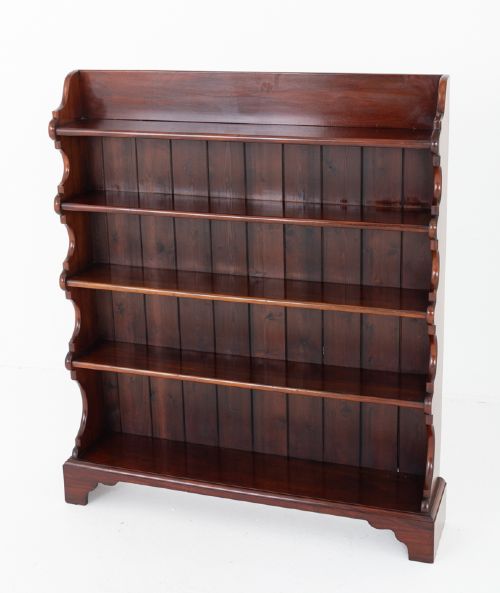
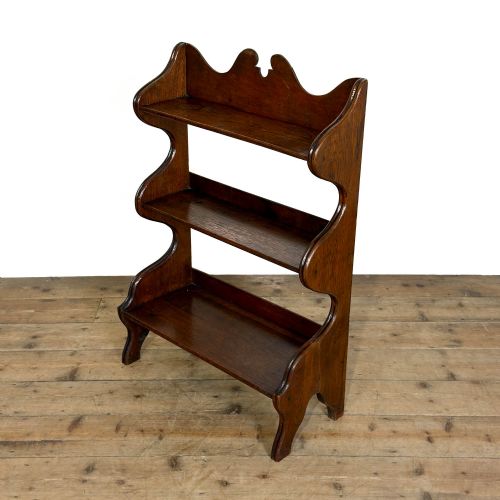
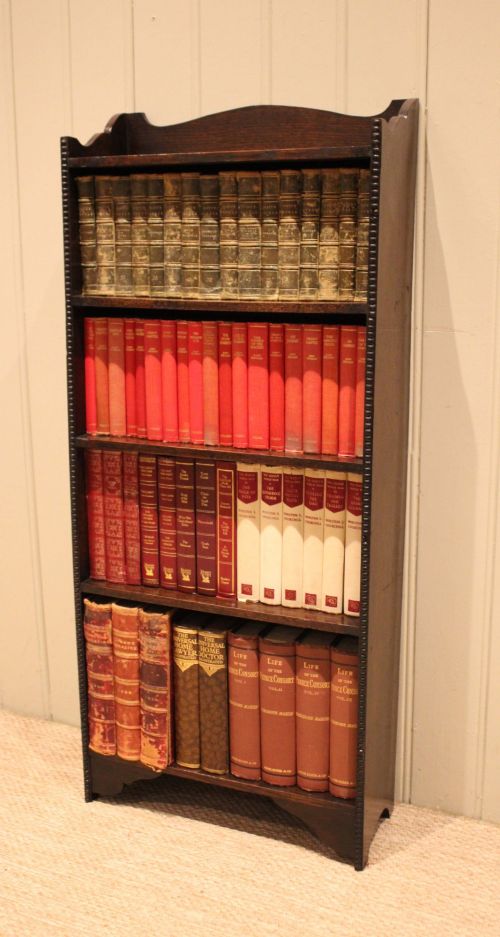
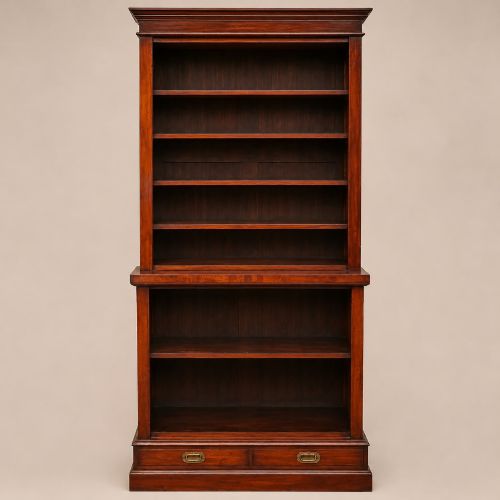
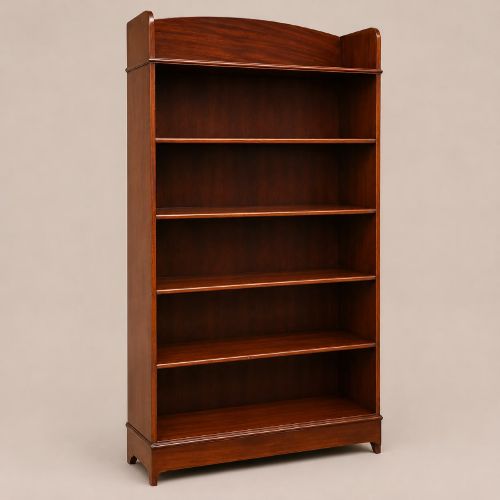
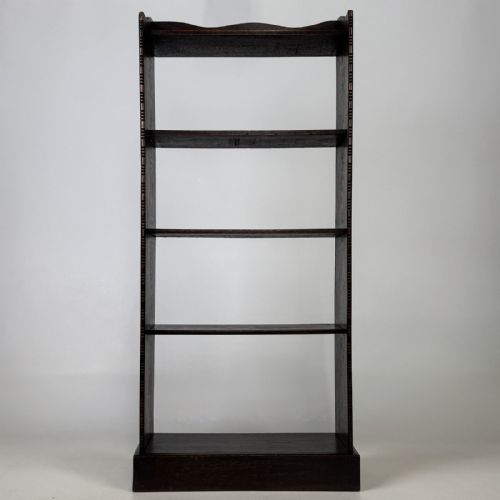
Edwardian open book shelves comprise accessible timber furniture designed for housing volumes without glazed or solid doors, typically featuring rectangular uprights and horizontal tiers. The listings demonstrate that oak and mahogany dominate these pieces, alongside walnut and occasional satinwood inlay.
While Edwardian examples form the primary focus when searching for Edwardian open book shelves, the selection spans related periods including Victorian, late nineteenth century, and early twentieth century manifestations up to the nineteen-thirties. Forms range from slim and small formats to breakfront designs, stepped configurations, and pieces incorporating raised galleries or carved cupboard doors.
Stylistic influences vary significantly across the inventory, encompassing plain utilitarian output alongside Arts and Crafts design, Jacobean Revival, Sheraton Revival, and Queen Anne Revival movements. Buyers encounter specialised variants like waterfall bookcases, whatnots, side tables, and book tables alongside standard multi-shelf bookcases.
Gradations of Quality
Quality in these bookcases rests upon the selection of timber, such as figured mahogany or quarter-sawn oak, and the crispness of carved details like galleries and side shaping. The integration of stylistic movements, including Arts and Crafts joinery or refined satinwood inlay, elevates certain pieces above plain utilitarian storage.
Structural adaptability also separates standard models from superior examples, particularly where adjustable shelving systems or robust breakfront and stepped configurations demonstrate thoughtful furniture design.
Edwardian Open Book Shelves Retail Price Guide 2026
Typical asking prices for edwardian open book shelves among the pieces listed under this phrase on Sellingantiques today, from the lower quarter to the upper quarter. They describe what is for sale here now, not the wider market.
Some shelves come with carved galleries designed purely to stop your books rolling onto the rug.
The Edwardian Open Book Shelves Glossary
- Breakfront
- A piece of furniture whose central section projects forward from the flanking sections. This configuration adds architectural presence to larger bookcases.
- Gallery
- A raised ornamental border running along the top edge of a piece of furniture. It prevents items from sliding off the upper surface.
- Whatnot
- A piece of open shelving with multiple tiers used for displaying ornaments or books. They often feature slender upright supports.
- Waterfall Bookcase
- A shelving unit where each tier steps back progressively from bottom to top, following a vertical curve. This profile resembles descending water.
- Satinwood Inlay
- Contrasting decorative wood pieces inserted into a primary timber surface to create geometric or floral patterns. It provides light-coloured visual accents on darker woods.
Edwardian Open Book Shelves: Frequently Asked Questions
What defines Edwardian open book shelves?
These pieces are accessible wooden storage units produced around the start of the twentieth century, lacking doors to allow immediate access to volumes.
They appear in various timbers like oak and mahogany, often featuring decorative elements such as carved galleries or inlaid details.
How do Arts and Crafts bookcases differ?
Arts and Crafts examples emphasise visible construction methods, honest material use, and often simpler, robust oak framing without excessive ornamentation.
They reflect a design philosophy that valued handcraftsmanship and utility over revivalist decorative styles.
Are the shelves adjustable on these bookcases?
Many period bookcases feature adjustable shelving supported by internal wooden tracks, peg holes, or brass hardware.
This adaptability allowed owners to alter shelf heights for different sizes of books.
What timber was used most frequently?
Oak and mahogany appear most commonly across the selection, with walnut and satinwood inlay used for specific aesthetic effects.
Finish variations range from dark fumed oak to polished golden oak and rich red mahogany tones.