
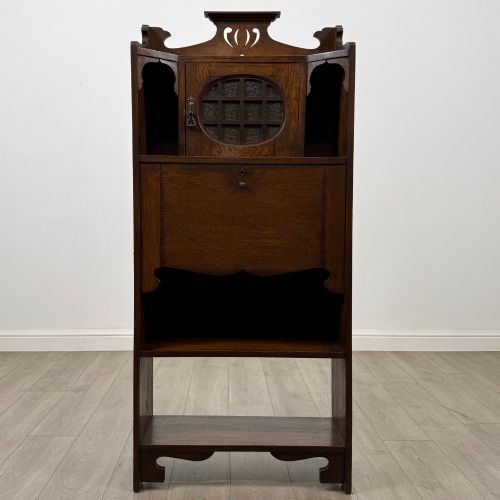
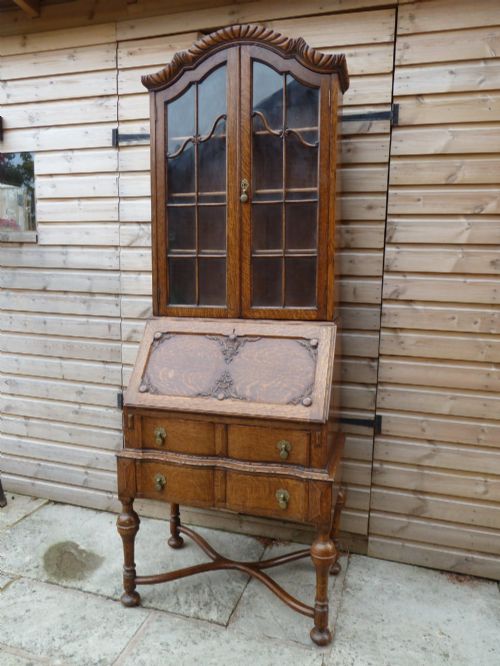
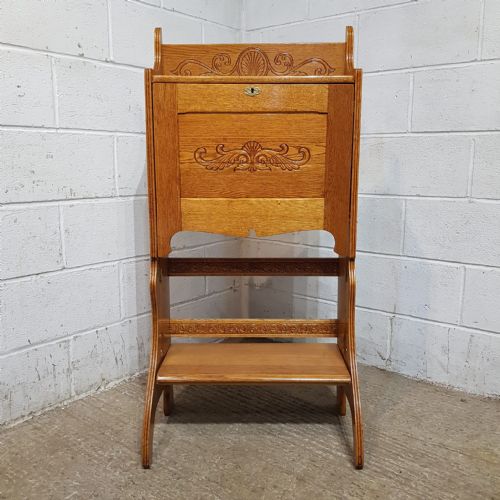
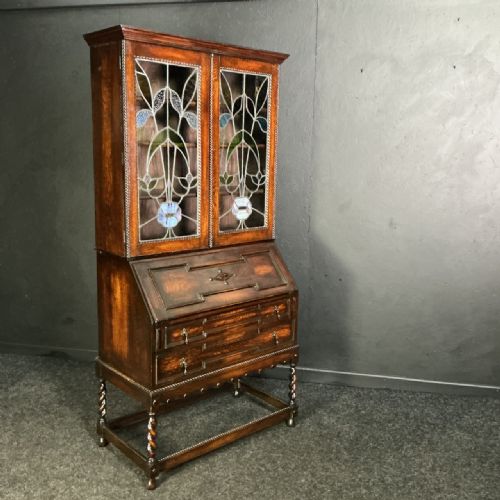
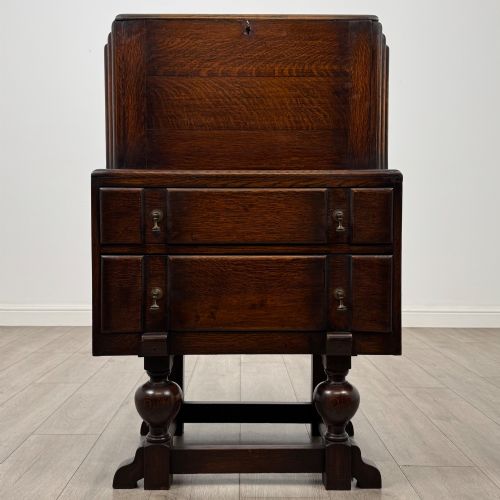

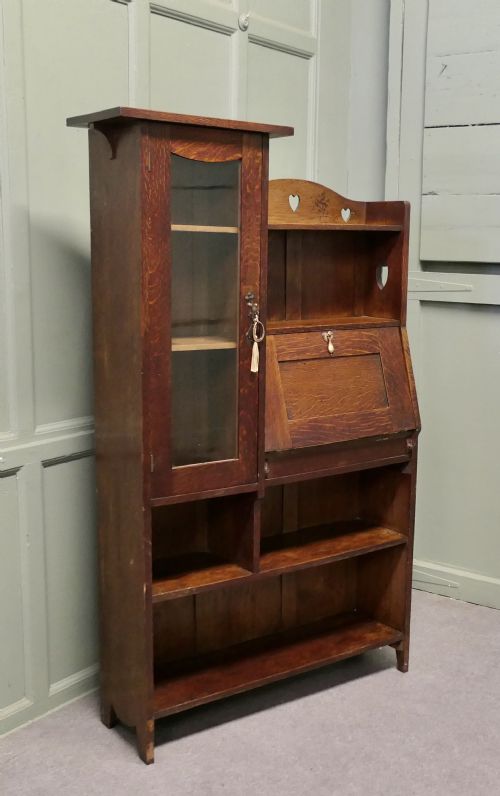


Edwardian Oak Writing Cabinet
An edwardian oak writing cabinet brings compact utility to a room, offering fitted pigeonholes and fall-front writing surfaces.
Edwardian Oak Writing Cabinet
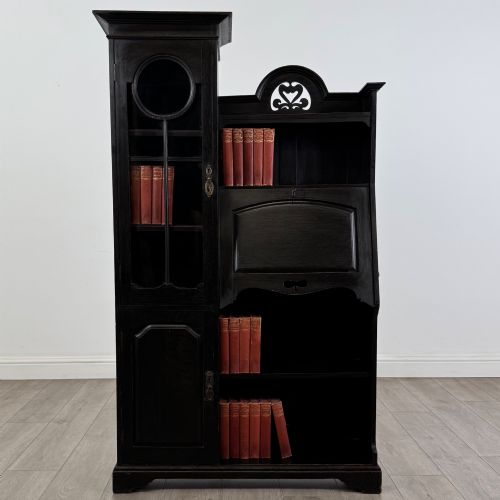
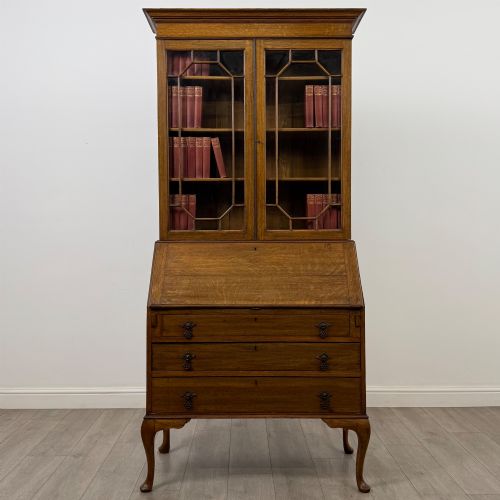
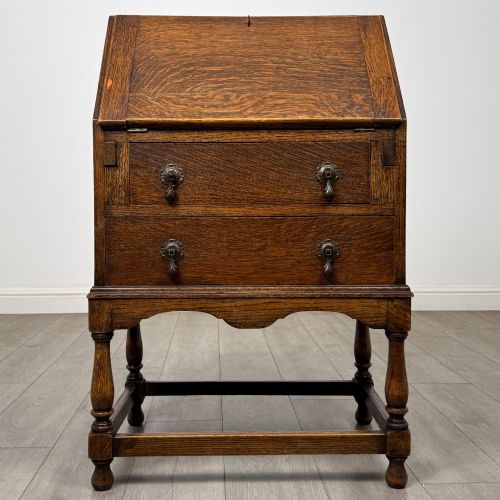
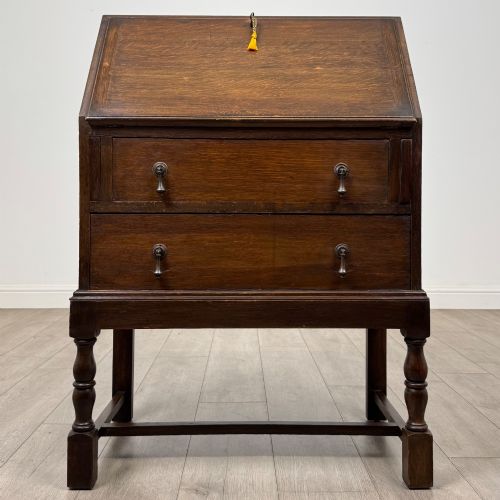
An edwardian oak writing cabinet encompasses a variety of compact desk forms, including bureau bookcases, stationery boxes, and fall-front writing bureaux. The pieces originate primarily from the Edwardian period and the early twentieth century, alongside examples drawing on Victorian and nineteenth-century traditions.
Buyers encounter distinct regional and stylistic variations, ranging from simple student desks to elaborate bureau bookcases incorporating display shelving. Forms frequently integrate compartments for correspondence, letter racks, and integrated inkstands alongside primary writing spaces.
What varies in quality
The degree of craftsmanship shows in the selection of timber grain, particularly where figured golden oak or burr oak is utilised across prominent exterior panels. Superior examples demonstrate precise dovetail joints, smooth operation of fall-front supports, and intact original brass hardware.
Internal complexity sets distinct tiers within these pieces, separating simple stationery boxes from elaborate bureau bookcases with moving interiors, adjustable date mechanisms, and integrated ceramic ink bottles.
A few clever writing cabinets hide moving interiors and mechanical date adjustments to keep nineteenth-century letter writers strictly on schedule.
Harris Lebus·Liberty of London·James Shoolbred and Co
The Edwardian Oak Writing Cabinet Glossary
- Bureau
- A desk featuring a sloping hinged lid that drops down to provide a writing surface above a series of drawers. This form frequently conceals internal pigeonholes and small compartments.
- Stationery cabinet
- A desk accessory or tabletop box designed to hold writing paper, envelopes, and ink bottles behind a hinged door or fall front. These often incorporate internal letter racks and adjustable dates.
- Bureau bookcase
- A tall combination piece uniting a lower writing bureau with upper enclosed shelving for books. Glazed or solid wooden doors protect the upper compartment.
- Secretaire
- A cabinet or chest incorporating a concealed writing drawer or drop-front desk compartment. The design maintains the outward appearance of a standard piece of case furniture.
Edwardian Oak Writing Cabinet: Frequently Asked Questions
How do bureau bookcases differ from standard desks?
Bureau bookcases combine a lower writing surface with upper shelving enclosed by glazed or wooden doors. This dual function provides both a dedicated workspace and substantial display storage.
Standard desks focus solely on the writing surface and under-desk drawer capacity without upper cabinetry.
Where should a stationery cabinet be placed?
Stationery cabinets suit tabletops, sideboards, or designated writing desks where correspondence materials remain accessible. Their compact footprint allows placement in smaller reception rooms or studies.
Positioning them away from direct heat sources protects the timber joints and leather writing inserts.
How do I identify Arts and Crafts influence?
Arts and Crafts influence appears through honest timber construction, visible joinery, and minimal carved ornamentation. Hardware often consists of patinated brass straps and hinges.
Design emphasis rests on functional utility and the natural grain of the oak rather than applied historical decoration.