




Antique Rolltop Secretary Desk
An antique rolltop secretary desk brings hidden compartments and a sliding cylinder to your study, offering both concealed workspace and structured storage.
Antique Rolltop Secretary Desk
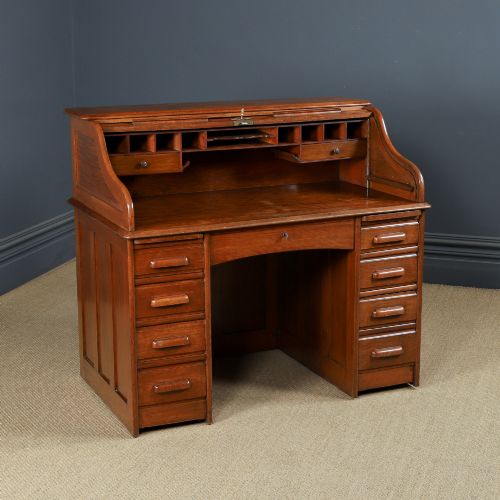
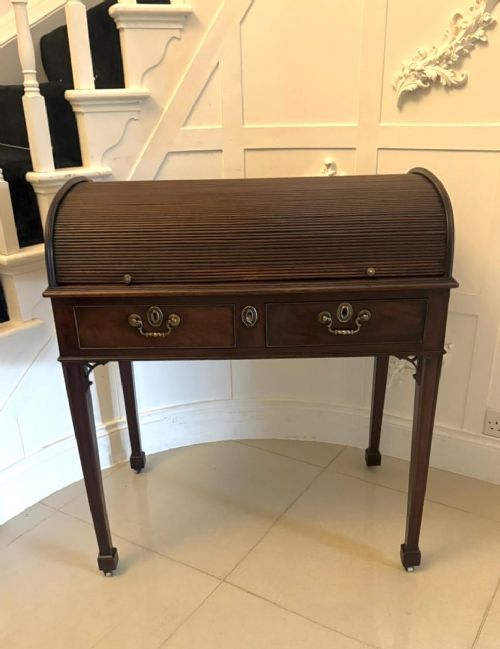
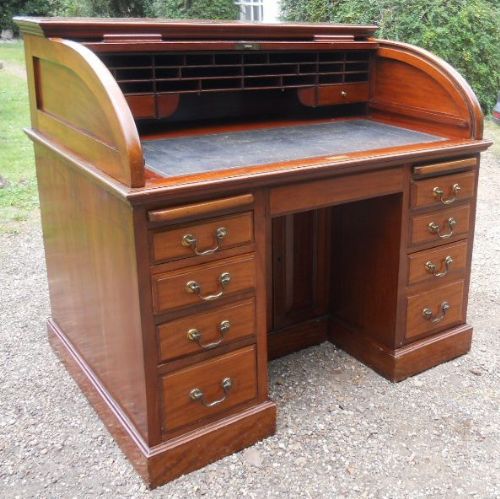
An antique rolltop secretary desk combines a writing surface with a slatted or cylindrical cover that slides down to hide correspondence and papers. These pieces appear primarily from the Victorian, Edwardian, and Georgian periods, alongside examples from the nineteenth century.
You will encounter various forms across this inventory, including pedestal desks, cylinder desks, bureau bookcases, and compact writing cabinets. Mahogany and oak dominate the selection, supported by walnut, satinwood, and maple.
Stylistic influences range from Sheraton Revival and Regency to Baroque and Late Victorian designs. Buyers seek these items for their clever internal compartments and enclosed writing spaces.
How they were made
Cabinetmakers constructed these desks using solid timbers like mahogany, oak, and walnut, frequently applying marquetry inlay and contrasting wood veneers for decoration. Tambour fronts and sliding cylinders required precise joinery to ensure the wooden slats moved smoothly within their recessed tracks.
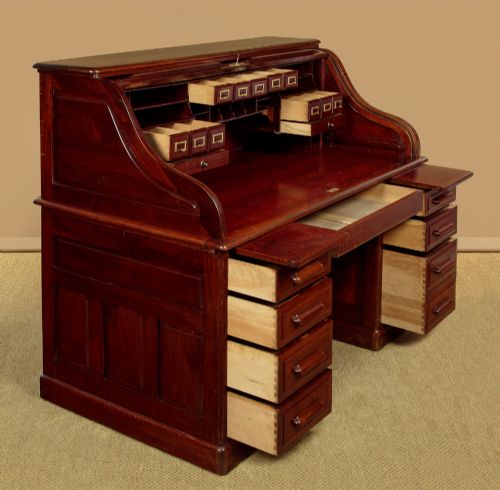
Hardware components typically include brass pulls and handles, while internal fittings organise stationery with small drawers and pigeonholes. Structural elements often incorporate glass doors on upper bookcase sections and lead details where appropriate.
Some desks hide secret drawers behind pigeonholes that require releasing a hidden spring catch to open.
What varies in quality
The sophistication of the internal stationery compartments and the complexity of the exterior marquetry inlay distinguish finer examples from simpler utilitarian office furniture. Cabinetmaking precision shows in how smoothly the tambour shutter or cylinder operates and fits within its housing.
Choice of primary timber and secondary wood selection also dictates the grade of the piece, with richly figured mahogany or walnut sitting above standard oak alternatives. The integration of glazed upper bookcases or specialised mechanisms like pull-out writing slides adds to the design ambition.
Wiggers
The Antique Rolltop Secretary Desk Glossary
- Tambour
- A flexible shutter made of narrow vertical strips of wood glued to canvas or leather backing. This allows the cover to slide smoothly around a curved track.
- Cylinder desk
- A writing desk featuring a quarter-circle solid wooden cylinder that rolls back to reveal the desk interior and pull-out writing slide.
- Bureau bookcase
- A dual-purpose piece of furniture combining a lower writing desk section with an upper glazed shelving unit for books.
- Marquetry
- Decorative veneer work arranged in pictorial or geometric patterns using various coloured woods.
- Pedestal desk
- A heavy freestanding desk supported by two vertical banks of drawers.
Antique Rolltop Secretary Desk: Frequently Asked Questions
What is a rolltop secretary desk?
A rolltop secretary desk is a form of writing furniture featuring a flexible slatted or solid curved cover that pulls down to conceal the workspace.
These pieces typically include internal pigeonholes and small drawers to organise correspondence and writing materials.
How do I date an old desk?
Dating relies on examining the timber species, construction methods, hardware, and stylistic details such as Victorian marquetry or Edwardian oak framing.
Comparing the primary woods and secondary drawer linings against known period characteristics helps narrow down the decade of production.
Are cylinder desks different from rolltops?
Cylinder desks use a solid curved piece of wood that rotates on a track rather than the individual narrow slats found on traditional rolltops.
Both styles serve the same purpose of concealing the desk interior when not in use.
Where were these desks used?
These desks served primarily in home studies, libraries, and private offices as secure spaces for managing personal or professional correspondence.
The enclosed design allowed owners to leave paperwork half-finished while keeping the room looking tidy.