
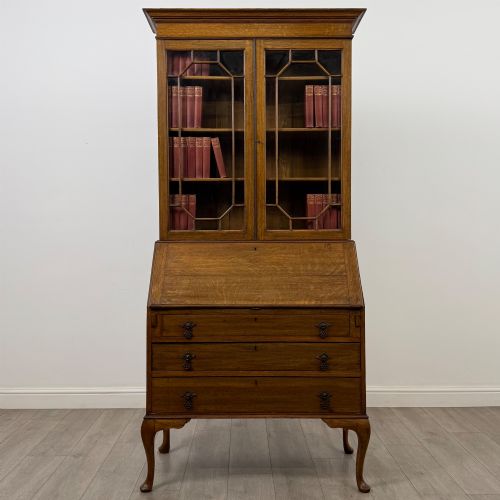

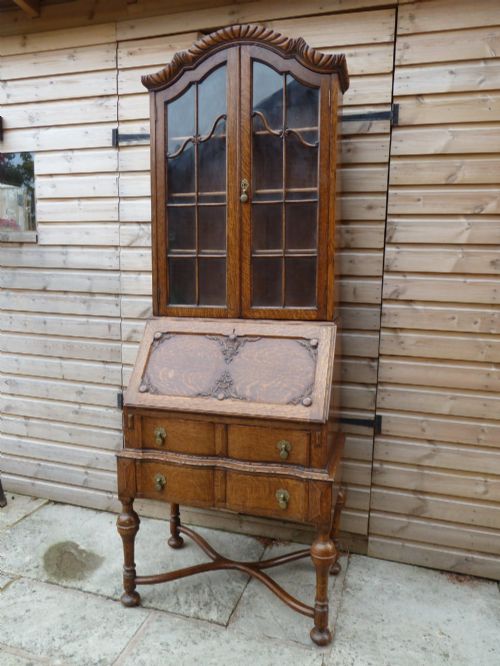
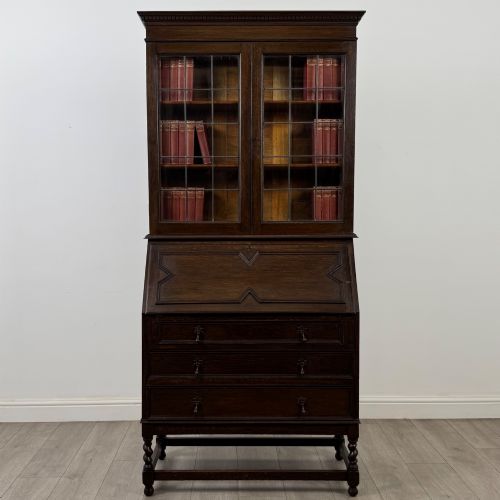


Glazed Oak Writing Desk
These glazed oak writing desk pieces combine fitted writing compartments with upper shelving enclosed by glass.
Glazed Oak Writing Desk
A glazed oak writing desk combines a lower writing surface with upper shelving enclosed by glass doors. Buyers searching for a glazed oak writing desk encounter forms such as bureau bookcases, secretaire bookcases, and cabinet desks.
The selections span multiple eras, ranging from the eighteenth century through Victorian, Edwardian, and Art Deco periods. Regional examples like Welsh oak sit alongside revivalist pieces referencing earlier Jacobean and Georgian designs.
Lower sections typically feature drop-front writing slopes or pull-out secretaire drawers concealing fitted interiors. Upper cabinets utilise leaded glass or plain glass panels to display books and papers.
Materials and construction
Carpenters utilised solid oak, golden oak, and pollard oak to build the primary carcass and drawer structures. Brass hardware, including drop handles and key escutcheons, provides functional detailing alongside wooden bun handles.
Glass panels are fitted into upper doors using lead cording or wooden glazing bars. Internal compartments often incorporate fabric linings and small stationary drawers constructed with traditional joinery.
Periods represented in the inventory range from the sixteenth century through the eighteenth century, Victorian, Edwardian, and 1920s.
Distinctions in craftsmanship
Superior execution shows in the selection of figured pollard oak or golden oak veneers and dense solid timber framing. Finely fitted internal stationery drawers and smoothly operating drop-front mechanisms distinguish higher grades of work.
Design elaboration separates standard production from workshop pieces, such as those incorporating brass panels or specific stylistic references like Arts and Crafts carving.
Morris & Co·George W Jack·Harris Lebus
The Glazed Oak Writing Desk Glossary
- Bureau bookcase
- A dual-purpose furniture form featuring a lower writing bureau combined with an upper glazed bookcase. It provides both enclosed storage and a fold-down writing surface.
- Secretaire bookcase
- A piece incorporating a pull-out drawer with a drop-front writing flap that conceals small pigeonholes and drawers. This mechanism serves the same function as a traditional bureau.
- Pollard oak
- Oak timber taken from pollarded trees, showing dense, clustered knot formations and highly decorative grain patterns. It was selected for high-status cabinet work.
- Lead cording
- Narrow strips of lead used to hold individual panes of glass together within cabinet doors. This technique appears frequently on Arts and Crafts and revivalist pieces.
- Bun handle
- A small, rounded wooden drawer pull shaped like a bun. These turned handles appear on many Edwardian and later drawers.
Glazed Oak Writing Desk: Frequently Asked Questions
What is a glazed oak writing desk?
A glazed oak writing desk is a combined furniture piece that pairs a lower writing compartment with an upper bookcase enclosed by glass doors. These items bring together workspace and display shelving in a single unit.
Such pieces range from compact Edwardian cabinet desks to large eighteenth-century bureau bookcases constructed from solid oak, golden oak, or pollard oak.
How do I identify the period?
Period identification relies on materials, handles, and stylistic details. Edwardian and 1920s examples often use golden oak and simple bun handles, while Arts and Crafts pieces show distinctive leaded glass and brass panels.
Earlier eighteenth-century items display traditional Georgian or Welsh construction traits, whereas Victorian and revivalist pieces incorporate heavier dark oak moulding and Jacobean motifs.
Where were these desks used?
These pieces served primarily in libraries, studies, and drawing rooms as practical workstations for correspondence and record keeping. The upper glass doors kept reference books clean while displaying them to visitors.
The lower drop-front writing surface concealed private papers and stationery compartments when closed.
How should I care for the wood?
Maintenance involves keeping the oak away from direct heat sources and extreme humidity fluctuations to prevent timber splitting. Regular dusting with a soft cloth preserves the finish of the golden oak or pollard oak surfaces.
Glass panels require standard cleaning while checking that lead cording and brass hardware remain secure.