


Carved Oak Writing Slope Desk
A carved oak writing slope desk is a sturdy, hinged repository for correspondence that brings tactile history to any study.
Carved Oak Writing Slope Desk
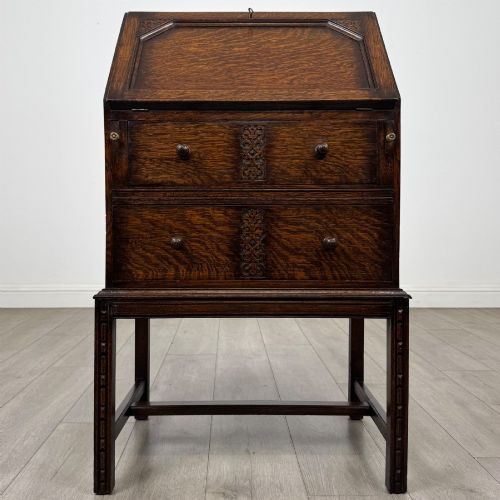
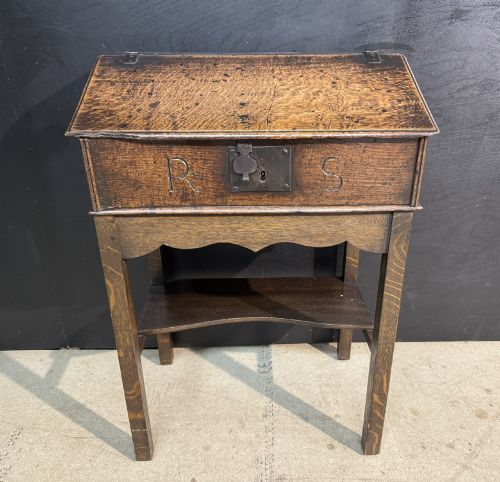
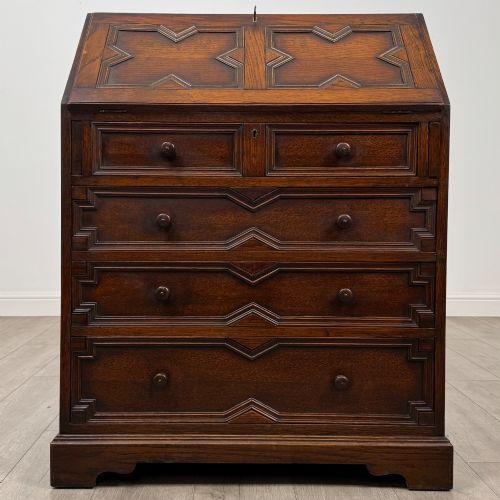
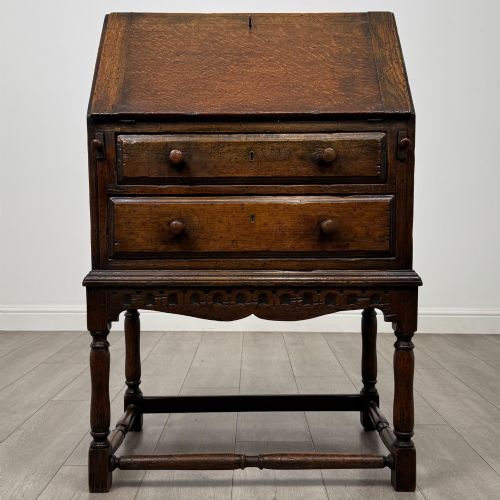
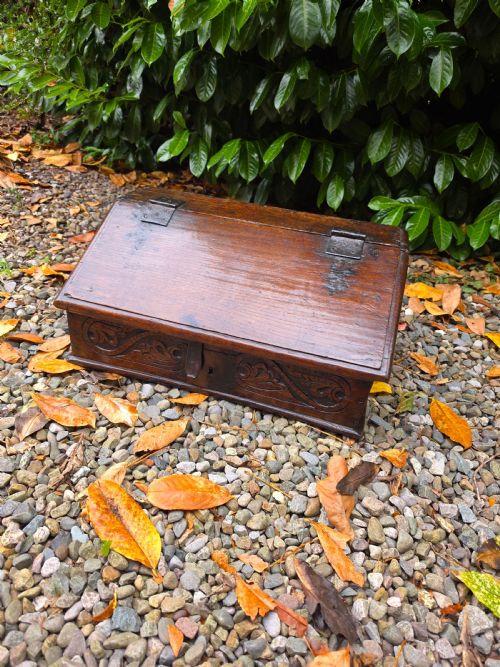
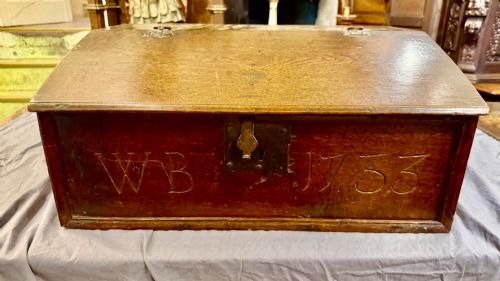
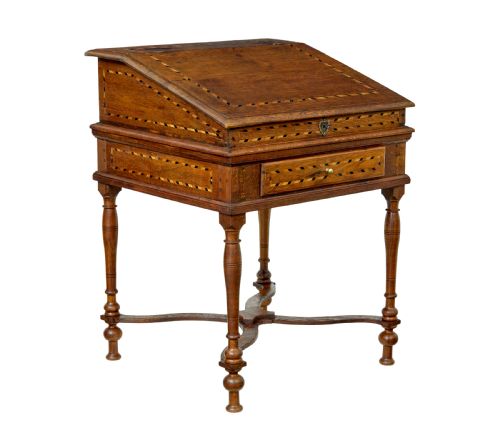
A carved oak writing slope desk encompasses a range of traditional forms, from early slant-front bible boxes and deed boxes to later bureaus and Davenport desks. These pieces originate across several eras, appearing in 17th century, 18th century, Victorian, and Edwardian iterations.
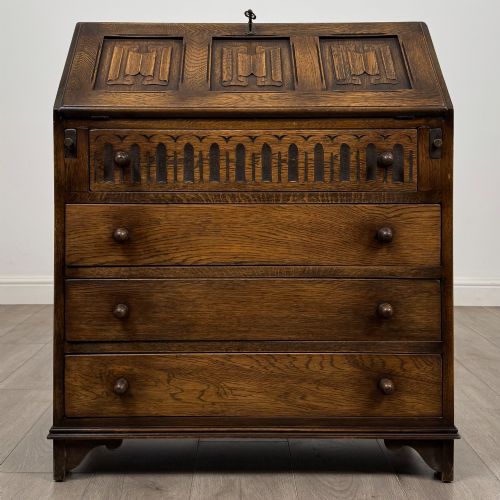
Buyers will encounter compact desk boxes meant for tabletops alongside larger fitted bureaus featuring internal drawers and pigeonholes. The execution varies from rustic vernacular items to intricately carved revival styles displaying linenfold or Green Man motifs.
Materials and construction methods
Makers utilised solid oak supplemented by rarer timbers such as pollard oak, burr oak, and fruitwood for decorative contrast, often incorporating holly and bog oak inlay. Structural hardware typically relies on brass hinges, iron locks, and occasional glass elements.
Surfaces frequently display hand-carved friezes, linenfold panels, or figural motifs alongside fitted wooden interiors with secret compartments and leather writing surfaces.
Listings feature oak material predominantly, paired with brass, iron, leather, and occasional pollard oak or fruitwood highlights across multiple centuries.
Evaluating craftsmanship and integrity
Quality rests in the crispness of the hand-carved detail, the integrity of the original oak timber, and the complexity of the internal fittings. Desks retaining original stands, working locks, and uncompromised secondary woods command higher regard.
The sophistication of the internal arrangement, such as multiple small drawers and hidden compartments within a bible box or bureau, distinguishes standard utility items from finer workshop output.
Thomas Turner
The Carved Oak Writing Slope Desk Glossary
- Bible box
- A hinged wooden box used originally for storing a bible or household documents, often serving as a portable writing surface. These form the earliest precursors to the slant-front desk.
- Bureaux
- The plural form of bureau, denoting a writing desk with a sloping lid that opens to reveal fitted interior compartments. Many examples sit upon dedicated wooden stands or legs.
- Linenfold
- A style of relief carving that mimics folded lengths of fabric or linen, commonly seen on panels of 17th century and revival pieces. It provides architectural texture to the front of a desk.
- Pollard oak
- Timber taken from trees that have been pollarded, resulting in a gnarled grain pattern with dense knotting. Cabinet makers prized this wood for its distinctive decorative figuring.
- Davenport desk
- A compact Victorian form of writing desk featuring a sloping top hinged over a pedestal of drawers. They often incorporate side drawers and sliding writing platforms.
Carved Oak Writing Slope Desk: Frequently Asked Questions
What is a bible box?
A bible box is a small, portable wooden receptacle with a sloping lid designed for reading and storing texts or writing materials. They represent the foundational form of early oak desk development.
Placed upon tables or laps before dedicated desks became common, these boxes often feature carved fronts and simple interior compartments for ink and quills.
How do I identify a 17th century piece?
Seventeenth-century pieces typically display robust frame-and-panel construction, hand-carved geometric or floral friezes, and heavy iron or brass hardware. The timber shows deep patination and tool marks from manual processing.
Later revival pieces from the Edwardian or Victorian periods attempt to replicate these traits but often reveal more uniform machine sawing and lighter internal framing upon close inspection.
What is a Davenport desk?
A Davenport desk is a compact Victorian writing cabinet featuring an angled, slanted top above a pedestal of drawers. This form maximises workspace in smaller rooms while offering substantial storage.
Many examples incorporate side drawers, pen trays, and decorative wood veneers like pollard oak to enhance their visual appeal in domestic settings.
How do I care for antique oak?
Antique oak benefits from stable indoor humidity and protection from direct sunlight, which can dry out and fade the timber. Regular dusting with a dry, soft cloth maintains the natural surface.
Applying occasional appropriate wax preserves the patina without creating a synthetic buildup that alters the historic texture of the wood.