
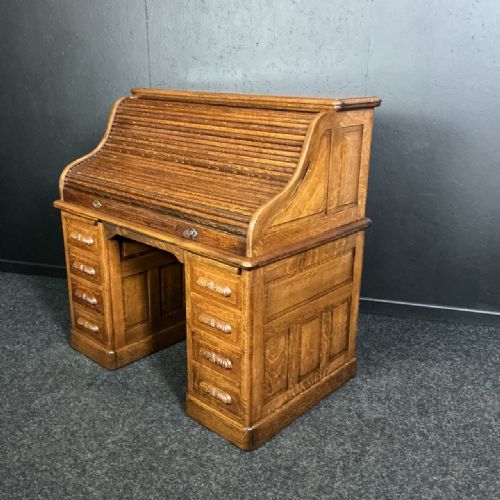


Edwardian Oak Pedestal Desk
When you search for an edwardian oak pedestal desk, you seek a substantial workspace built from sturdy timber to organise correspondence and ledgers.
Edwardian Oak Pedestal Desk
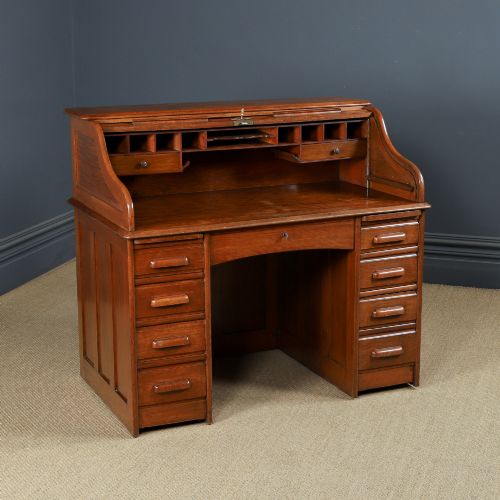
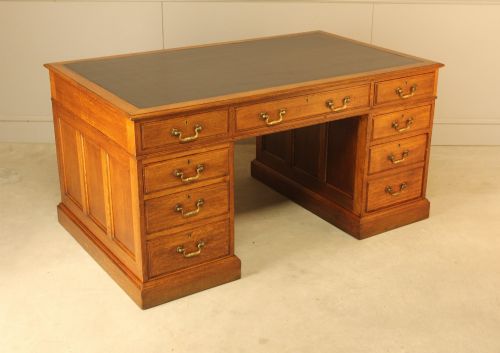
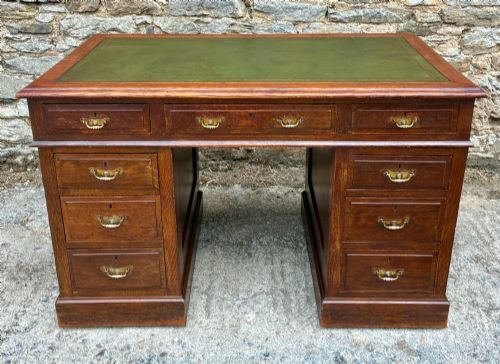
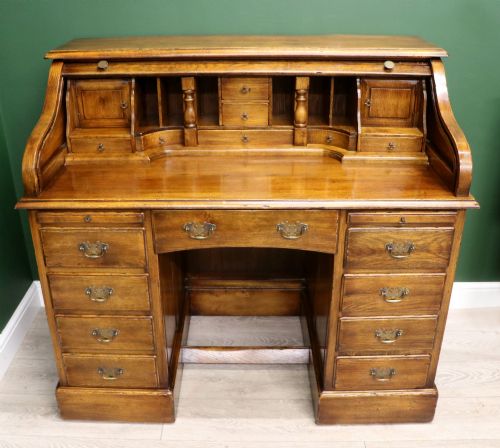
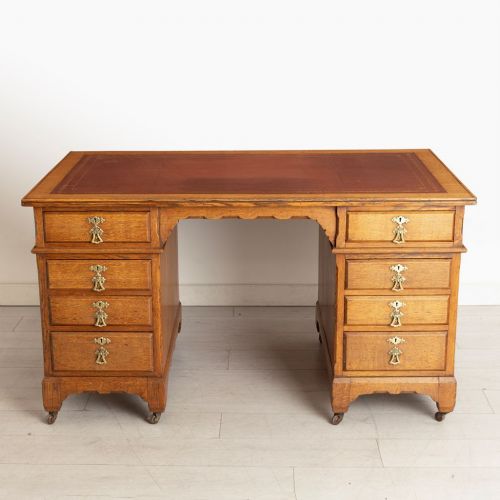
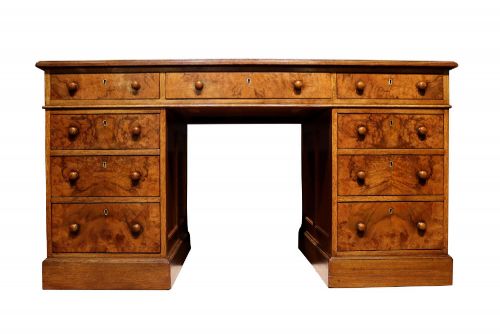
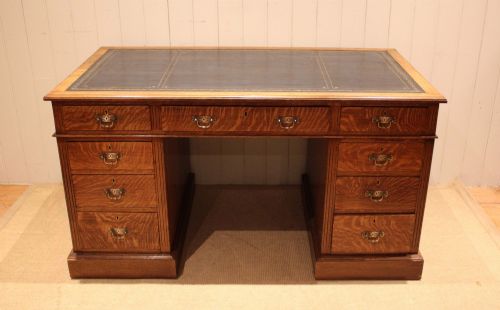
An edwardian oak pedestal desk typically comprises two banks of drawers supporting a heavy top, frequently featuring a leather writing surface or a mechanical roll top mechanism. These substantial furnishings serve as the backbone of period studies and offices, offering generous storage alongside a commanding presence.
The pieces appearing on this page span the Edwardian era alongside adjacent Victorian and interwar periods, reflecting the transition from ornate nineteenth-century carving to more streamlined early twentieth-century utilitarian design. While many examples are standard single or twin pedestal configurations, larger partners desks and tambour-fronted variations also populate the selection.
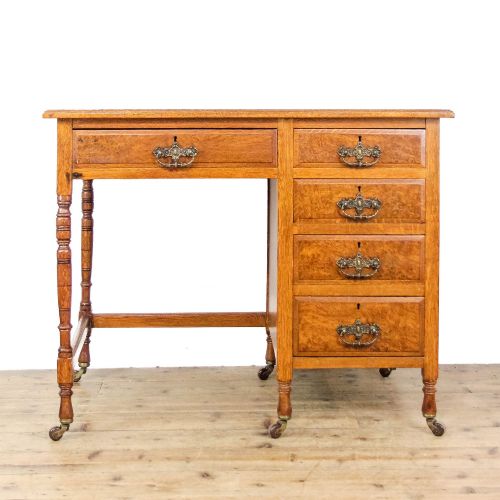
Makers and retailers of the period, including Maples and Heals, retailed these robust items to professional households and offices across Britain. Buyers encountering this phrase will find desks ranging from compact single-pedestal writing tables to expansive oak partners desks designed for dual-sided use.
Materials and Construction
Carpenters constructed these desks primarily using solid oak, occasionally selecting burr oak or incorporating secondary timbers like ash and satinwood within drawer linings and crossbanding. Brass handles, cast iron mechanisms for roll tops, and gilt-tooled leather writing inserts complete the standard specification of the period.
Panelling techniques and robust dovetail joinery ensure the structural integrity of the pedestals, while tambour slats provide smooth operation for enclosed roll-top variants. Drawer linings commonly feature traditional hand-cut joints, paired with original brass drop handles or stamped locks.
Listings feature oak alongside brass, leather, burr walnut, cast iron, ash, and satinwood across multiple revival styles.
Markers of Distinction
Quality in an edwardian oak pedestal desk reveals itself through the selection of timber figure, the precision of the joinery, and the presence of maker stamps or retailer labels. Desks featuring figured oak grain, secondary satinwood or burr walnut accents, and original brass hardware sit firmly at the upper end of the range.
Interior execution further separates standard commercial pieces from exceptional commissions, observable in fully oak-lined drawers and sophisticated internal letter compartments. The tactile weight of the pedestals and the smooth gliding action of a tambour shutter or heavy drawer indicate superior original workshop practice.
Maples of London and Paris·Edwards and Roberts·Heals of London·Angus of London
The Edwardian Oak Pedestal Desk Glossary
- Pedestal desk
- A heavy writing table supported by two separate stacks of drawers flanking a central kneehole.
- Tambour top
- A flexible slatted wooden shutter that rolls back in tracks to conceal the desk's upper writing surface and pigeonholes.
- Partners desk
- An expansive double-sided desk designed for two people to work opposite one another simultaneously, featuring drawers on both faces.
- Crossbanding
- A decorative border of veneer laid perpendicular to the grain of the primary surface, often seen in contrasting timbers like satinwood.
- Gilt-tooled
- Leather desk surfaces stamped with metallic gold leaf decorative patterns around the perimeter.
Edwardian Oak Pedestal Desk: Frequently Asked Questions
What is a roll top desk?
A roll top desk uses a slatted wooden tambour mechanism that slides down in curved tracks to cover the pigeonholes and writing surface. This design allowed clerks to lock away paperwork quickly at the end of the working day without clearing the desk.
Most examples encountered from this era pair the roll top mechanism with a sturdy oak pedestal base containing multiple banks of storage drawers.
How do I care for a leather desk top?
Leather inserts benefit from occasional treatment with specialised leather balms to maintain flexibility and prevent the surface from drying out over time. Avoid using abrasive cleaning agents or excessive moisture near the gilt-tooled borders.
Protecting the hide with a blotter during daily writing helps preserve the original finish and the surrounding timber framing.
Can I fit a modern chair underneath?
Kneehole clearances vary significantly across historical desks, particularly between compact single-pedestal writing tables and larger commercial models. Measure the height from the floor to the underside of the central drawer or modesty panel before pairing with an office chair.
Period seating such as revolving armchairs often provides appropriate proportions for working comfortably at these heights.