




Edwardian Oak Hall Chairs
Edwardian oak hall chairs bring upright presence and honest timber to an entranceway, offering a sturdy seat designed to make a statement.
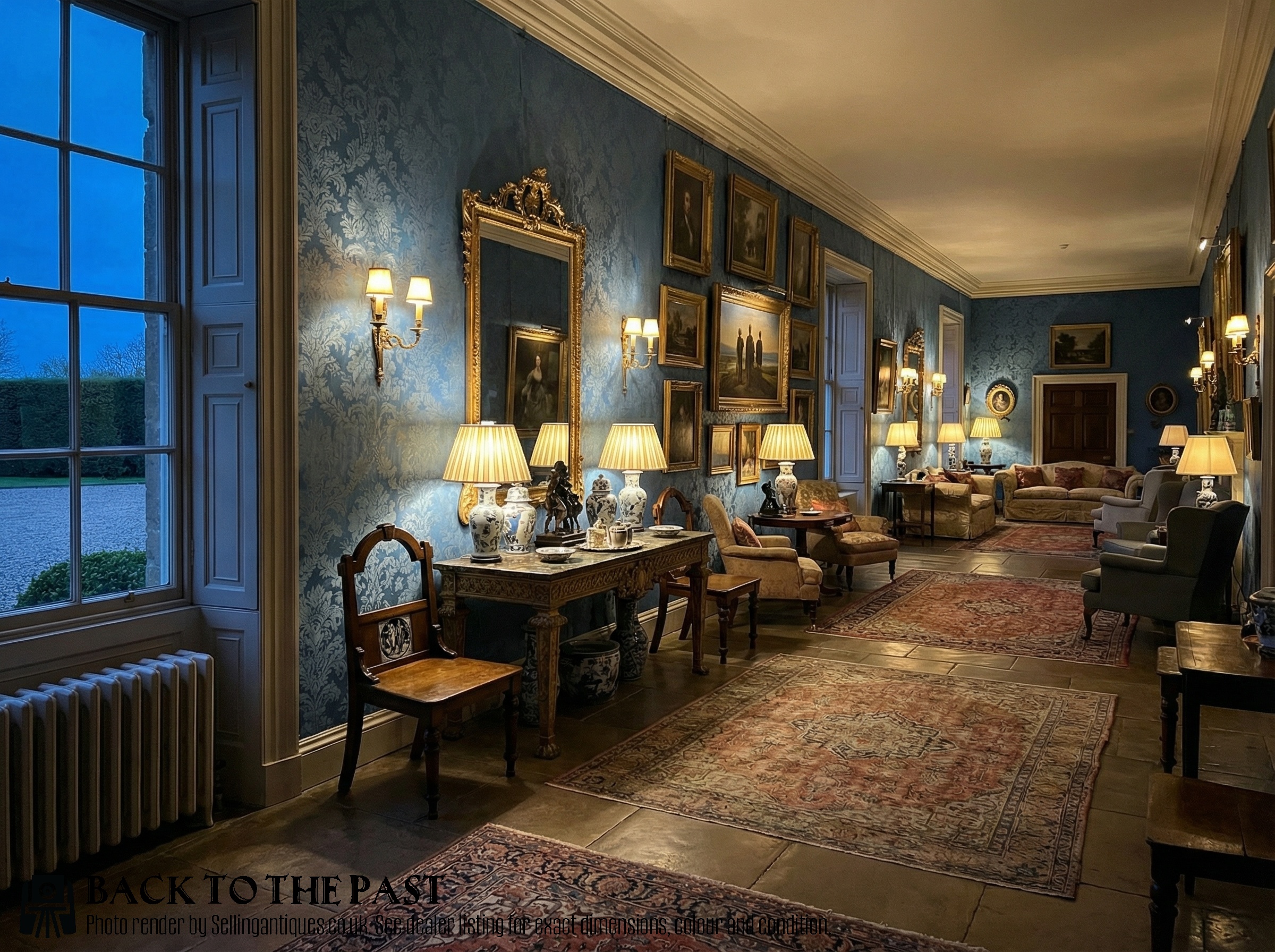
Edwardian Oak Hall Chairs
The inventory on this page ranges from tall-backed side chairs and armchairs to benches, settles, and monks benches. Most pieces showcase the solid timber construction typical of the Edwardian period, often accompanied by earlier Victorian and later revival examples.
How they were made
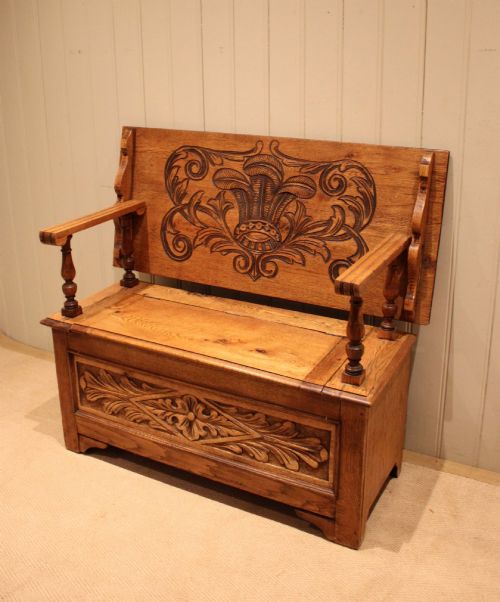
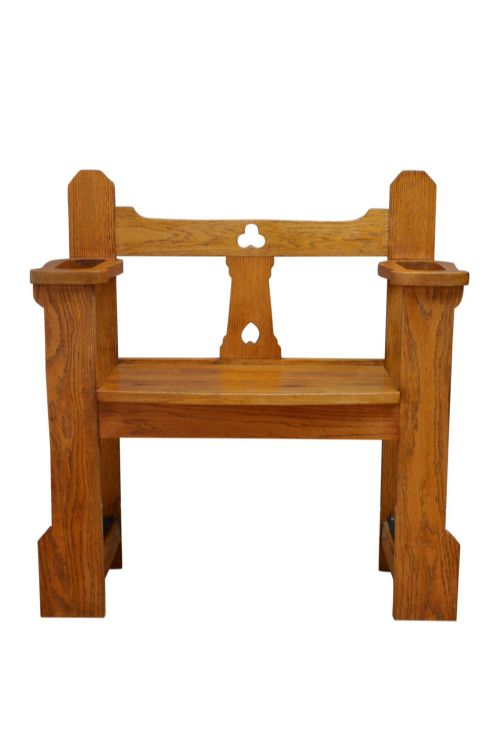
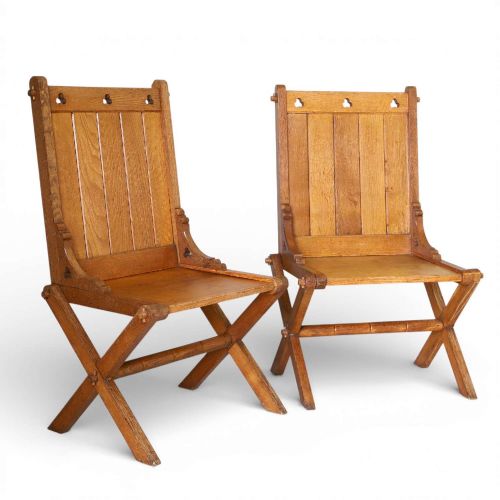
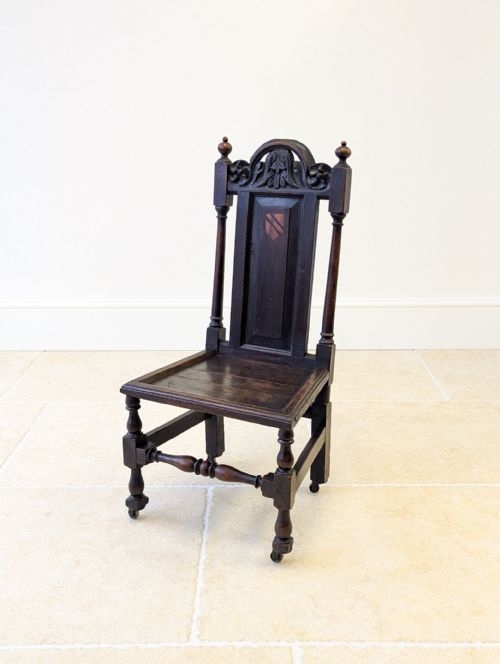
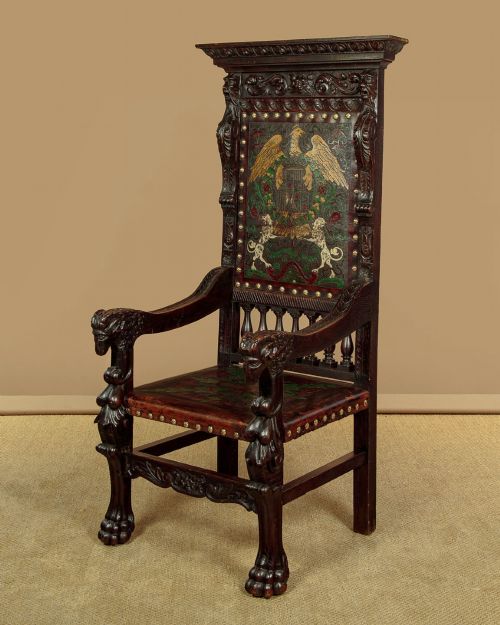
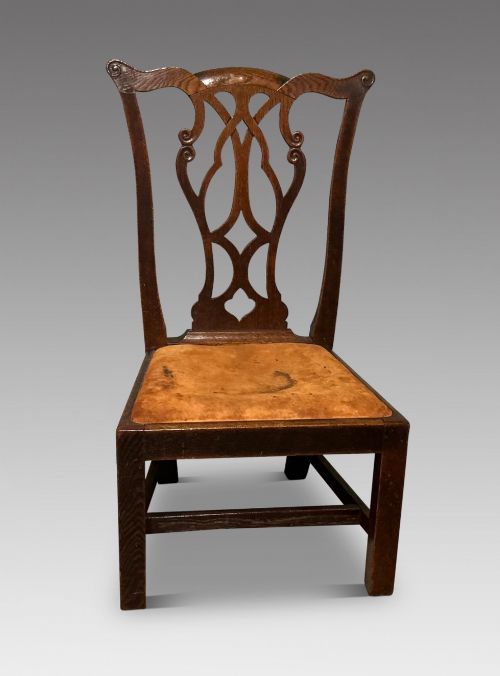
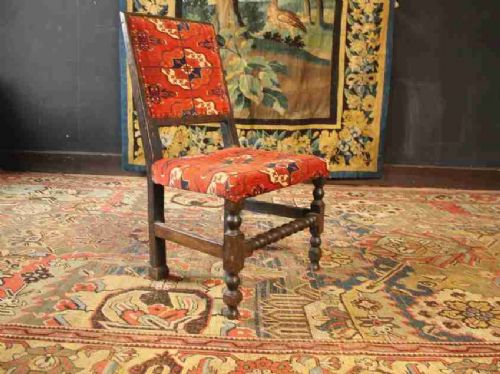
Cabinetmakers utilised solid oak and timber frameworks, often incorporating carved panel detailing, barley twist legs, and trefoil motifs. Workshops relied on traditional joinery methods to build enduring frames suited to heavy daily use.
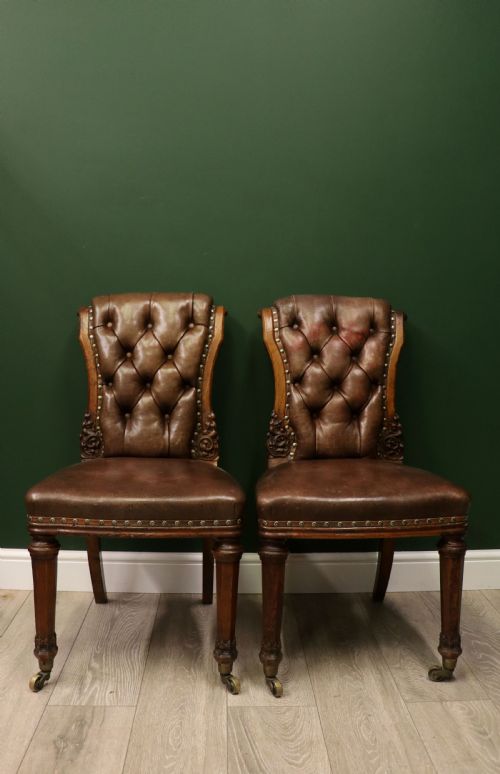
Upholstered elements frequently feature leather, fabric, suede, and buttoned panels, while specific designs integrate decorative brass accents or ceramic tiles into the wooden structure.
One extraordinary seating option even served as a shop advertising chair for matchless soap.
What varies in quality
The distinction between standard examples and exceptional pieces rests in the depth and crispness of the hand carving and the integrity of the timber. Stronger items display thoughtful proportions and balanced ornamentation without excessive wear to the joints.
Finer construction is evident in the selection of the oak and the harmony of revival styles, whether following Arts and Crafts simplicity or elaborate Gothic and Jacobean details.
Liberty & Co·A.W.N. Pugin·Watsons Matchless Soap
The Edwardian Oak Hall Chairs Glossary
- Hall chair
- A rigid, upright wooden seat designed for an entrance hall rather than long lounging. These pieces usually feature solid wooden backs and minimal upholstery.
- Arts and Crafts
- A design movement prioritising traditional craftsmanship, visible construction methods, and simple forms over mass-produced ornamentation. It heavily influences many pieces found in this category.
- Monks bench
- A convertible piece of furniture that functions as a bench with a backrest that folds down to form a table top. They provide practical storage space beneath the seat.
- Barley twist
- A type of furniture leg or support turned on a lathe to resemble a twisting rope. This decorative turning appears frequently on twentieth-century seating.
Edwardian Oak Hall Chairs: Frequently Asked Questions
Where were hall chairs placed in historic homes?
These chairs stood primarily in hallways, vestibules, and entrance lobbies where visitors waited briefly before entering the main rooms of the house.
Because they were meant for transient use rather than relaxation, the designs emphasised upright postures and strong decorative backs that showcased the owner's taste.
How do I distinguish Edwardian pieces from Victorian ones?
Edwardian examples tend to exhibit lighter proportions and simpler lines influenced by the Arts and Crafts movement, whereas Victorian pieces often feature heavier carvings and darker, more elaborate Gothic or Jacobean revival motifs.
Examining the construction methods and style vocabulary helps determine whether a piece originates from the late nineteenth century or the early 1900s.
What is a monks bench used for?
A monks bench serves a dual purpose as both a seating bench with a high back and a table when the backrest tilts forward onto the armrests.
Many versions also include a concealed storage compartment beneath the hinged seat for household items.
How should I care for antique oak furniture?
Maintaining solid oak involves keeping pieces away from direct heat sources and sudden temperature fluctuations that can dry out the timber.
Regular dusting with a dry cloth and occasional application of appropriate wax helps preserve the natural finish of the wood.