


Edwardian Needlepoint Stool
An Edwardian needlepoint stool brings tactile warmth to a room through traditional textile work mounted on sturdy timber frames.
Edwardian Needlepoint Stool
An edwardian needlepoint stool combines practical seating with decorative textile work, appearing across various forms including footstools, piano stools, and window seats. The selection spans several distinct aesthetic directions, from classic Edwardian pieces to earlier Victorian and revival designs.
Makers utilised resilient timbers like mahogany, walnut, and pitch pine to support intricate textile tops, creating sturdy items suited for daily domestic use. Buyers encounter both compact round foot stools and larger rectangular dressing table seats within the current range.
How these stools were constructed
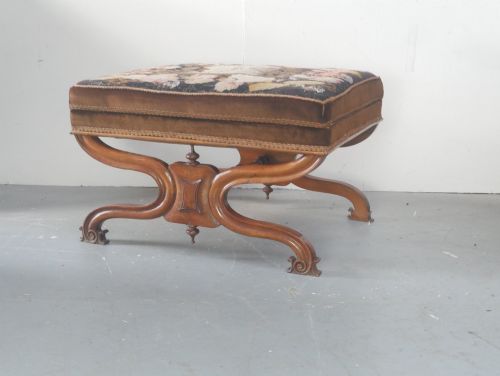
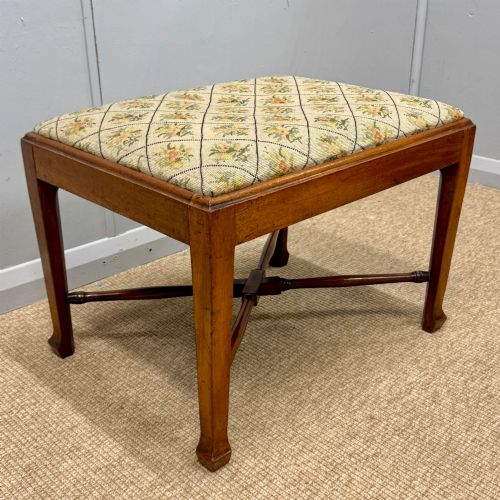
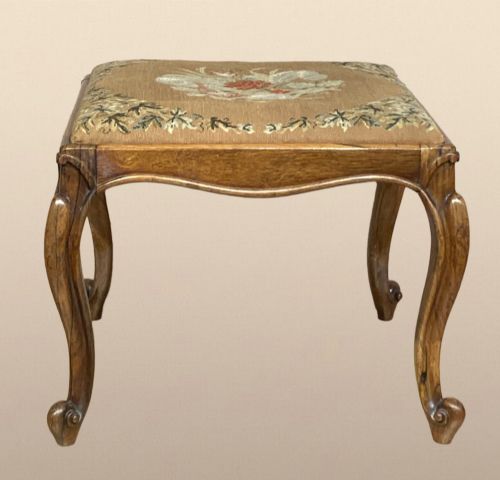
Craftsmen built the structural frames using dense hardwoods such as mahogany and walnut, occasionally employing beech or pitch pine for interior support. These timbers were shaped into cabriole legs, tripod bases, or straight frames featuring cross stretchers.
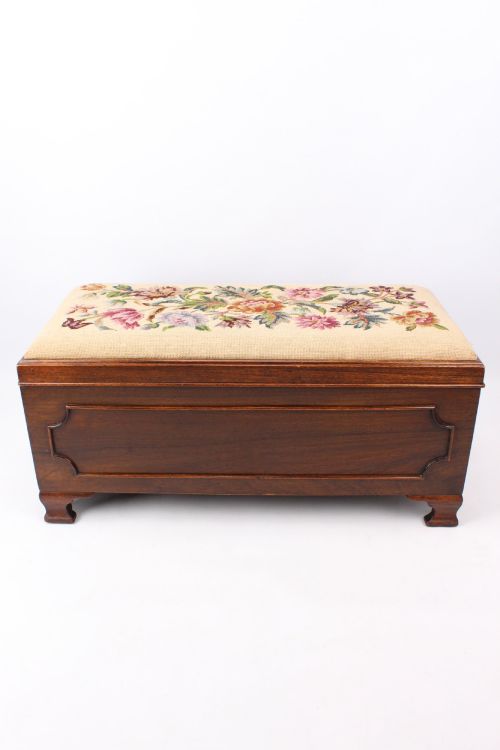
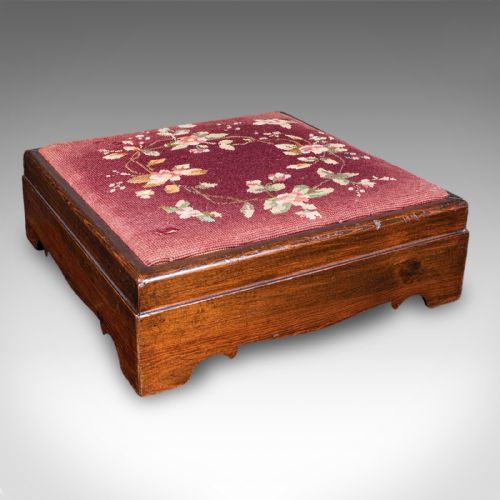
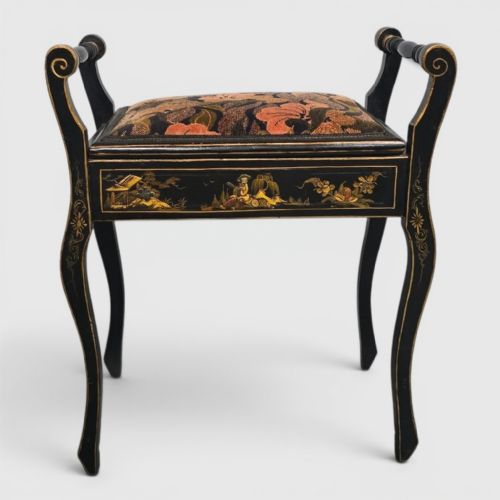
The top surfaces received upholstery incorporating wool needlepoint, tapestry, and geometric kilim textile panels. Skilled artisans secured these decorative covers over padded foundations, sometimes adding inlaid details or painted Chinoiserie finishes to the woodwork.
Geometric kilim tapestry designs share floor space with delicate Chinoiserie painted finishes and intricate Tunbridge Ware wood mosaics.
What separates the finest pieces
Superior quality rests in the tightness and complexity of the needlework tapestry, where intricate geometric or pictorial patterns demand greater hours of hand execution. The execution of the timber frame, from carved walnut cabriole legs to precise Tunbridge Ware inlay, distinguishes standard production from finer workshop output.
Condition and originality dictate lasting appeal, particularly regarding the preservation of the original textile seat and the stability of the hardwood frame. Pieces bearing identifiable maker stamps or distinct regional styles like Scottish Baronial command particular attention from collectors.
Jas Shoolbred·Whytock and Reid
The Edwardian Needlepoint Stool Glossary
- Needlepoint
- A type of canvas work embroidery stitched by hand using wool or yarn. It forms the durable and decorative upper surface of these stools.
- Cabriole leg
- A furniture leg that curves outward and then tapers inward, finishing in a pad or claw foot. This form appears frequently on Victorian and Edwardian seating.
- Cross stretcher
- Wooden rails connecting the legs near the base to provide additional structural rigidity. They are common on dressing table and piano stools.
- Tunbridge Ware
- A form of decorative woodworking characterised by tiny mosaic tiles assembled from different coloured woods to form geometric patterns. It decorates specific Victorian pieces in the collection.
Edwardian Needlepoint Stool: Frequently Asked Questions
Where were Edwardian needlepoint stools used?
These versatile pieces functioned primarily in drawing rooms, bedrooms, and music rooms as piano seats or dressing table stools. Their compact size allowed them to move easily beside firesides or window seats.
Today, they serve equally well as low footstools or occasional seats in sitting rooms and hallways.
How do I care for the needlepoint top?
Protect the wool textile surface from direct sunlight to prevent the coloured yarns from fading over time. Gentle vacuuming through a mesh screen helps remove dust without snagging the stitches.
Avoid harsh chemical cleaners on both the fabric and the wooden frame to preserve the original finish.
How do I distinguish Edwardian pieces from Victorian ones?
Edwardian examples often display lighter mahogany frames and cleaner neoclassical lines compared to the heavier, highly carved walnut and rosewood typical of the Victorian era. Revival styles and darker timber tones frequently indicate earlier nineteenth-century production.
Examining the underlying construction methods and textile patterns helps confirm the manufacturing period.
Are piano stools adjustable?
Many piano stools of this era feature specialised mechanical or tripod columns designed to alter the seating height for the pianist. Other variants remain fixed, functioning identically to standard dressing table stools.
Checking the mechanism beneath the seat reveals whether the height can be modified.