
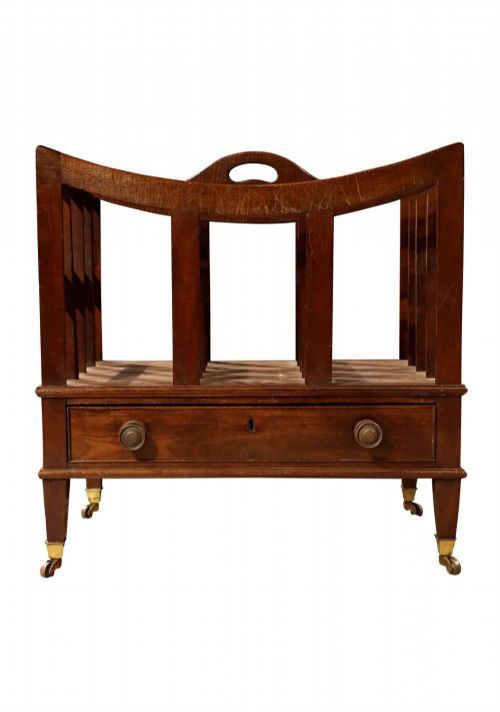


Edwardian Music Rack
An edwardian music rack is a practical piece designed to hold sheet books and folios near the piano, bringing both function and period charm to a room.
Edwardian Music Rack
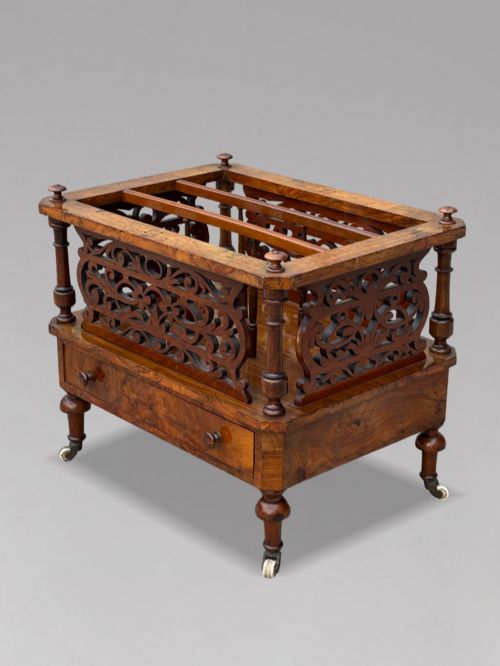
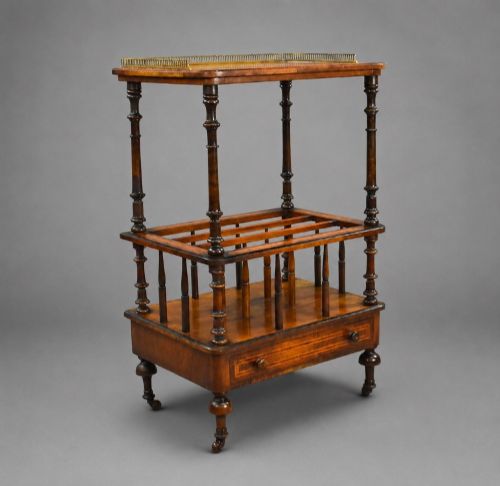
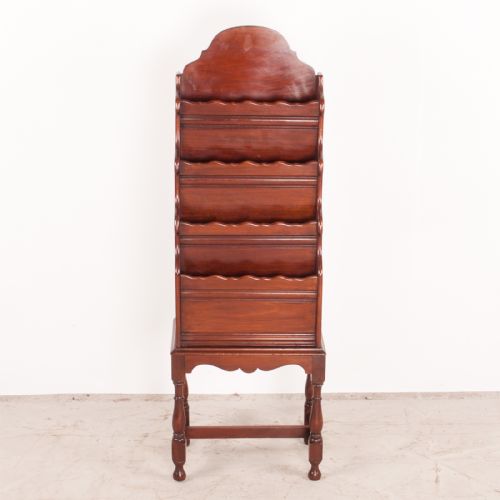
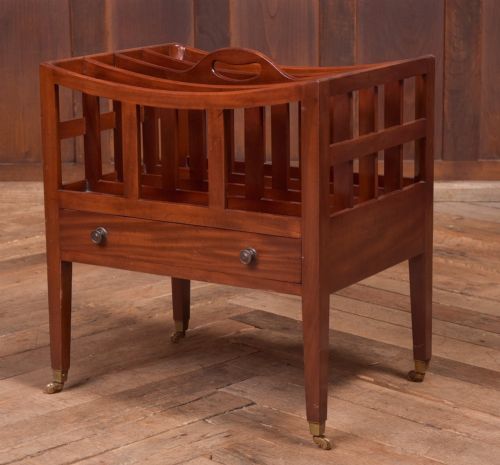
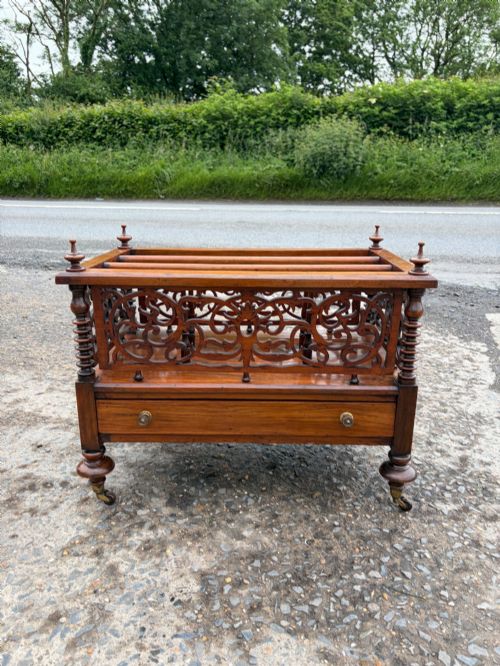
When you search for an edwardian music rack, you encounter forms that span several decades, though pieces originating in the Edwardian era itself sit alongside Victorian and Regency examples on this page. These items primarily appear as canterburys, music stands, and cabinets designed to keep scores and folios tidy.
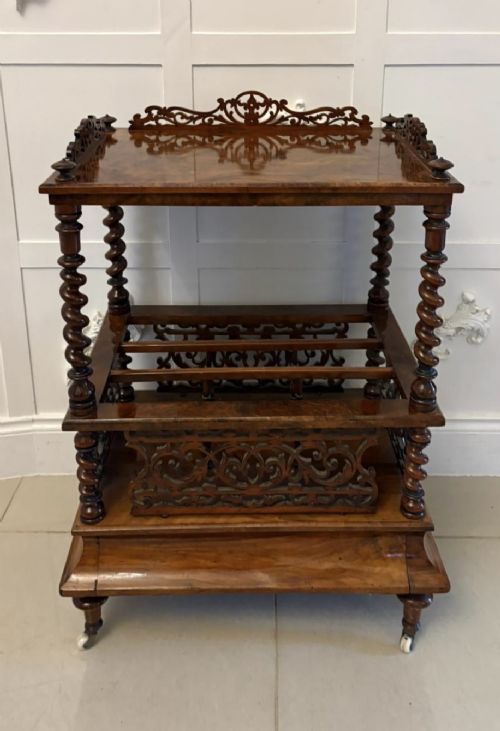
The materials you meet most often include mahogany and oak, frequently paired with inlaid details or brass hardware. Many of these pieces serve double duty as occasional tables or small whatnots fitted with castors for easy movement across the floor.
How they were made
Cabinet makers relied on timbers such as mahogany, walnut, burr walnut, rosewood, and oak to build the frames and slatted compartments of these stands. Inlays of lighter woods and marquetry added decorative contrast to the polished surfaces.
Bamboo makes a surprise appearance as a framing material for Victorian music storage.
What varies in quality
The choice of timber creates the primary distinction between standard examples and exceptional ones, with figured burr walnut and rich rosewood commanding attention over simpler oak or mahogany. Finer pieces display crisp marquetry work and well-executed inlay rather than plain surfaces.
Structural additions such as integrated drawers, multi-tiered whatnot shelving, and original castors elevate the utility and sophistication of the piece. The crispness of the turned legs and the joinery at the corners reveal the hand of a more accomplished workshop.
Howard and Sons of London
The Edwardian Music Rack Glossary
- Canterbury
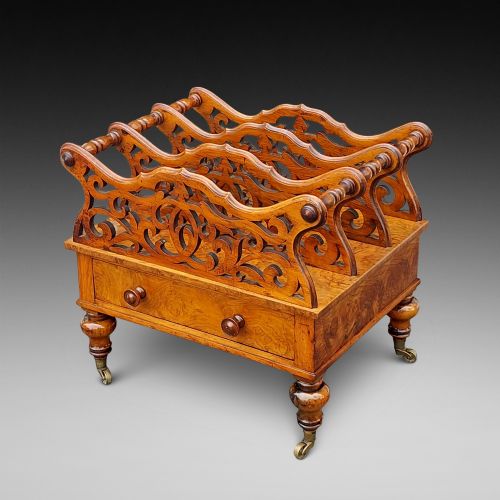
- A low stand with partitioned upright sections for holding sheet music, magazines, or books, often mounted on castors. These pieces frequently include a small drawer beneath the rack.
- Whatnot
- An open set of several shelves for displaying small objects, sometimes combined with a canterbury base below. They appeared frequently in Victorian and Edwardian interiors.
- Marquetry
- Decorative veneer applied to furniture in patterns using different woods, metals, or shells to form pictorial or geometric designs. It is commonly found on burr walnut tops.
- Lyre-shaped
- A design motif shaped like a lyre, frequently utilised in the vertical supports of music stands and sheet music racks. This classical shape reflects Regency and Victorian tastes.
- Castors
- Small wheel attachments fitted to the feet of heavy furniture to allow easy rolling across carpets and floors. Original brass castors are a desirable feature on period stands.
Edwardian Music Rack: Frequently Asked Questions
What is an edwardian music rack used for?
These pieces were built to hold sheet music, folios, and books close to the piano or in the family sitting room. They kept heavy volumes upright and separated for quick selection during musical evenings.
Today, they function just as well beside a modern armchair to store magazines, journals, and daily reading material while adding period character to the space.
How do I spot an edwardian music rack?
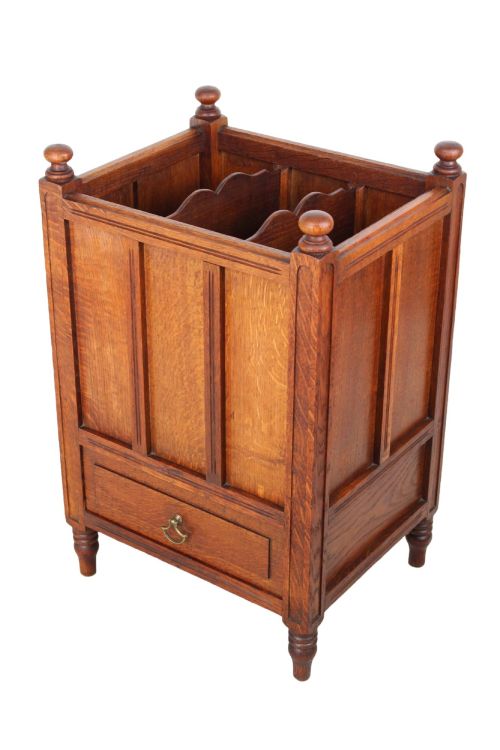
Edwardian examples typically feature light mahogany construction, sometimes with subtle line inlay, reflecting the lighter aesthetic of the early twentieth century compared to heavier Victorian walnut.
Many listings also include canterburys and music cabinets from the nineteenth century, showing turned legs, brass handles, and partitioned sections for folios.
Can I use an edwardian music rack as a side table?
Many of these pieces double as lamp tables or occasional tables, featuring a flat top surface suitable for small lamps or ornaments. Models built with lower drawers and partitioned sections provide both surface space and storage.
Their compact footprints and movable castors make them versatile additions beside sofas or chairs in a modern sitting room.
What woods were used for edwardian music racks?
Makers favoured mahogany and oak during the Edwardian period, often finishing the surfaces with a warm polish to highlight the grain. Earlier Victorian pieces frequently utilised burr walnut, rosewood, and inlaid marquetry.
Brass hardware and ceramic fittings occasionally added contrast to the wooden frames and the turned legs supporting the base.