


Edwardian Marquetry Bench
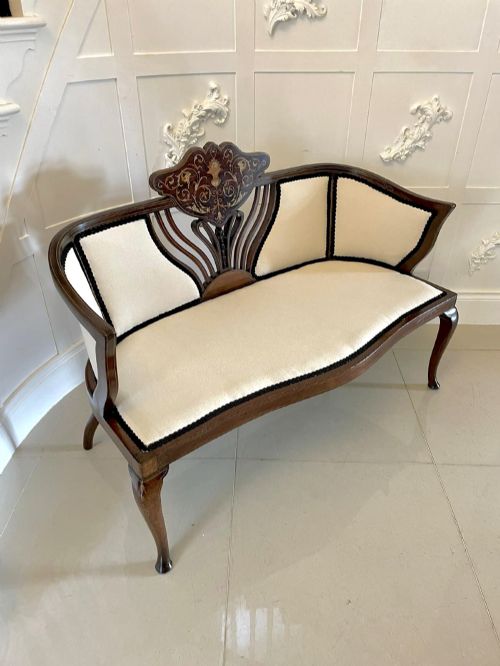
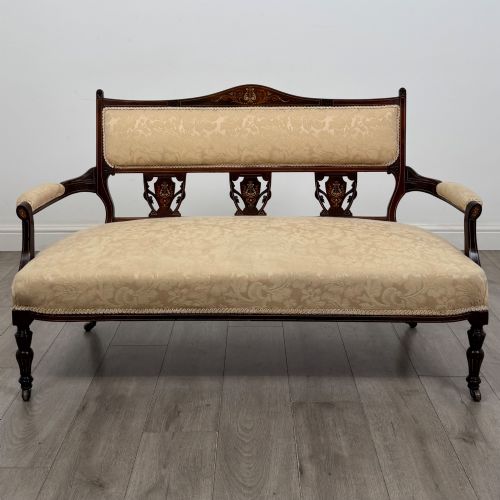
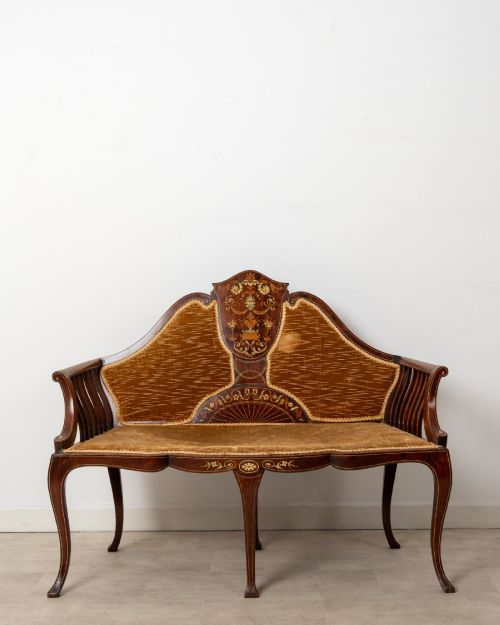
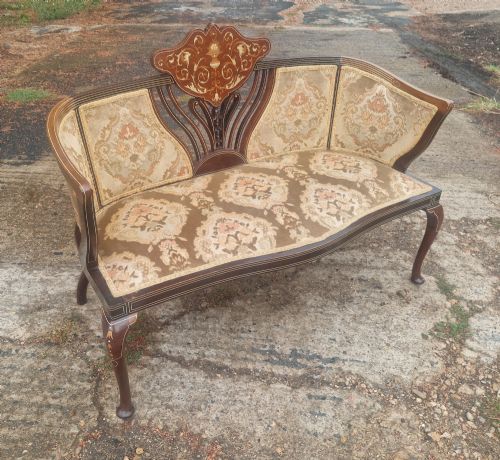
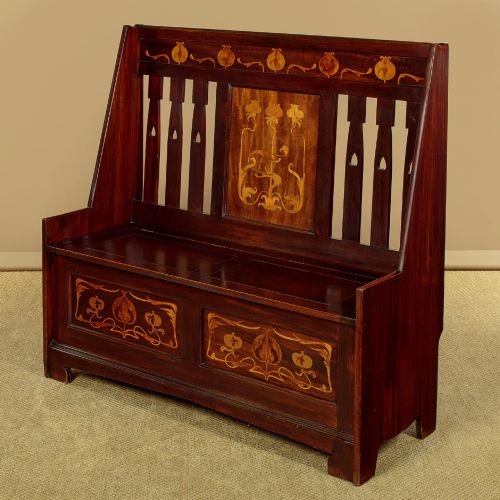
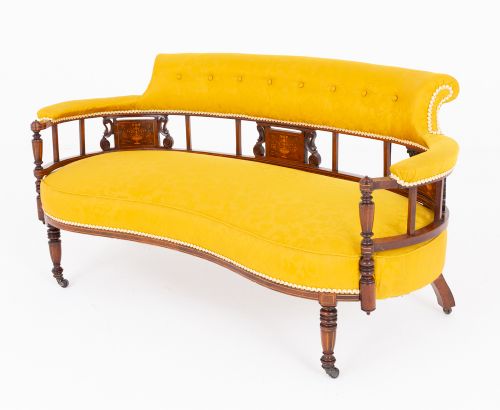
These Edwardian marquetry bench pieces combine mahogany timbers with intricate satinwood inlay, offering both practical seating and refined period character for the home.

Edwardian Marquetry Bench
An edwardian marquetry bench brings together seating forms such as settees, window seats, and piano stools spanning the late nineteenth century through to the early twentieth century. Buyers seeking this phrase encounter mahogany and rosewood frames embellished with detailed wood inlays.
The prevailing examples on this page are Edwardian and Victorian pieces, featuring satinwood inlay and boxwood details alongside various fabric upholsteries. These seating items range from salon settees to end-of-bed sofas and piano stools.
Origins span late Victorian workshops and Edwardian furniture makers, reflecting the revival of Sheraton styles and Arts and Crafts influences. The selection demonstrates how makers adapted traditional forms for domestic spaces through decorative marquetry.
Distinctions in craftsmanship and design
The refinement of the marquetry and inlay work distinguishes standard items from superior examples. Finely cut satinwood, boxwood, and bone details demonstrate greater precision and artistic control across the timber surface.
Timber selection and frame integrity separate the output of larger workshops from everyday production. Dense mahogany and rosewood timbers with well-executed joinery retain their structural rigidity over decades of use.
The sophistication of the stylistic revival - whether drawing upon Sheraton Revival symmetry or Arts and Crafts simplicity - influences the character of the piece. Superior proportions and balanced upholstery integration elevate the overall presence of the seating.
Listings feature mahogany, rosewood, and satinwood materials across Edwardian and Victorian periods.
James Shoolbred and Co
The Edwardian Marquetry Bench Glossary
- Marquetry inlay
- The art of applying pieces of veneer to a structure to form decorative patterns. This technique defines the surface ornamentation on Edwardian and Victorian furniture.
- Satinwood
- A durable timber with a golden sheen used extensively for contrasting inlay work. Cabinet makers employed it to highlight specific design motifs against darker woods.
- Box settle
- A high-backed wooden seating form incorporating storage beneath the seat. These robust pieces reflect the utilitarian side of domestic furniture production.
- X-framed piano stool
- A seating form supported by intersecting diagonal wooden members. This structural design provides stability while offering a distinct aesthetic silhouette.
Edwardian Marquetry Bench: Frequently Asked Questions
What periods do these benches cover?
The pieces span from the late nineteenth century through to the Edwardian era, capturing Victorian and early twentieth-century production.
Designs reflect revivals of earlier stylistic movements alongside contemporary Edwardian tastes.
How were these seats used originally?
They served multiple domestic functions, from formal salon seating to piano stools and window seats placed in reception rooms.
Specific variants like end-of-bed sofas provided practical seating within private sleeping quarters.
What woods appear in the woodwork?
Mahogany and rosewood form the primary structural timbers for the frames and legs of the furniture.
Satinwood, boxwood, and bone provide the contrasting materials used for the detailed marquetry and inlay patterns.
How do I care for the upholstery?
Maintenance depends on whether the fabric is historic damask or later replacement textile.
Gentle vacuuming and professional textile cleaning preserve the condition of the fabric without harming the surrounding timber frame.