


Edwardian Maritime Wall Art
Edwardian maritime wall art captures naval power, coastal trade and local fishing fleets through original paintings, watercolours and etchings.
Edwardian Maritime Wall Art
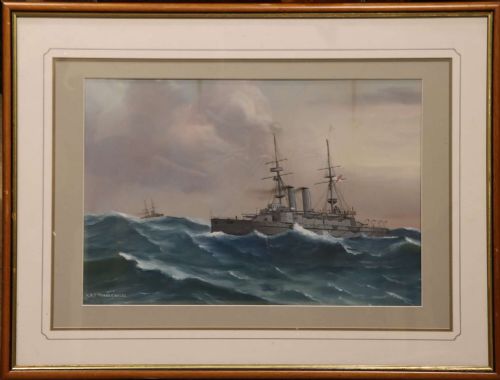
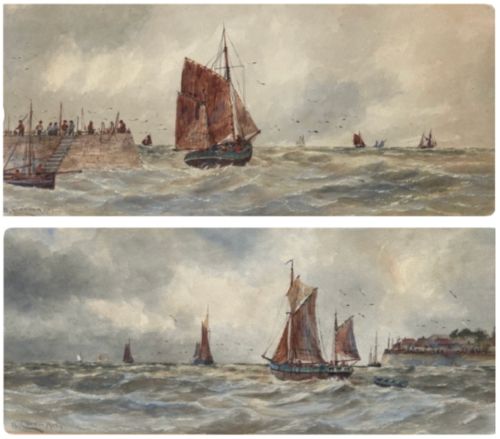
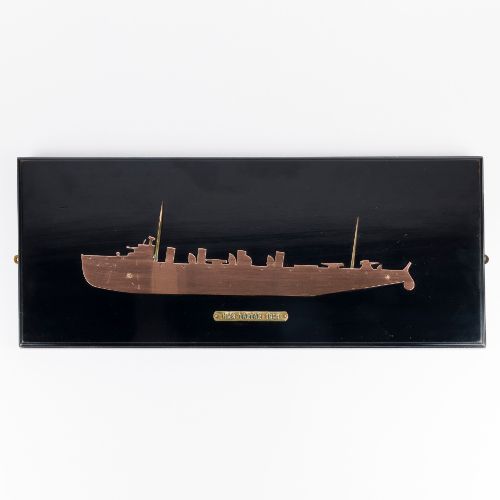
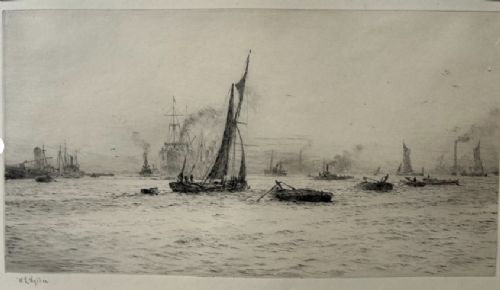
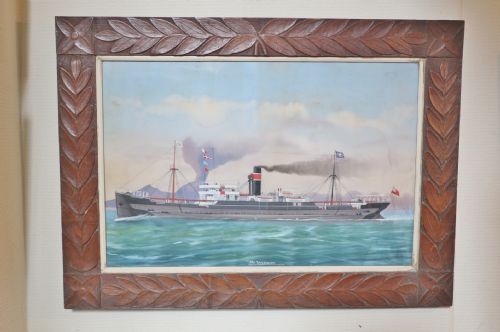
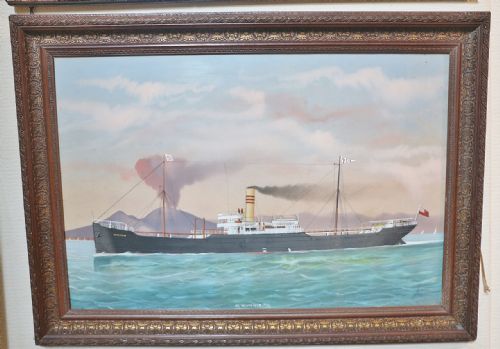
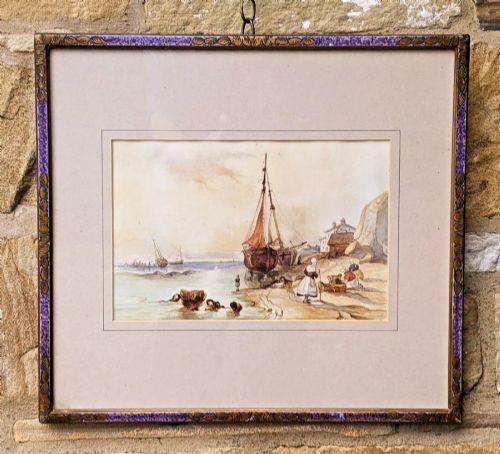
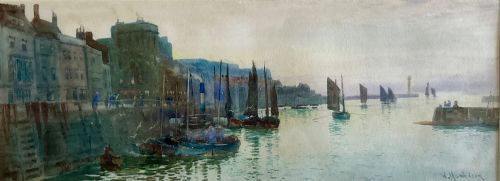
Edwardian maritime wall art encompasses framed paintings, watercolours and etchings depicting naval vessels, steamships, sailing boats and coastal harbours. The selection relies heavily on early twentieth-century works alongside late nineteenth-century pieces that share the same aesthetic. Buyers encounter detailed depictions of named ships, fishing luggers and quiet coastal scenes from locations such as Whitby, St Ives and the River Thames.
The objects take several distinct physical forms, ranging from framed oil paintings on canvas and board to delicate watercolour pigments and pencil signed etchings. Makers also produced mixed media works, gouache studies and textile woolwork pictures featuring sailors and vessels. These pieces generally reflect a period of intense maritime activity, recording specific ironclads, liners and local craft.
How they were made
Artists worked primarily with oil on canvas or watercolour pigment on paper, often incorporating gouache to build opaque highlights on water and sky. Canvases were stretched and framed in gilt or wood surrounds, whilst works on paper utilised glass protection to preserve the delicate washes. Etchings relied on inked metal plates pressed onto paper, capturing fine linear details of rigging and architecture.
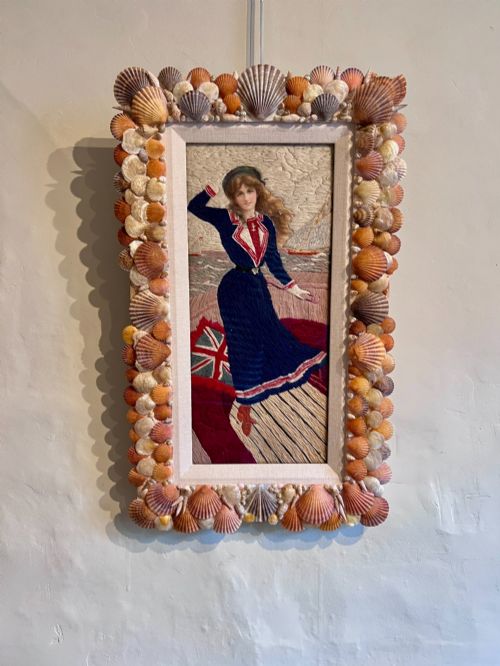
Makers of textile pieces utilised coloured wools to construct tactile pictures known as woolies, stitching maritime scenes with considerable patience. Board supports and heavy wood frames provided structural rigidity for gouache and oil paintings intended for domestic display. Each technique suited the specific demands of marine recording, from the fluid transparency of watercolours to the rich textures of oil paint.
Sailors occasionally stitched portraits of their sweethearts alongside ironclad battleships to keep both close at heart while at sea.
What varies in quality
Quality rests upon the artist's command of light, atmosphere and maritime architecture, distinguishing careful observation from formulaic studio production. Stronger works capture the specific movement of water, accurate vessel rigging and the atmospheric effects of sunrise, sunset or storm conditions. Lesser examples offer stiffly rendered hulls and repetitive wave patterns without convincing depth or meteorological truth.
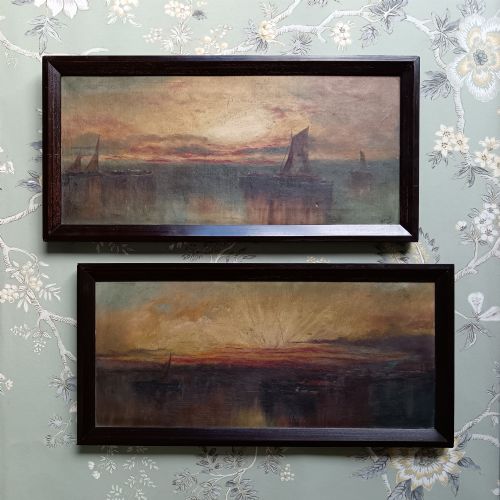
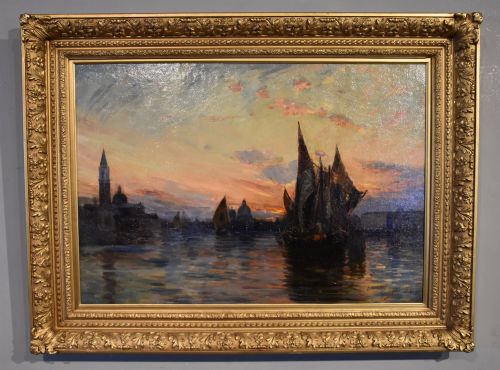
The distinction also lies in the preservation of the medium, the strength of the original pigment and the quality of the period framing. Works signed by recognised marine painters or featuring documented historical vessels carry greater documentary and visual weight. The handling of atmosphere, whether in the hazy light of a Venetian evening or the heavy swell of a coastal storm, dictates the visual success of the piece.
William Lionel Wyllie·Charles Napier Hemy·Richard Harry Carter·Pieter Cornelis Dommersen·Daniel Sherrin·Edward Henry Eugene Fletcher·James Webb·Leslie Rackham·Ernest F Hill·George Hamilton Constantine
The Edwardian Maritime Wall Art Glossary
- Gouache
- An opaque water-based pigment used to achieve solid colour areas and bright highlights in works on paper or board. It allows artists to build dense, matte surfaces that contrast with transparent watercolour washes.
- Lugger
- A traditional fishing boat carrying one or more lug sails on small masts, frequently recorded by artists working in coastal British art colonies. These nimble vessels formed the backbone of regional fishing fleets.
- Woolwork
- A traditional stitched textile picture, often created by sailors using coloured wool yarns on canvas ground. These handmade pieces commonly depict named ships alongside sentimental motifs.
- Etching
- A printmaking technique where an artist scratches a design through a protective ground on a metal plate, which is then acid-bitten and inked for printing. This process yields fine, precise lines ideal for architectural and nautical detail.
- Ironclad
- A steam-propelled warship protected by iron or steel armour plates, built extensively during the latter half of the nineteenth century and early twentieth century. These formidable vessels frequently inspired detailed paintings and sentimental tributes.
Edwardian Maritime Wall Art: Frequently Asked Questions
What subjects appear in Edwardian maritime art?
These works primarily depict named naval warships, steamships, tall ships and regional fishing boats operating around British and European coasts. Artists also recorded quiet harbours, bustling river scenes and dramatic coastal weather conditions.
Compositions range from detailed historical portraits of specific vessels to impressionistic studies of beaches, lighthouses and maritime communities.
How do I care for antique watercolours?
Watercolour paintings require protection from direct sunlight to prevent the fading of delicate pigments and paper discoloration. Maintaining stable indoor humidity levels prevents warping and deterioration of the paper support.
Framed works should utilise acid-free mounts and UV-filtering glass where possible to ensure long-term preservation without trapping moisture against the surface.
What distinguishes an etching from a painting?
An etching is a printed work created from an inked metal plate rather than a direct application of paint or pigment to a surface. Etchings rely on fine linear detail and tonal hatching rather than brushstrokes or colour washes.
Signed artist proofs and original prints offer a different texture and visual quality compared to unique oil or watercolour compositions.