



Edwardian Marine Seascape Art
Edwardian marine seascape art captures the motion of coastal tides, working vessels and tall ships through the brushwork of the period.
Edwardian Marine Seascape Art
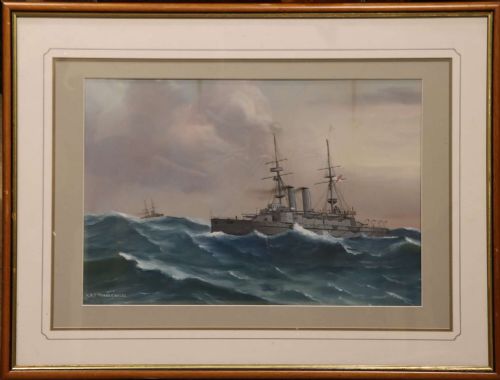
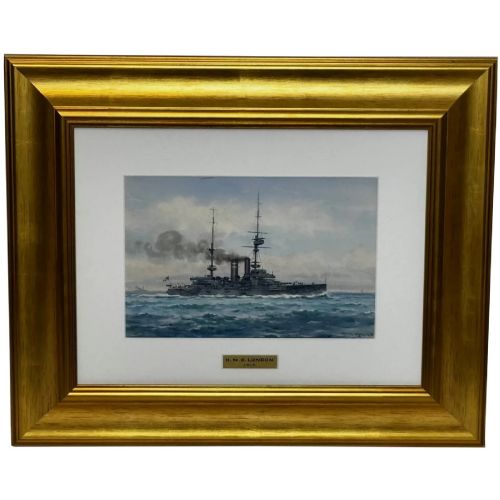
Edwardian marine seascape art spans oil paintings on canvas and board alongside detailed works on paper, recording coastal views, harbour scenes and naval vessels from the early twentieth century. Pieces in this category capture maritime life from British fishing ports to international waters, reflecting the significant cultural and economic weight of the sea during the Edwardian era.
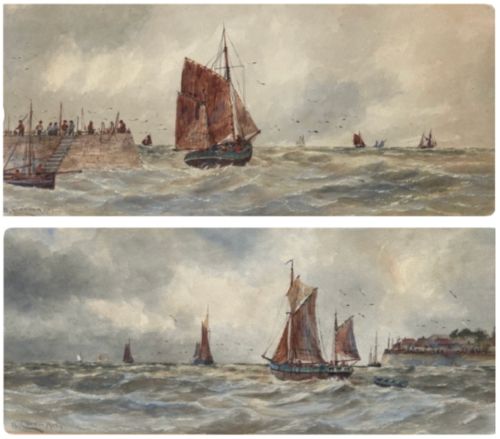
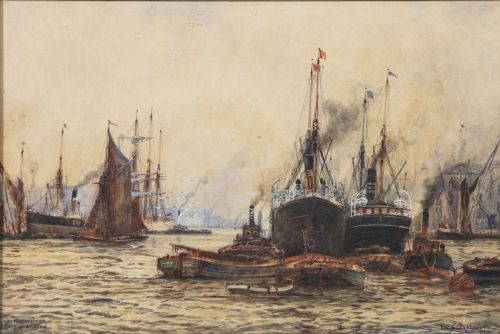
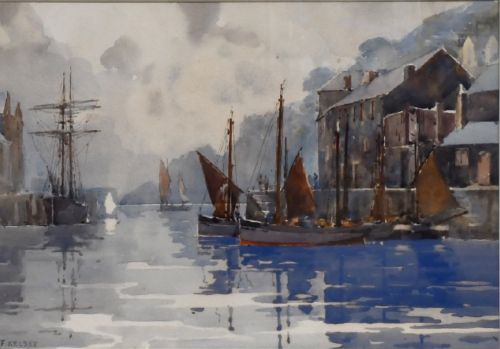
The works on this page lean heavily towards watercolours and oil paintings produced around 1900 to 1920, often signed by named artists or attributed to specific regional studios. Buyers encounter depictions of Thames barges, Cornish fishing luggers, stormy harbours and tranquil coastal inlets, preserved within their original framed formats.
While the core of the selection sits firmly in the Edwardian period, influences stretch back to late Victorian traditions and forward into the interwar years. This creates a diverse group of works ranging from brisk storm studies in gouache to sunlit harbour watercolours.
How They Were Made
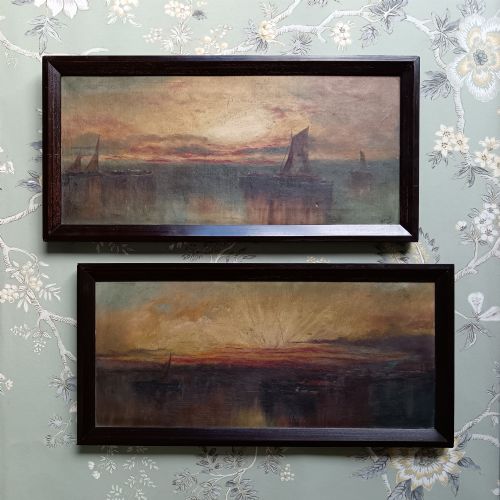
Artists of this period utilised oil paint on stretched canvas or wooden board to build rich, textured surfaces capable of rendering turbulent water and atmospheric skies. Watercolours on paper, frequently heightened with gouache pigment, allowed painters to capture the transient light of sunrise and sunset along coastal ports with immediacy.
Support materials include heavy paper, card and primed canvas, often housed behind glass or within period wooden frames that complement the maritime subject matter. Pigment application ranges from precise brushwork detailing naval rigging to loose, impressionistic washes depicting crashing waves and misty shorelines.
Listings feature works executed in oil paint, watercolour pigment and gouache on paper, canvas and wood board.
What Varies in Quality
Quality in these maritime works rests on the artist's command of light, atmosphere and the difficult anatomy of sailing vessels upon moving water. Stronger pieces display confident brushwork and accurate perspective in rendering rigging, hull forms and the weight of choppy seas.
The handling of the medium dictates visual depth, separating hurried sketches from resolved compositions where pigment and paper or canvas work in harmony. Documentation such as clear signatures, legible dates and identifiable locations adds historical context to the artistic merit of the piece.
Frank Watson Wood·Frank William Scarbrough·Charles Napier Hemy·Pieter Cornelis Dommersen·Daniel Sherrin·Edward Henry Eugene Fletcher
The Edwardian Marine Seascape Art Glossary
- Gouache
- An opaque water-based paint that provides solid, flat areas of colour and allows for highlights over watercolour washes.
- Lugger
- A traditional two-masted fishing boat rigged with standing lugsails, frequently seen in West Country and Yorkshire coastal art.
- Canvas
- A heavy woven fabric stretched across a wooden frame to serve as a sturdy support for oil paint.
- Watercolour pigment
- Finely ground colour particles suspended in a water-soluble binder, applied to paper to create transparent washes of tone.
Edwardian Marine Seascape Art: Frequently Asked Questions
How do I identify an Edwardian marine painting?
Look for signature styles, clothing of figures on the shore, and specific vessel types popular in the early twentieth century.
Many works carry artist signatures, dates or exhibition notes on the reverse that help narrow the timeline.
Where should I hang a marine watercolour?
Keep watercolours away from direct sunlight to prevent the pigments from fading over time.
Choose an interior wall with stable humidity to protect both the paper and the original frame.
What subjects are most common in these artworks?
Common subjects include working fishing boats, naval cruisers, bustling commercial ports and quiet coastal inlets.
Artists frequently painted familiar regional spots such as Whitby, St Ives and the Thames estuary.
Are these paintings usually framed in period frames?
Many pieces retain their original or contemporary wooden frames, which often show period gilt or painted finishes.
Checking the frame construction provides additional clues to the age and history of the artwork.