
Edwardian Mahogany Wardrobe
An edwardian mahogany wardrobe brings generous storage and refined proportions to a bedroom, combining practical hanging space with classical detailing.

Edwardian Mahogany Wardrobe
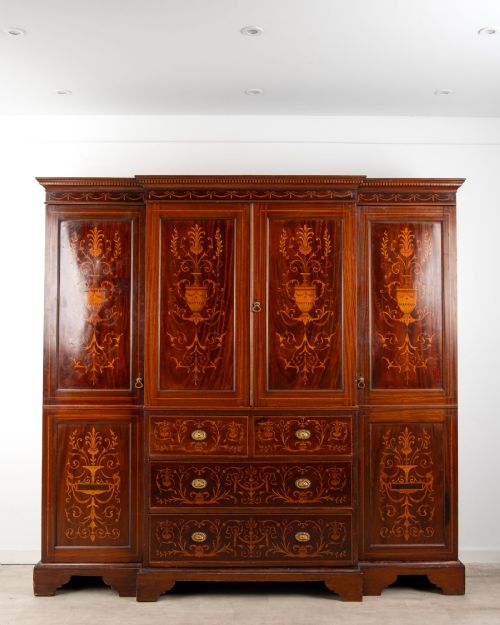
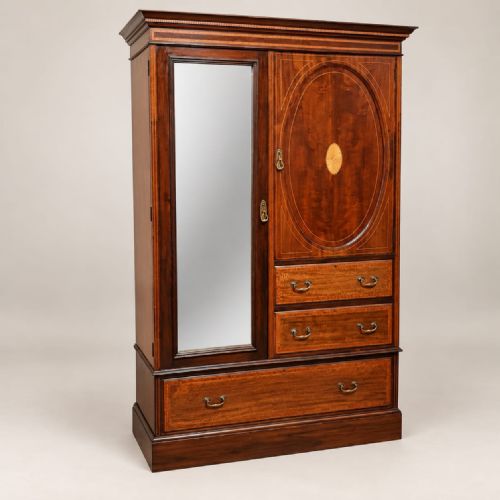
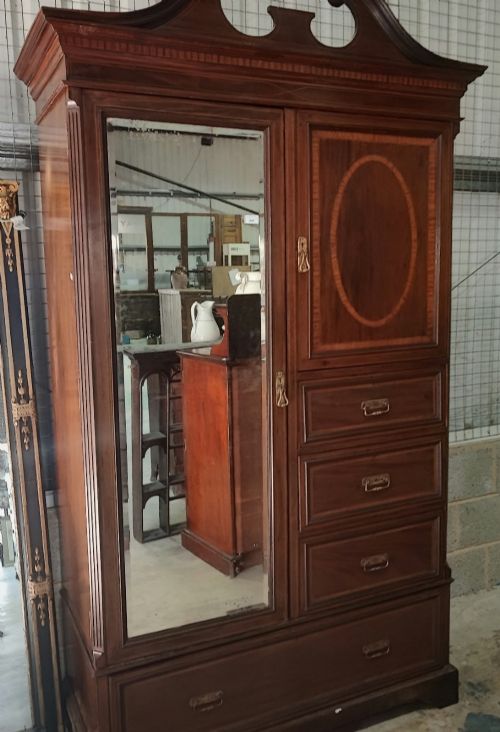
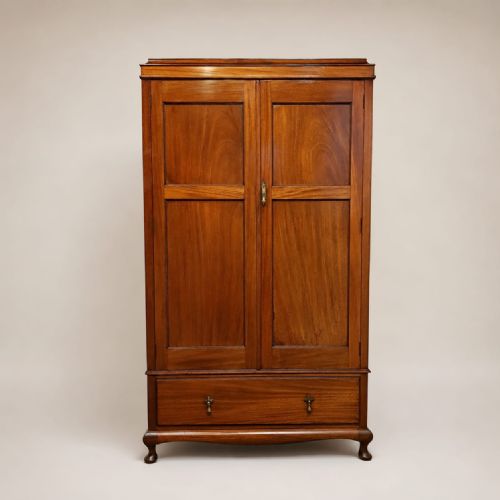
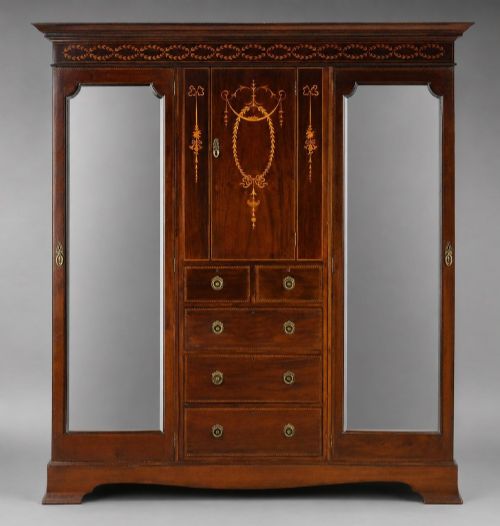
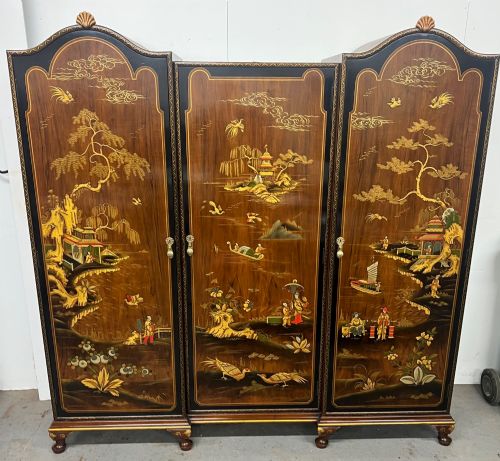
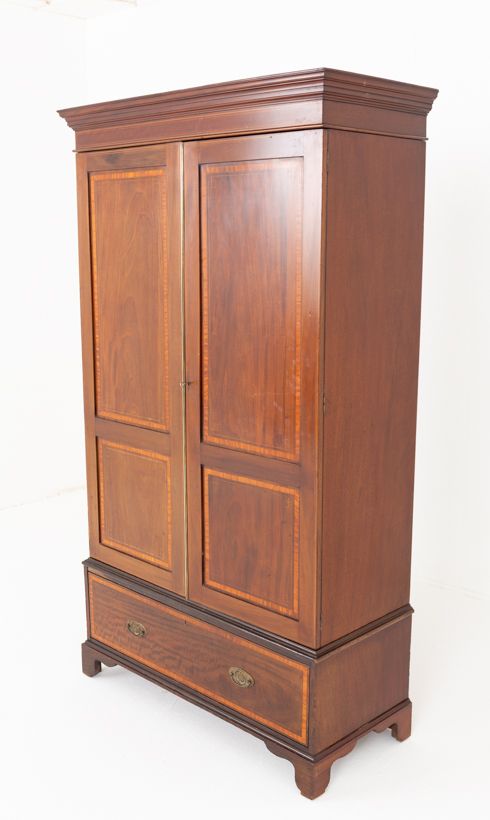
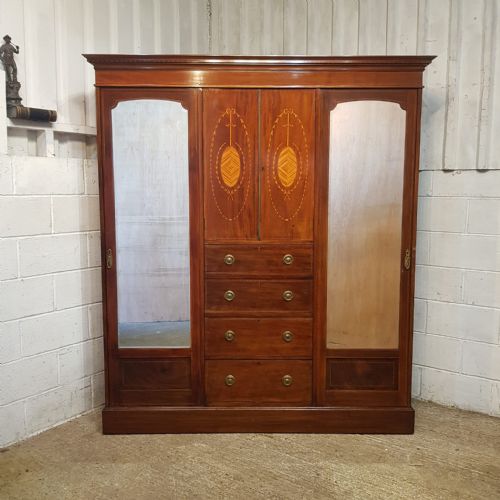
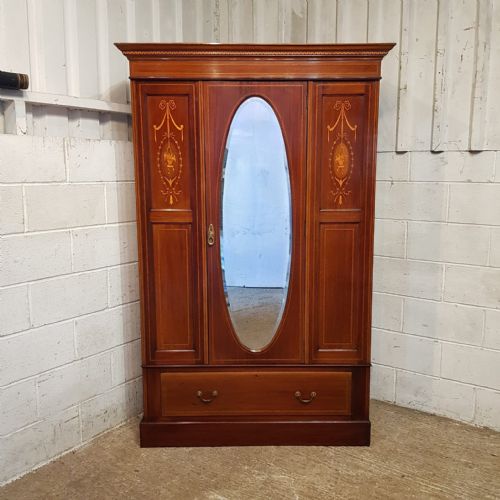
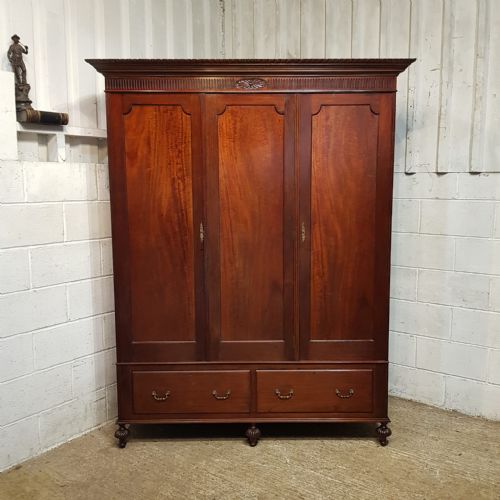
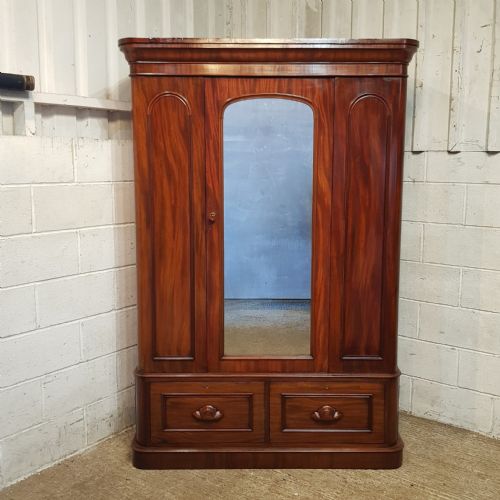
An edwardian mahogany wardrobe encompasses large bedroom storage pieces built around the turn of the twentieth century, typically constructed with symmetrical panel doors or central mirrored sections. The most frequent variant on this page is the double or triple wardrobe, often incorporating lower drawers or internal linen compartments.
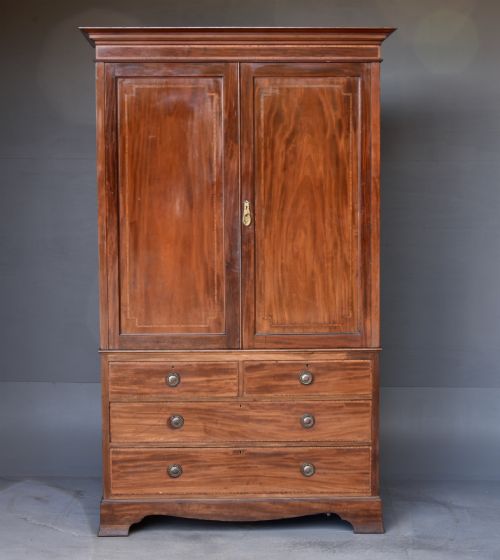
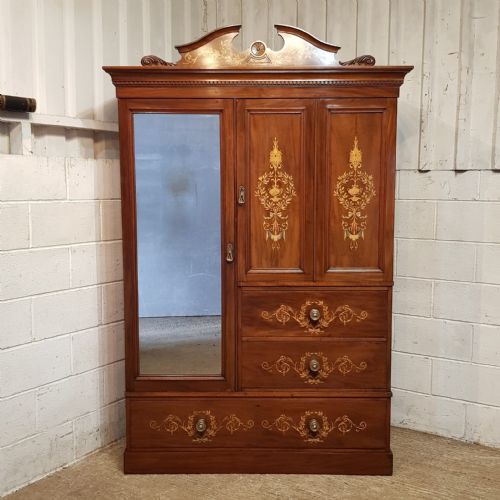
Makers and cabinetmakers of the period also produced compactum models, which combined hanging sections with linen presses, small drawers, and compartments within a single unified case. These pieces draw heavily on Sheraton revival and neoclassical styles, utilising balanced cornices and clean linear framing.
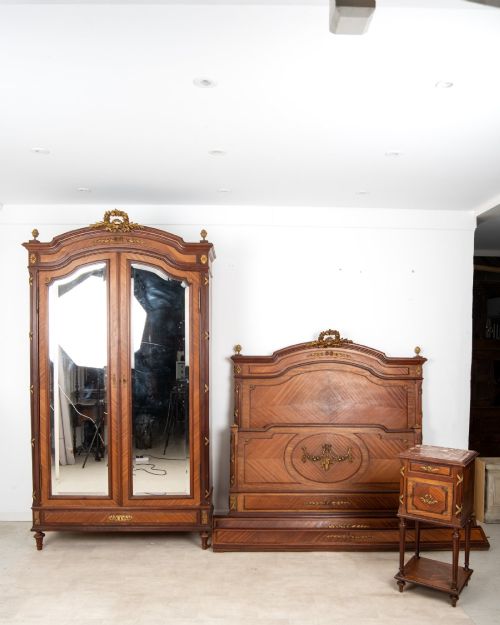
While the majority date from the Edwardian era and the late nineteenth century, related examples stretch from georgian linen presses to arts and crafts and louis xvi revival suites. Buyers select these wardrobes for their substantial internal capacity, deep timber tones, and traditional architectural presence.
How they were made
Cabinetmakers built these pieces primarily using solid mahogany and flame mahogany veneers applied to secondary structural timbers, creating rich grain patterns across the primary facade. Brass hardware, such as hanging rails, drawer pulls, and locking mechanisms, provided functional durability alongside decorative contrast.
Surface enrichment frequently involved satinwood inlay and delicate floral marquetry, setting lighter contrasting wood into the darker mahogany ground. Bevelled mirror glass frequently featured centrally on door panels, requiring sturdy internal framing to support the weight of the glass.
Edwardian Mahogany Wardrobe Retail Price Guide 2026
Typical asking prices for edwardian mahogany wardrobe among the pieces listed under this phrase on Sellingantiques today, from the lower quarter to the upper quarter. They describe what is for sale here now, not the wider market.
Several gentleman's wardrobes still harbour hidden tie compartments and velvet-lined collar boxes tucked behind compact upper doors.
What varies in quality
Quality rests significantly on the selection of timber and the precision of the cabinetwork, particularly in how veneers are matched across wide door panels and cornices. Finer examples display meticulous hand-cut satinwood inlay, tight joinery at the crown and plinth, and substantial original brass fittings.
The sophistication of the internal layout also marks superior production, distinguishing standard hanging cupboards from fully fitted combination wardrobes with specialised linen drawers and sliding trays.
Maples and Co·Edwards and Roberts·Druce and Co·Wylie Lochhead·Heals Ltd London
The Edwardian Mahogany Wardrobe Glossary
- Compactum
- A multi-compartment wardrobe combining hanging space, drawers, shelves, and linen presses in a single integrated piece. These substantial units offer maximal storage efficiency for bedroom organisation.
- Flame mahogany
- A veneer cut from the fork of the mahogany tree where the branch meets the trunk, producing a distinctive flickering, flame-like grain pattern. Cabinetmakers placed these striking veneers symmetrically on door fronts.
- Satinwood inlay
- A decorative technique where thin strips or pieces of pale satinwood are set flush into the darker mahogany surface. This method created contrasting geometric borders, urns, or floral motifs.
- Linen press
- A tall cupboard featuring sliding trays or shelves in the upper section for storing folded textiles, placed above a base of wider drawers. Georgian and Edwardian variants represent traditional bedroom storage.
- Marquetry
- The art of applying pieces of veneer to a structure to form decorative patterns and pictorial designs. Artisans used contrasting woods to create floral sprays and classical motifs across cabinet doors.
Edwardian Mahogany Wardrobe: Frequently Asked Questions
How do I dismantle an edwardian mahogany wardrobe?
Many large wardrobes from this period were designed to be taken apart into sections, including the cornice, base, sides, and central doors, to allow for transport up staircases and through doorways.
Screws and concealed wooden pegs usually hold the structural elements together, and numbering often appears on the internal joints to guide reassembly.
What is the difference between a compactum and a standard wardrobe?
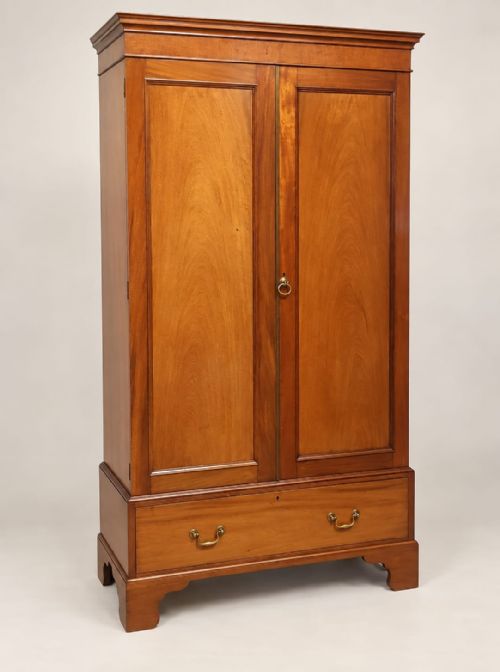
A standard wardrobe focuses primarily on vertical hanging space behind two or three full-length doors, occasionally featuring a single drawer at the base.
A compactum integrates multiple functions within the same footprint, dividing the interior between hanging compartments, sliding linen trays, and stacks of graduated drawers.
How should I care for flame mahogany veneer?
Mahogany responds best to consistent indoor humidity levels and protection from direct sunlight, which can fade the rich reddish-brown tones and dry out the underlying timber.
Applying a traditional beeswax polish occasionally maintains the lustre of the finish without building up heavy chemical residues.
Can I adjust the hanging depth in these old wardrobes?
Older wardrobes often feature fixed wooden hanging pegs or older metal rails positioned for historical clothing dimensions, which can limit the space available for modern padded coat hangers.
Modifying the interior requires careful measurement to ensure new rails fit within the original hardware housings without damaging the cabinet walls.