

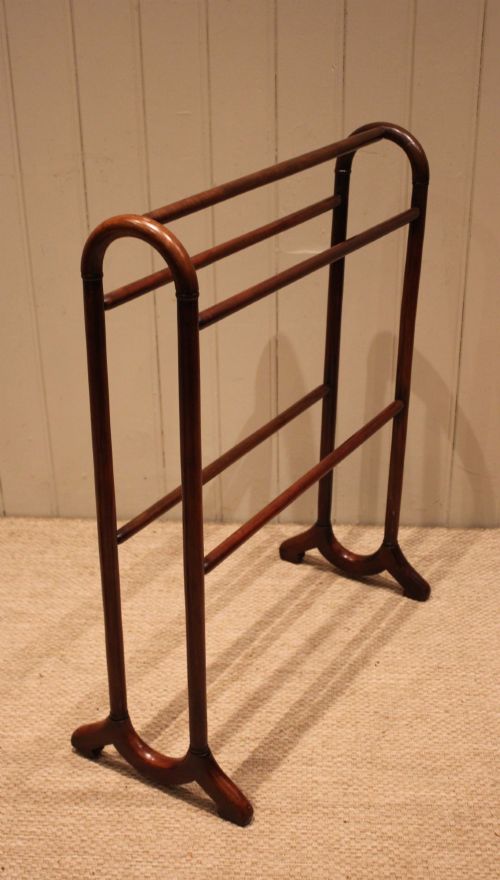
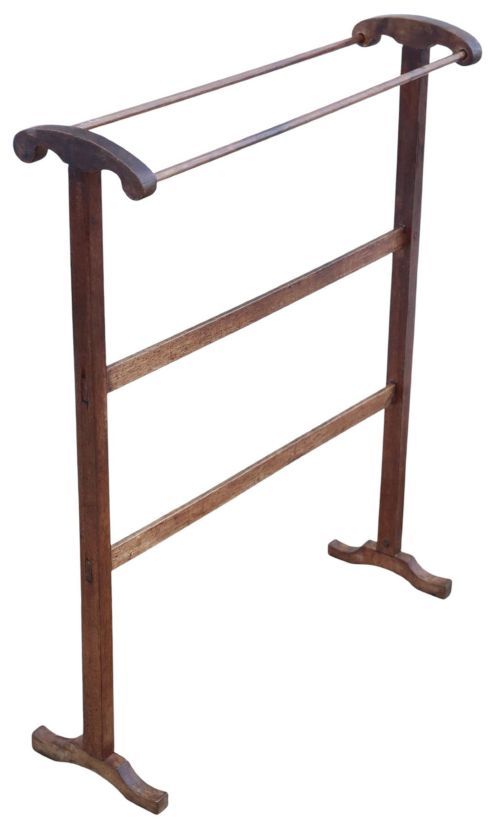
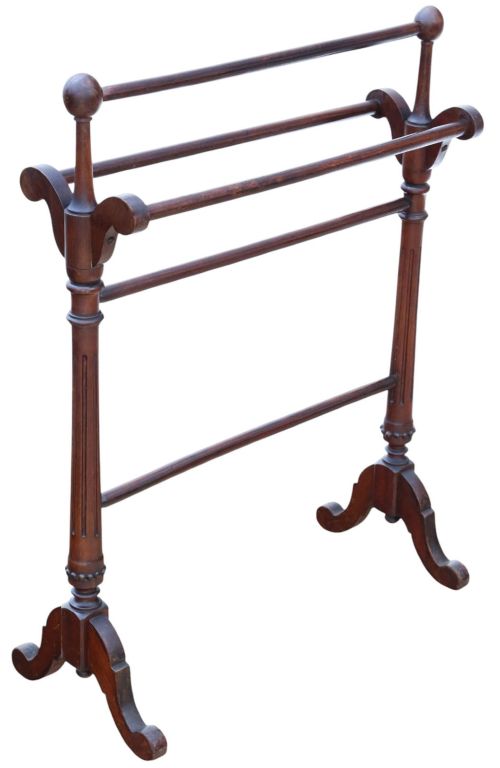
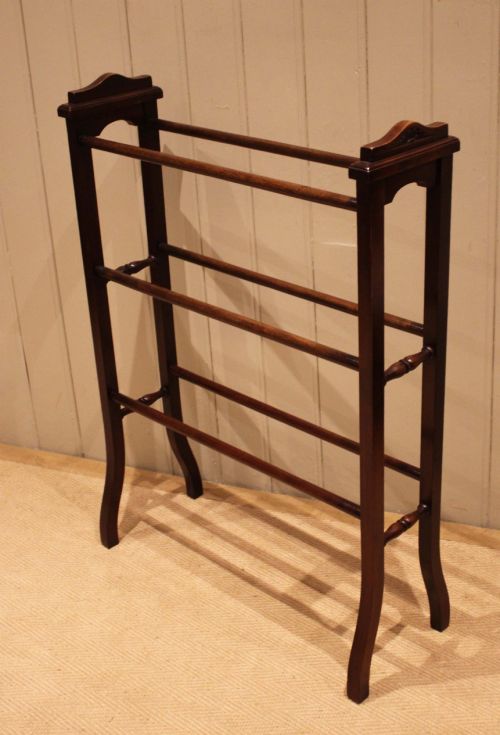



Edwardian Mahogany Towel Rack
Edwardian mahogany towel rack pieces offer practical drying utility with refined period timber, bringing functional elegance to a bathroom.
Edwardian Mahogany Towel Rack
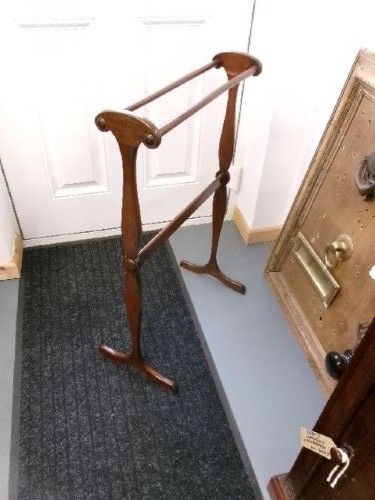
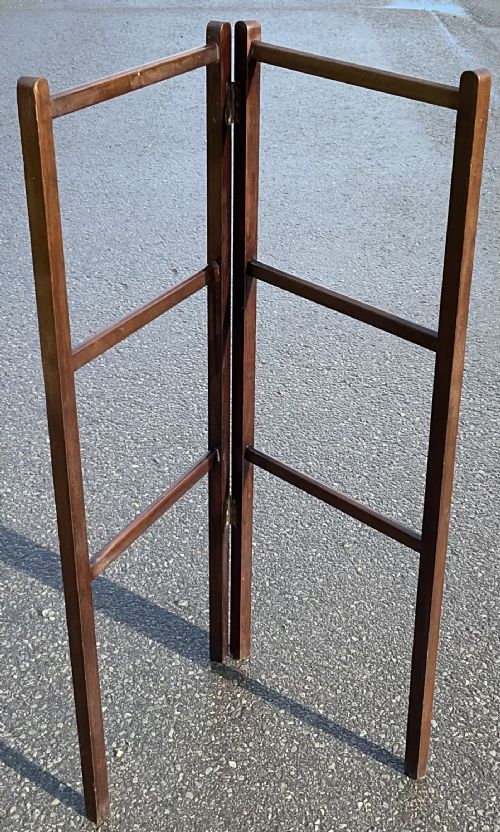
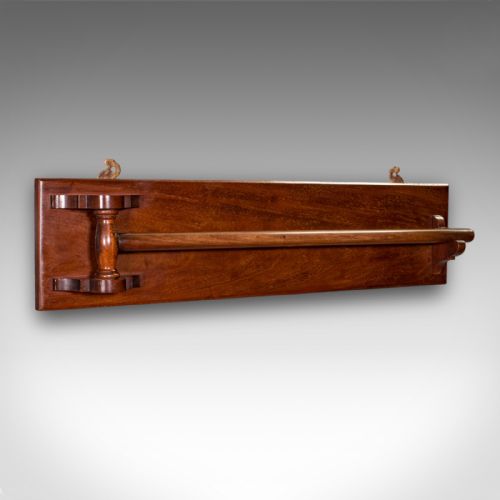
An edwardian mahogany towel rack is a domestic accessory designed for bathrooms, bedrooms, and dressing rooms to hold and air linens. These items appear primarily in standing formats, including folding variants, ship's maritime drying racks, and multi-bar configurations.
The material record spans mahogany, oak, hardwood, and brass, often accented with satinwood inlay and boxwood stringing. While Edwardian pieces dominate the selection, examples stretch back through the nineteenth century into Victorian and Regency periods.
How they were made
Makers utilised solid mahogany and supporting hardwoods like oak to build sturdy standing frames capable of supporting damp linens. Structural joints relied on traditional cabinet-making methods to ensure stability during daily use.
Decorative refinement was achieved through contrasting stringing and inlay work, incorporating boxwood and satinwood into the timber rails and uprights. Brass fittings and hardware frequently provided functional articulation, particularly on folding designs and maritime pieces.
Edwardian Mahogany Towel Rack Retail Price Guide 2026
Typical asking prices for edwardian mahogany towel rack among the pieces listed under this phrase on Sellingantiques today, from the lower quarter to the upper quarter. They describe what is for sale here now, not the wider market.
Some maritime towel racks went to sea before finding their way back to dry land.
What varies in quality
The standard of timber selection and decorative detailing marks the distinction between ordinary utility items and finer examples. Pieces featuring crisp satinwood inlay, boxwood stringing, and well-figured mahogany show greater workshop ambition.
Structural complexity also defines the grade of the piece, with multi-bar frames and folding mechanisms demonstrating superior design compared to simple single-rail stands.
The Edwardian Mahogany Towel Rack Glossary
- Inlay
- A decorative technique where contrasting woods such as satinwood are inserted into recesses in the mahogany surface. This method enhances the visual depth of the frame.
- Boxwood stringing
- Thin lines of pale boxwood inlaid into darker mahogany to create geometric borders. It is a signature decorative touch on Edwardian pieces.
- Maritime drying rack
- A specialised folding or compact rack designed for shipboard use. These items utilised robust brass hardware to withstand motion.
- Standing towel rail
- A freestanding floor-standing furniture form rather than a wall-mounted fixture. These typically feature between four and five horizontal bars for hanging textiles.
Edwardian Mahogany Towel Rack: Frequently Asked Questions
What is an edwardian mahogany towel rack?
An edwardian mahogany towel rack is a freestanding wooden frame built to hold and dry bath or bed linens. These items combine practical household utility with the warm tones of period timber.
Most examples feature multiple horizontal rails supported by vertical uprights, sometimes equipped with folding hinges or brass accents for added versatility.
Where were these racks used?
These pieces were kept in bedrooms, dressing rooms, and bathrooms to manage household textiles before central heating and electric airing were common. Their portable standing design allowed them to be positioned near fires or windows.
Maritime versions were adapted for use aboard ships, utilising compact frames to dry linens in confined spaces.
How many rails do they usually have?
The evidence shows variations ranging from single-rail forms up to multi-bar configurations, with four-bar and five-bar formats appearing frequently. These rails are held within standing frames that allow air to circulate around the textiles.
Additional bars provided greater capacity for larger households or more extensive laundering needs.
How do I date an edwardian mahogany towel rack?
Dating relies on stylistic markers recorded across the nineteenth and early twentieth centuries, including Victorian, Regency, and Edwardian periods. Edwardian examples often feature lighter mahogany construction paired with boxwood stringing or satinwood inlay.
Earlier nineteenth-century iterations tend toward heavier proportions and simpler rectilinear forms without delicate stringing.