

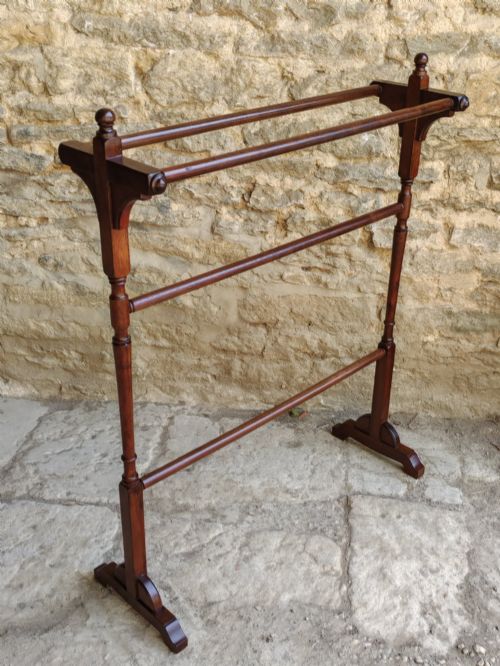
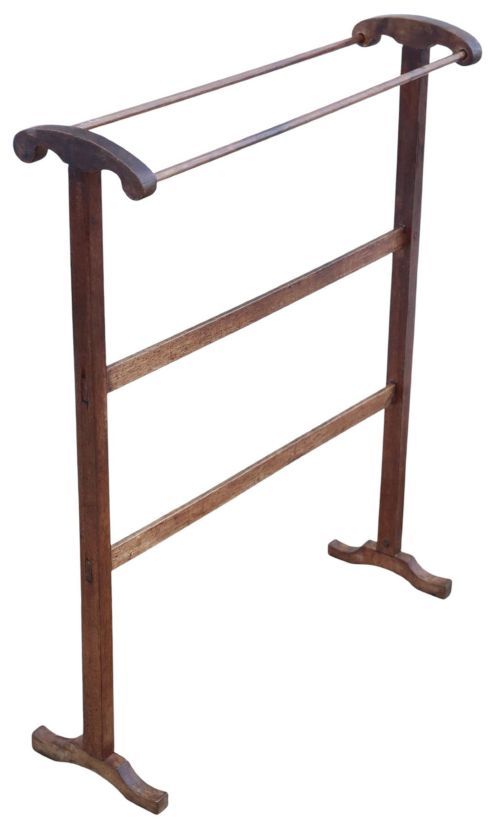
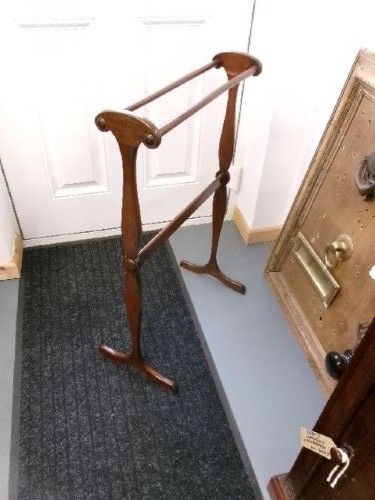
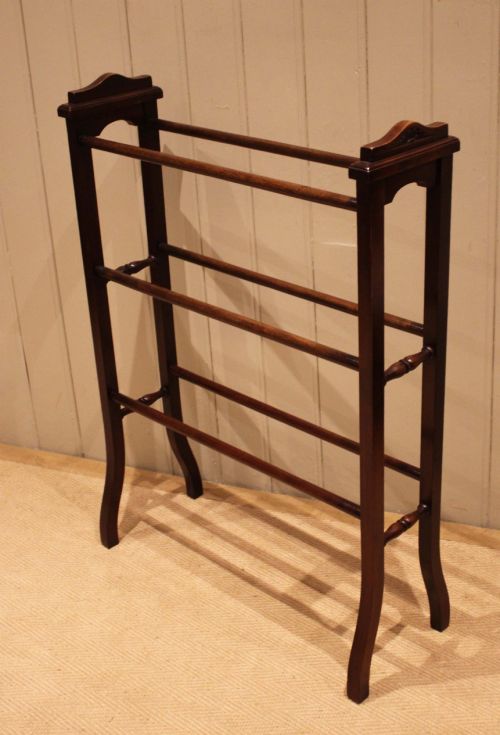




Mahogany Towel Rack
A mahogany towel rack brings handsome warm timber and practical period utility to a dressing room, bathroom or bedroom.
Mahogany Towel Rack
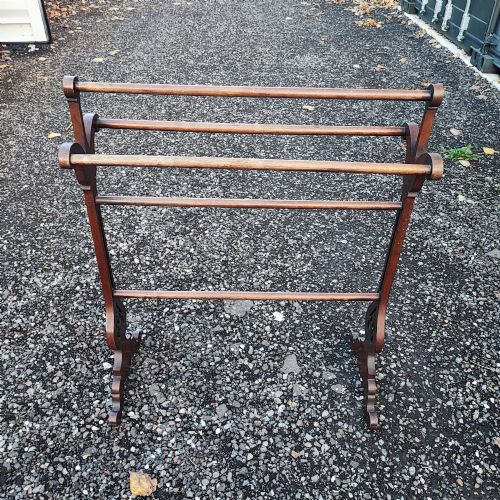
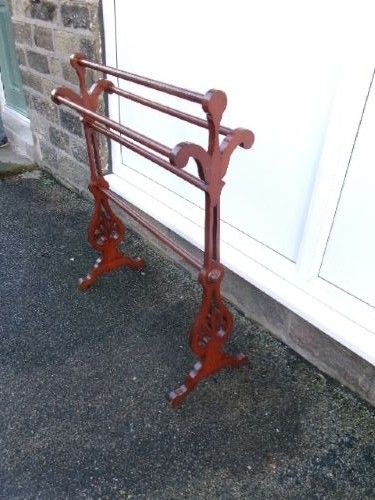
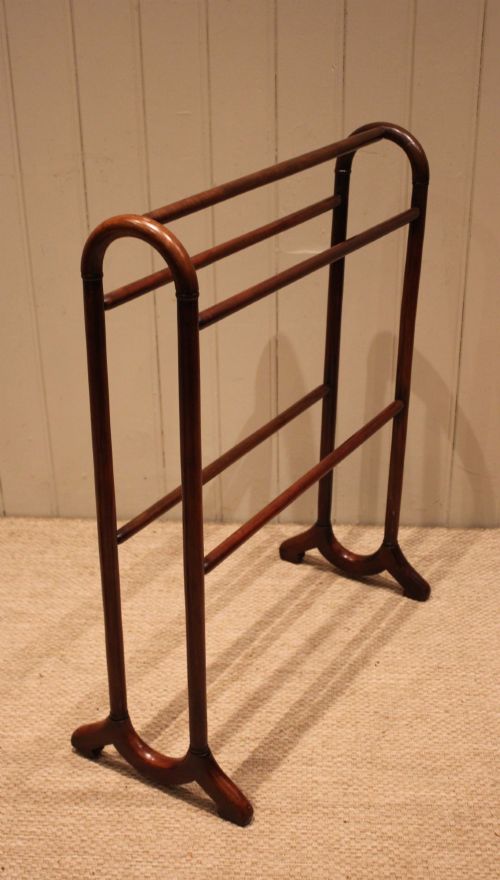
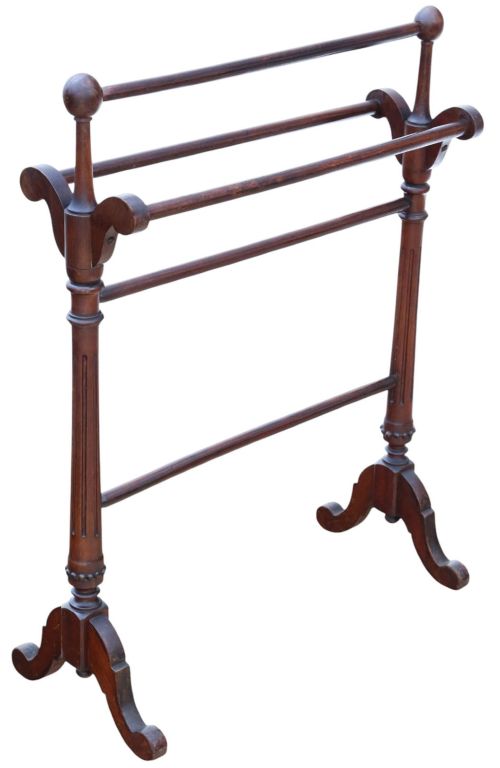
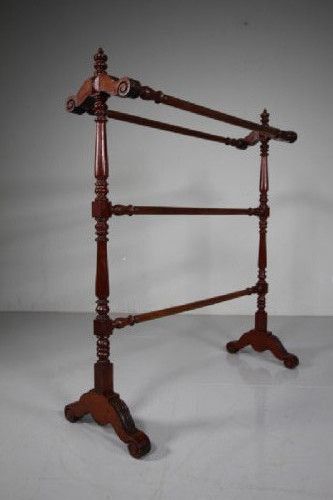
A mahogany towel rack is a functional domestic stand designed for airing and holding linens, cloths or garments. When searching for a mahogany towel rack, collectors encounter pieces spanning the Regency, Victorian and Edwardian eras.
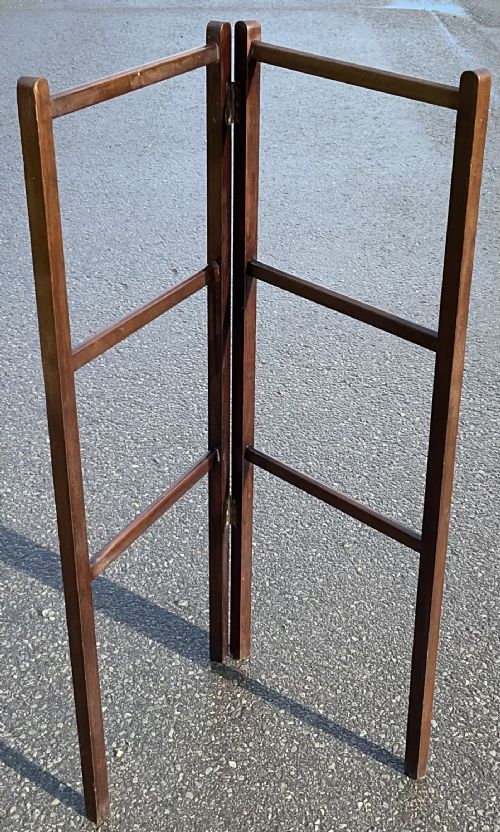
The forms vary from simple floor-standing rails to large multi-bar frames and folding cheval designs. Most examples found here date from the nineteenth century through the early twentieth century.
Makers produced both compact domestic rails and oversized pieces for larger chambers or maritime use. These stands serve as both practical drying racks and decorative items of period furniture.
How they were made
Cabinet makers constructed these racks primarily using solid mahogany, occasionally combining the timber with oak or secondary hardwoods for structural strength. Some examples incorporate brass fittings, hinges or hanging mechanisms.
Finer pieces feature decorative embellishments such as satinwood or boxwood inlay and delicate stringing along the uprights and crossbars. Workshops built these stands with folding hinges or multiple parallel bars to maximise utility.
Mahogany Towel Rack Retail Price Guide 2026
Typical asking prices for mahogany towel rack among the pieces listed under this phrase on Sellingantiques today, from the lower quarter to the upper quarter. They describe what is for sale here now, not the wider market.
The listings span the 1850s, Victorian, Edwardian and Regency periods, constructed in mahogany, oak, brass and boxwood.
What varies in quality
Quality in a mahogany towel rack rests upon timber selection, grain depth and the crispness of any inlay work. Finer examples display thoughtful proportions and substantial framing rather than purely utilitarian construction.
The inclusion of details such as brass mounts, boxwood stringing or multiple pivoting bars elevates a piece above standard workshop production. Better examples retain their original structural integrity across folding joints and upright supports.
The Mahogany Towel Rack Glossary
- Cheval towel rail
- A freestanding floor rack built with a pivoting frame supported by upright pillars, allowing the rails to tilt. These pieces often feature sturdy feet for stability.
- Boxwood stringing
- A narrow inlay of pale boxwood set flush into the darker mahogany surface to create decorative linear borders. This technique highlights the edges of uprights and crossbars.
- Hanging double towel rail
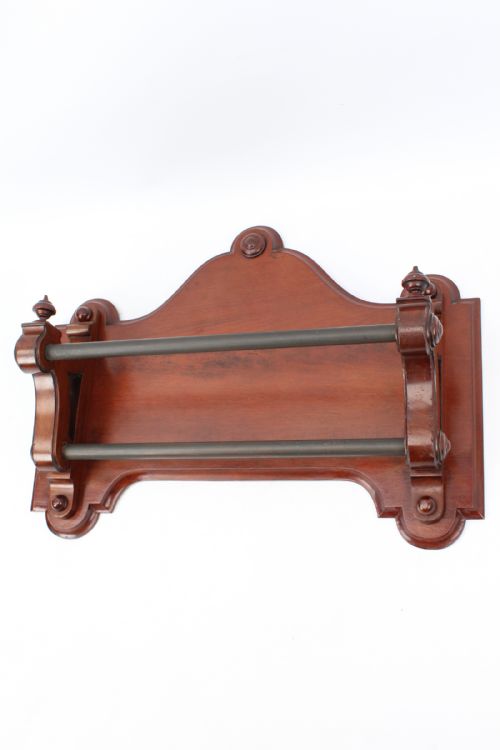
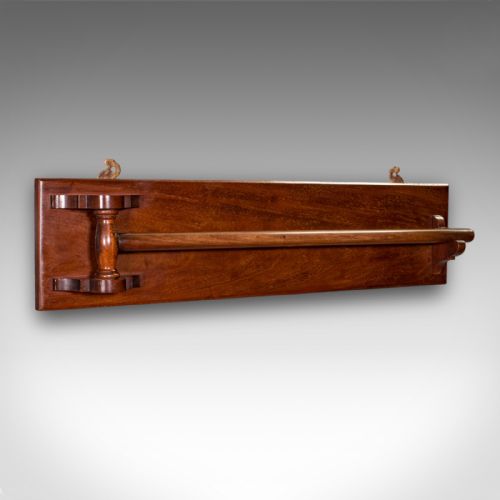
- A wall-mounted or hanging fixture featuring parallel bars designed to hold multiple linens in restricted spaces. These items often appear in maritime or compact domestic settings.
- Five bar towel rail
- A standing rack constructed with five horizontal rails to provide generous hanging space. Workshops utilised this multi-bar arrangement in larger Edwardian and Victorian bedrooms.
Mahogany Towel Rack: Frequently Asked Questions
How were mahogany towel racks used?
These racks stood in bedrooms, dressing rooms and bathrooms to air, dry and hold household linens and garments. Families utilised them alongside washstands and baths before central heating became common.
Larger folding and cheval versions accommodated multiple items simultaneously. Their portable design allowed servants to move them near fires or out of chambers as needed.
How do I date a towel rack?
Dating relies upon stylistic markers, timber characteristics and construction methods observed across different eras. Regency and William IV pieces often display heavier proportions and bold architectural turns, while Edwardian examples favour lighter frames and inlaid stringing.
Victorian stands sit between these styles, frequently utilising standing or folding formats in solid mahogany. Examining the joinery and secondary woods helps confirm the period of manufacture.
Where should I place my rack?
A mahogany towel rack suits bathrooms, bedrooms and dressing areas where period character meets daily utility. Standing models work well against empty walls or in corners, providing accessible hanging space for textiles.
Care should be taken to keep solid timber stands away from excessive direct moisture and rapid temperature shifts. Their warm wood tones complement both traditional interiors and contrasting modern spaces.