
Edwardian Mahogany Study Desk
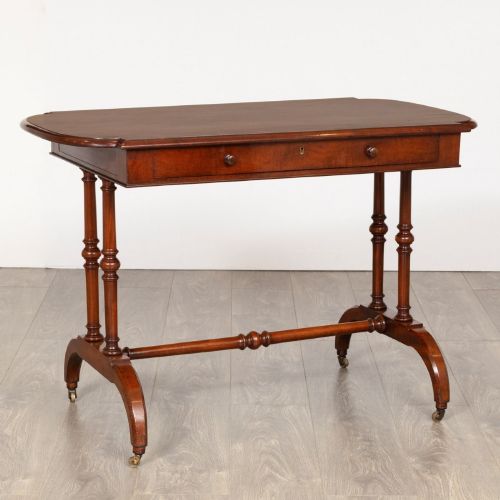
An edwardian mahogany study desk brings practical elegance and rich timber tones into a room, offering a dedicated writing surface shaped by early twentieth-century design.
Materials and Construction Methods
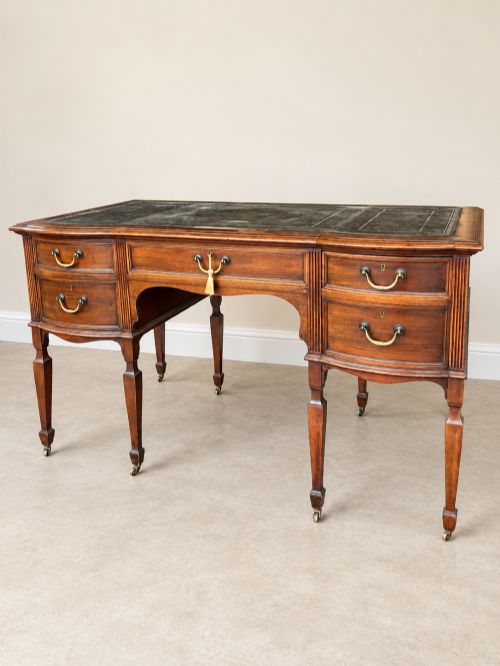
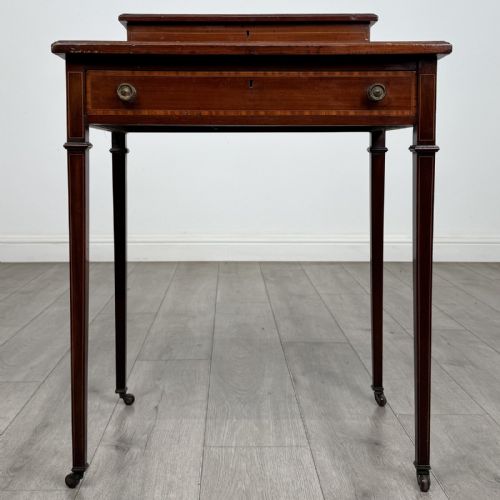
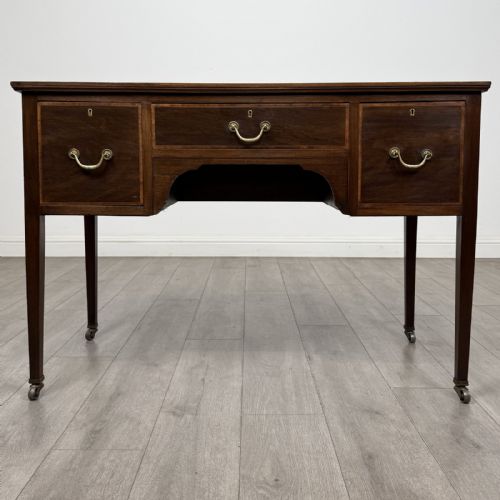
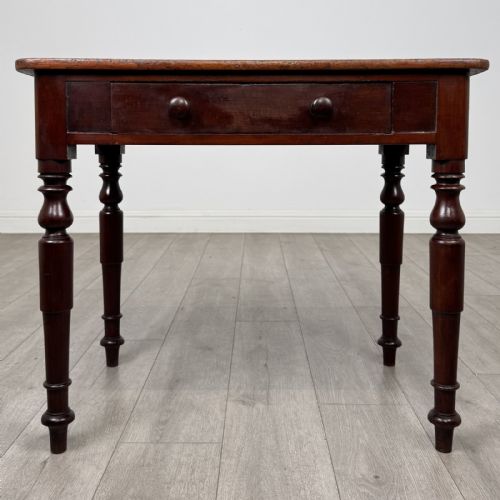
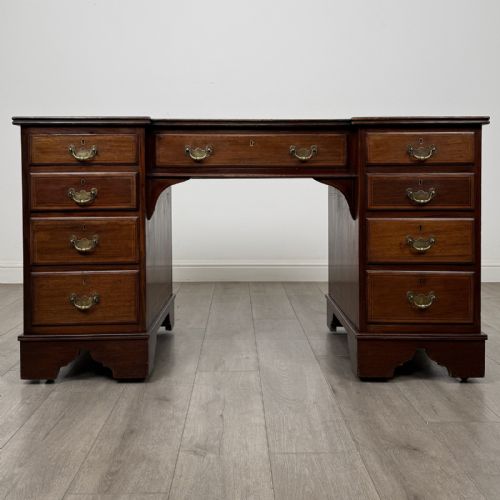
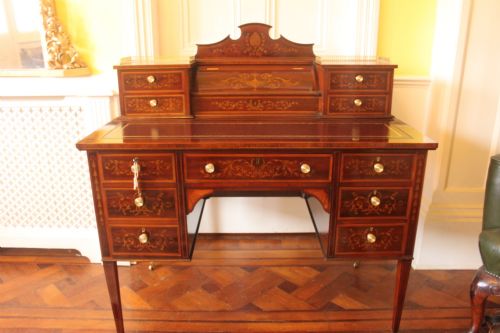
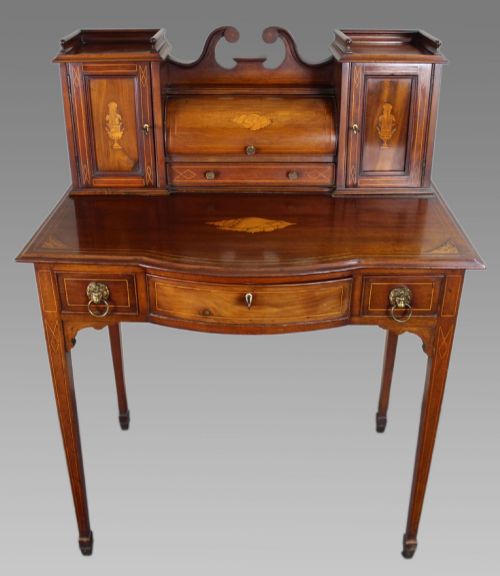
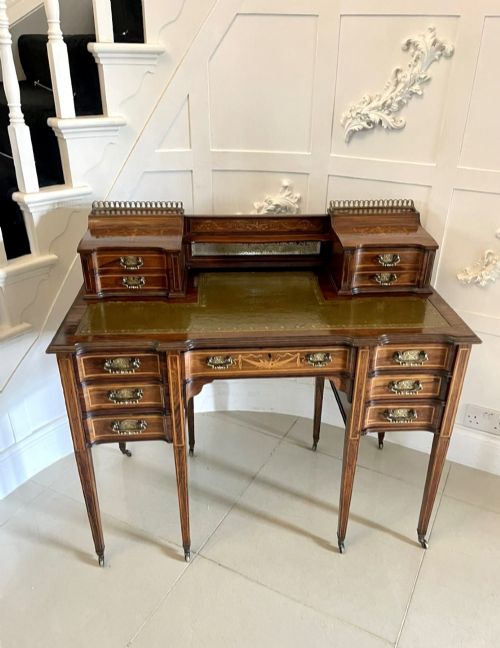
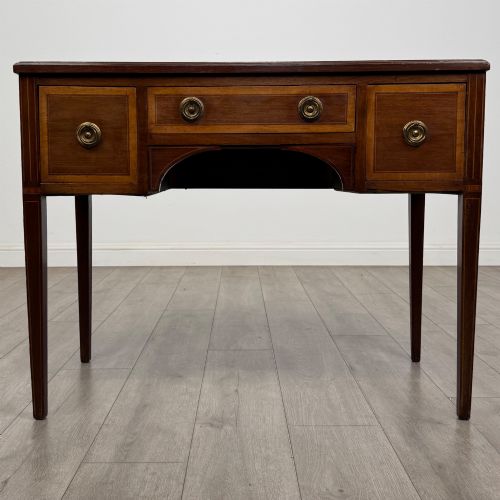
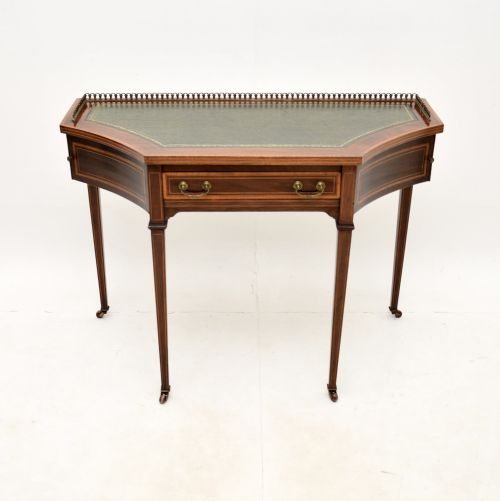
Makers of the period utilised solid mahogany and mahogany veneers over secondary timbers, selecting pieces with distinct grain patterns and warm reddish-brown tones. Satinwood banding and marquetry inlay frequently embellished the primary surfaces, providing contrasting colour and geometric detail.
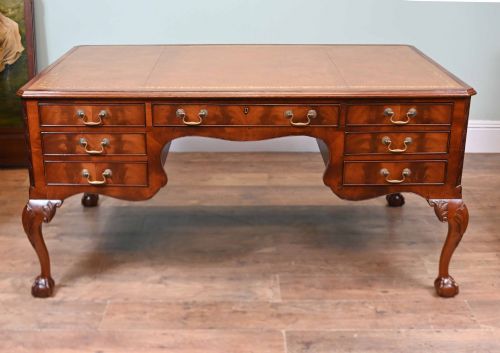
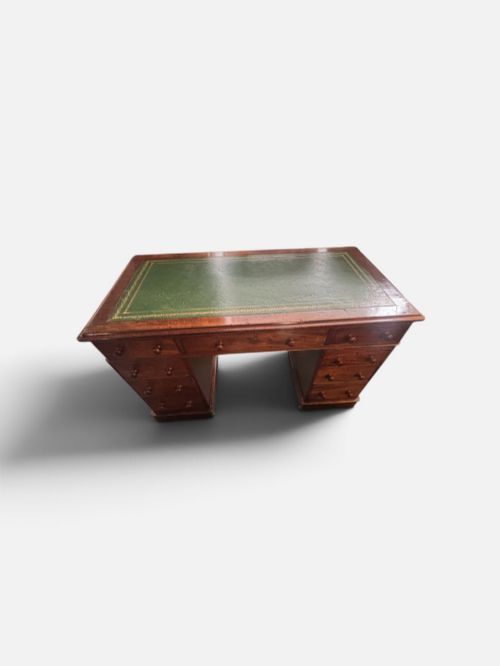
Working surfaces typically incorporated inset leather panels, often tooled with gilt borders, framed within the surrounding timber top. Drawer construction relied on traditional dovetail joints, complemented by brass drop handles, ring pulls and original locking mechanisms.
Distinctions in Quality and Execution
Superior examples separate themselves through the crispness of their inlaid details, the choice of figured flame mahogany veneers and the structural integrity of their joinery. Finer pieces demonstrate careful timber selection where grain patterns match harmoniously across drawer fronts and top surfaces.
A drop-side flap offers an ingenious way to expand a small desk's surface area when paperwork accumulates unexpectedly.
Maple and Co·Heal and Son·Trollope and Sons·Edwards and Roberts·Whytock and Reid
The Edwardian Mahogany Study Desk Glossary
- Pedestal desk
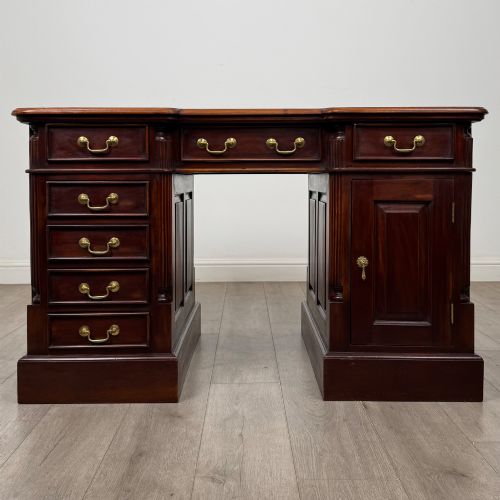
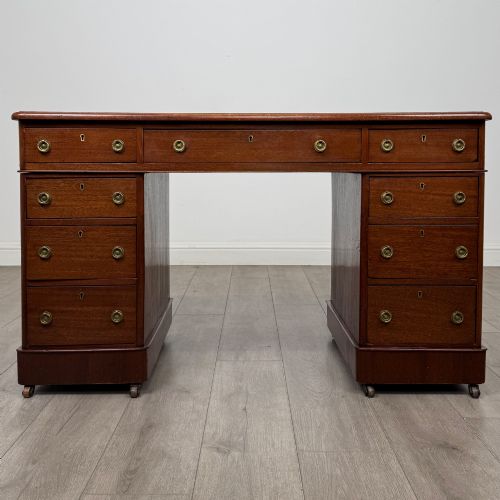
- A heavy writing desk supported by two banks of drawers resting on the floor, leaving a central kneehole space. This form provides substantial storage capacity while maintaining a formal architectural presence.
- Kidney desk
- A writing table featuring a distinctive curved top shaped like a kidney bean, designed to wrap around the user. These pieces often date to the Edwardian era or draw on earlier Sheraton revival styles.
- Satinwood
- A pale, lustrous exotic timber utilised for contrasting stringing, banding and inlay work on mahogany furniture. Its bright yellow-gold colour highlights drawer borders and tabletop edges.
- Stringing
- Thin lines of contrasting wood inlay embedded into the surface of a piece to create decorative borders and geometric patterns. This technique defines panel edges on many Edwardian tables.
- Kneehole
- The central recessed space beneath a desk top designed to accommodate the user's legs while sitting. Smaller versions are frequently described simply as kneehole desks.
Edwardian Mahogany Study Desk: Frequently Asked Questions
What is a pedestal desk?
A pedestal desk is a large freestanding writing table supported by two columns or pedestals containing drawers, flanking a central sitting space. These pieces offer substantial storage capacity and a finished appearance on all sides.
Such desks served as the primary administrative workspace in libraries and studies during the Victorian and Edwardian periods.
How do I care for leather desk tops?
Leather writing surfaces require gentle cleaning with a slightly damp cloth followed by periodic treatment with appropriate leather balms to prevent drying and cracking. Avoid using harsh chemical solvents or placing hot cups directly on the hide.
Maintaining the leather preserves both the appearance and the tactile quality of the writing surface.
Are Edwardian desks different from Victorian ones?
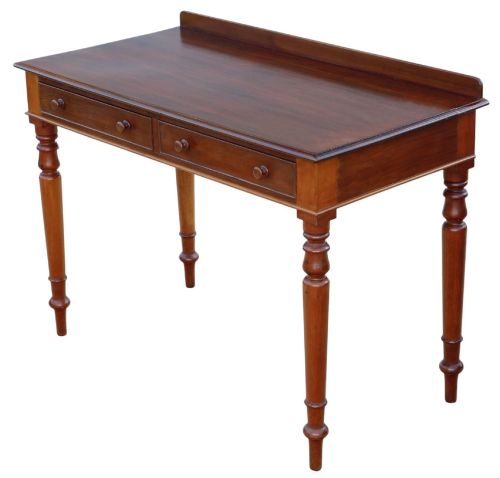
Edwardian desks tend to be lighter in proportion and often incorporate satinwood inlay, revival styles and brighter mahogany finishes. Victorian examples generally display heavier construction, darker timber tones and more robust architectural mouldings.
Both periods share a commitment to solid timber construction and traditional joinery methods.