
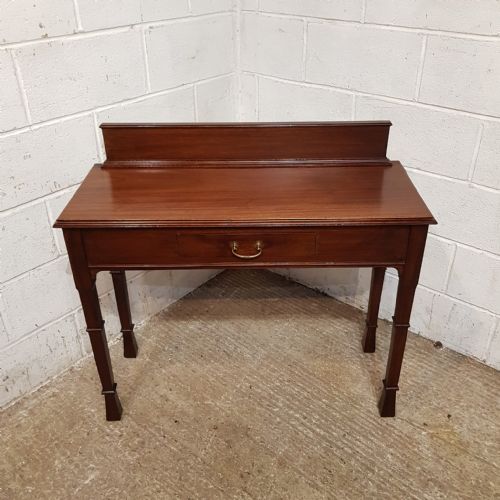
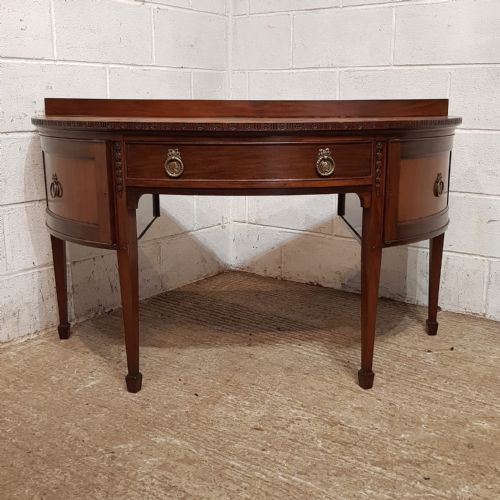
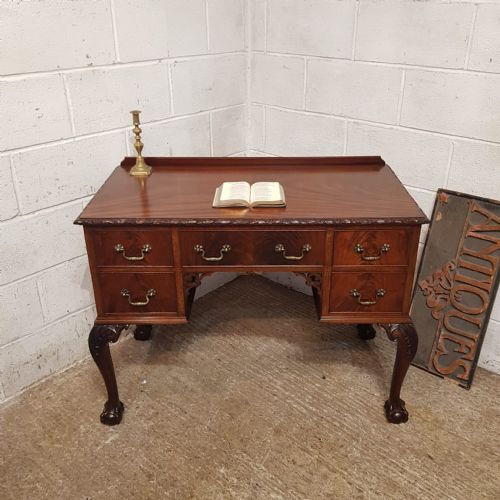
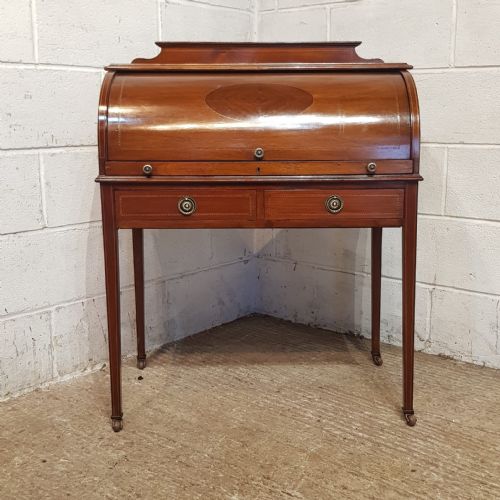
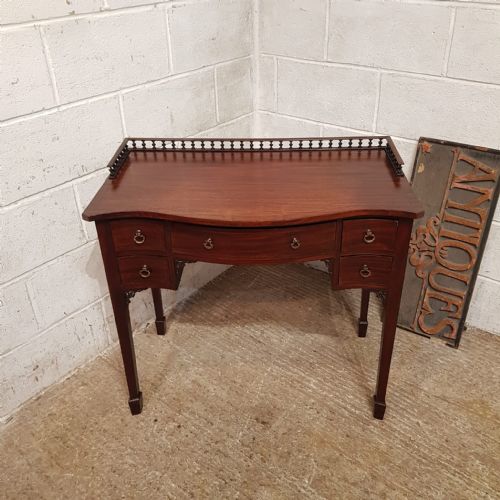

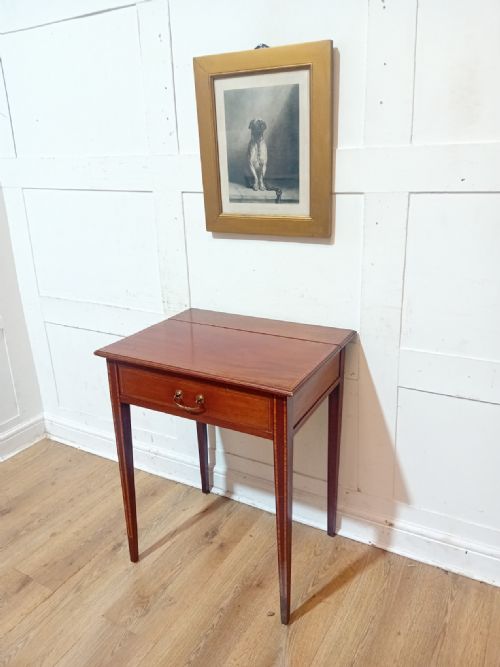


C1900 Mahogany Desk
When searching for a c1900 mahogany desk, buyers encounter Edwardian writing furniture designed for domestic studies and libraries.
C1900 Mahogany Desk
A c1900 mahogany desk typically belongs to the Edwardian period or the broader 19th Century tradition, encompassing writing tables, twin pedestal forms, and compact ladies' writing desks. Buyers searching this phrase most frequently encounter Edwardian pedestal formats, writing tables, and bureau bookcases designed for domestic studies.
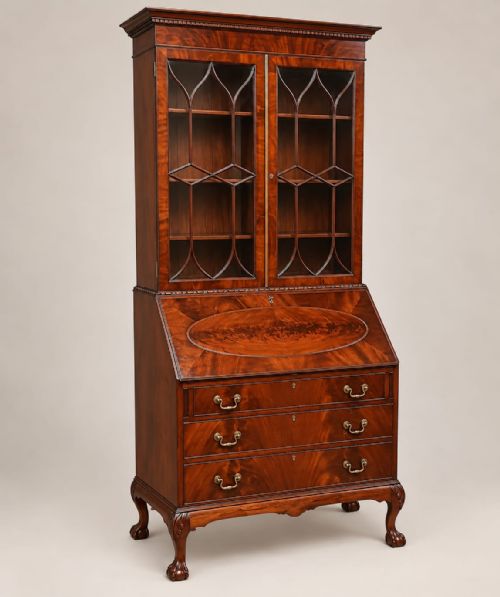
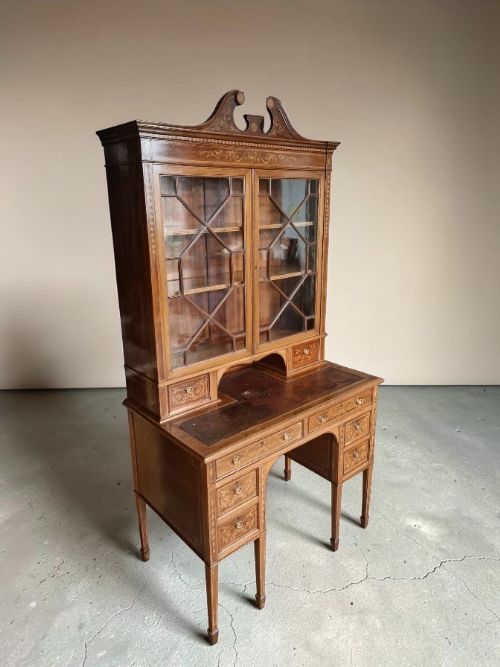
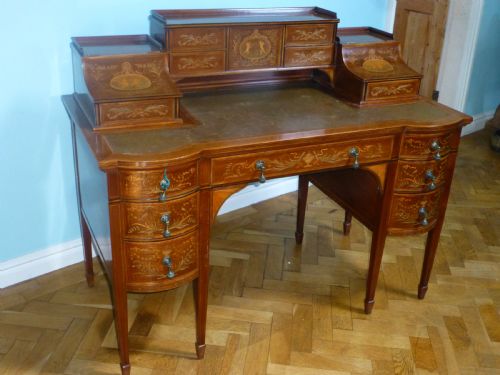
The surviving pieces include specialised forms such as Carlton House desks, kidney-shaped writing tables, and bureau de dame cabinets. These items reflect the domestic administration and correspondence needs of the period through fitted drawers, pigeonholes, and leather writing surfaces.
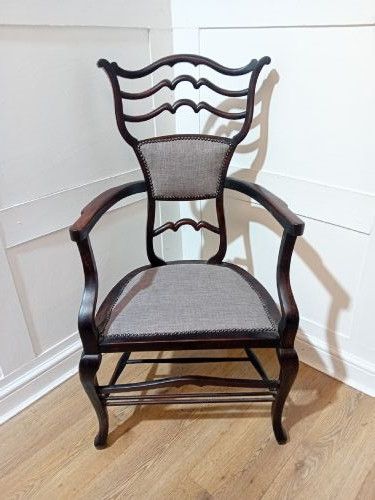
Associated seating appears frequently alongside the desks, including elbow chairs, library armchairs, and tub chairs matching the mahogany timber and Edwardian style. Console tables and hall tables also share the construction traits and decorative vocabulary of the writing furniture.
Materials and construction
Makers constructed these pieces primarily from solid mahogany and mahogany veneers, frequently incorporating contrasting satinwood inlay for decorative borders and marquetry panels. Structural elements often integrated secondary timbers, while brass featured prominently in ring drop handles, keyhole escutcheons, and upholstery studs.
Working surfaces relied on inset leather panels, sometimes complemented by glass tops, fabric, or interior upholstery. Cabinetmakers employed traditional joinery techniques across twin pedestals, serpentine fronts, bow fronts, and barrel-fronted writing compartments.
Listings feature Edwardian Empire Revival, Chippendale Revival, and French Louis XVI Revival styles executed in mahogany.
Distinctions in quality
The distinction between standard commercial output and superior craftsmanship rests on the selection of timber figures and the precision of satinwood inlay. Finer examples display meticulous marquetry and well-figured mahogany veneers across curved surfaces like serpentine and bow fronts.
Hardware selection and internal fitting also divide the range, with top-tier pieces utilising solid brass drop handles and fully fitted stationery compartments. The integration of coordinated seating, such as matching library armchairs or carver chairs, indicates a higher original commission.
Edwards and Roberts·JAS Shoolbred·Waring and Gillows·Maple and Co
The C1900 Mahogany Desk Glossary
- Twin pedestal desk
- A form featuring two separate stacks of drawers supporting a horizontal writing surface with a central kneehole. This layout provided substantial storage capacity for stationery and documents in Edwardian studies.
- Carlton House desk
- A distinctive writing table featuring a curved superstructure of small drawers and compartments enclosing the rear and sides of the writing surface. This form offered elaborate organisation for correspondence.
- Marquetry
- Decorative inlay utilising various wood veneers arranged in pictorial or geometric patterns. Makers applied this technique to drawer fronts and writing surfaces to enhance visual richness.
- Serpentine front
- A furniture front characterised by a concave central section flanked by two convex curves, or the reverse. This undulating profile required skilled woodworking to execute cleanly on mahogany.
- Bureau bookcase
- A combination piece comprising a sloping fall-front desk base beneath enclosed upper shelving. These tall items served multiple functions for storage and writing within domestic interiors.
C1900 Mahogany Desk: Frequently Asked Questions
What is a twin pedestal desk?
A twin pedestal desk consists of two independent drawer columns supporting a wide desktop with a central seating space. This heavy form provided stability and generous document storage for professional and domestic studies.
Cabinetmakers built these pieces using solid mahogany frames with inset leather writing surfaces and brass hardware. They remain practical workspace furniture for contemporary interiors.
How do I identify Edwardian mahogany furniture?
Edwardian mahogany pieces date from the period surrounding 1900 and frequently draw inspiration from earlier Georgian, Regency, or Sheraton styles. They utilise rich mahogany timbers combined with delicate satinwood inlay and fine brass fittings.
These items balance formal revival aesthetics with practical domestic utility, often presenting lighter proportions than their Victorian predecessors.
Are these desks suitable for daily computer use?
These desks accommodate modern writing equipment and laptops while offering ample drawer space for organisation. Their traditional leather-inset tops provide a durable writing surface that suits daily study use.
Buyers often pair them with matching Edwardian library chairs or desk armchairs designed to fit standard desk heights.