
Edwardian Mahogany Press
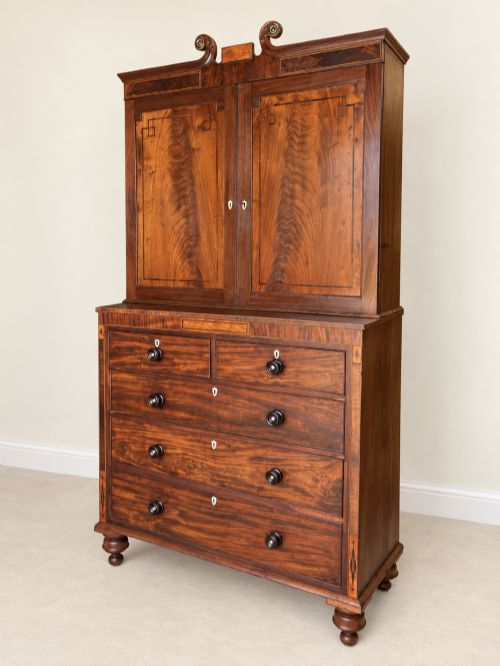
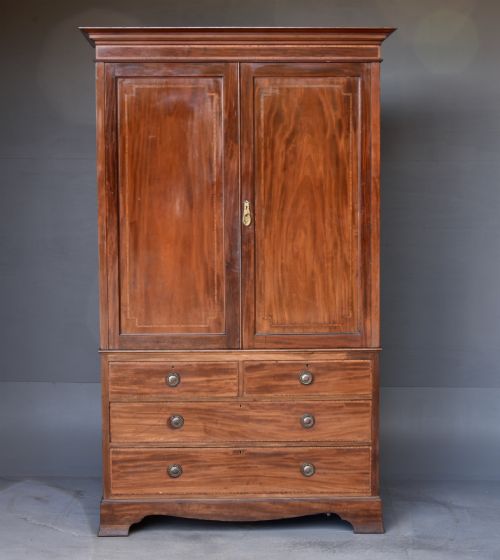
An edwardian mahogany press combines deep timber storage with fitted interior sliding trays, built to keep linens and formal attire in proper order.

Edwardian Mahogany Press
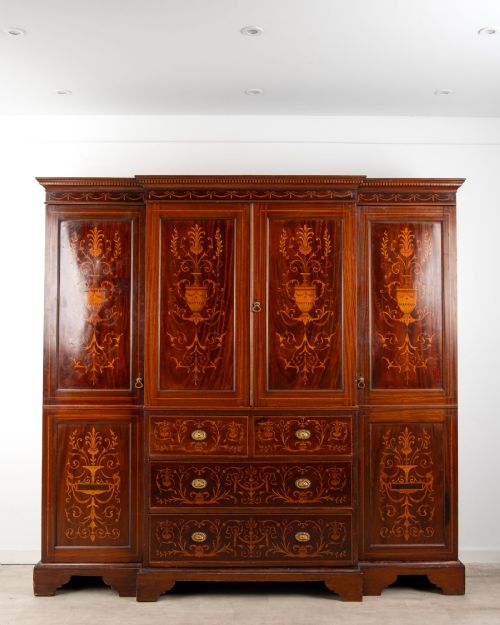
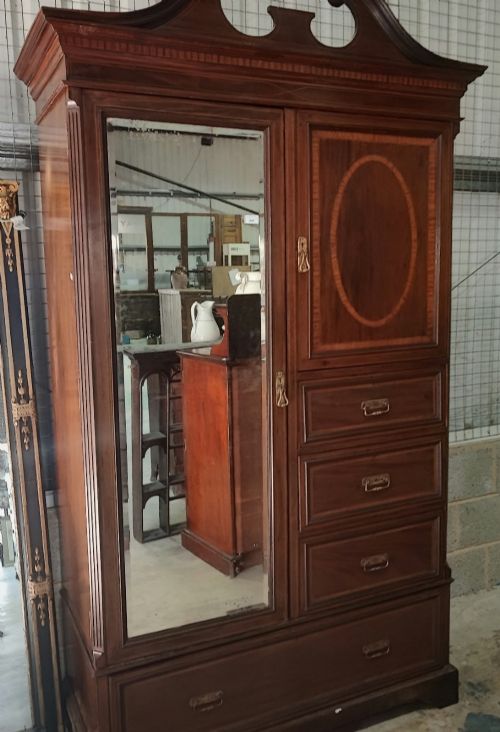
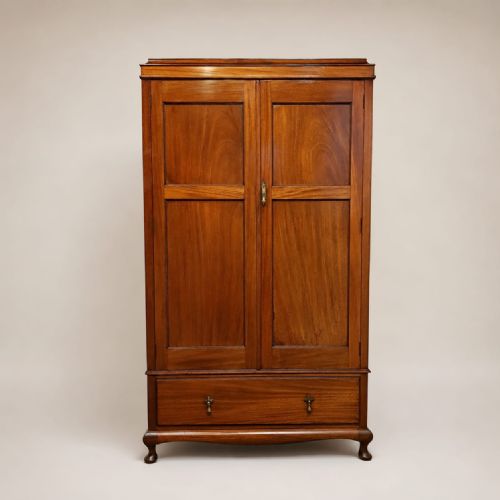
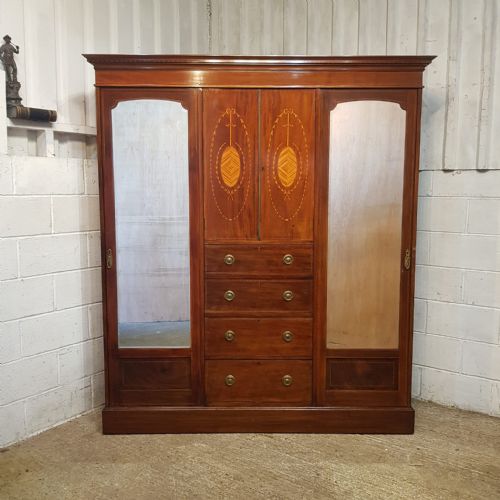
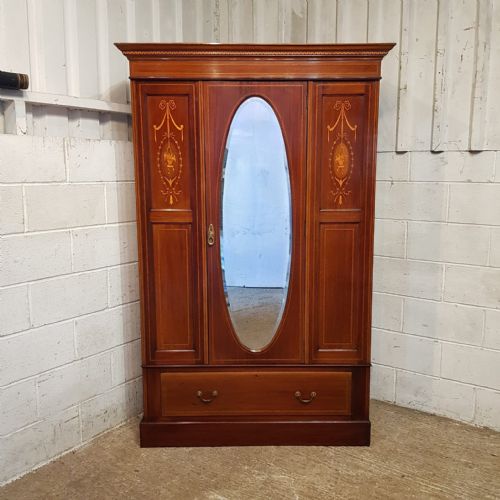
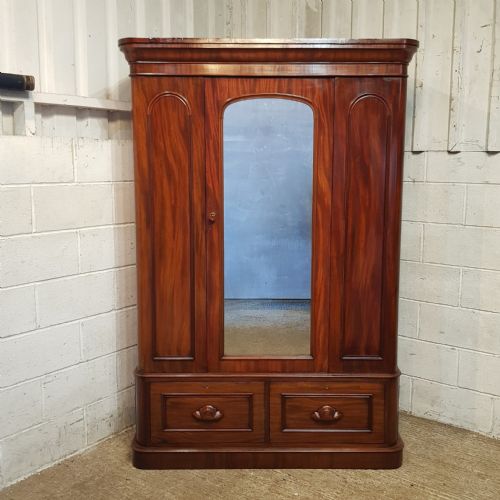
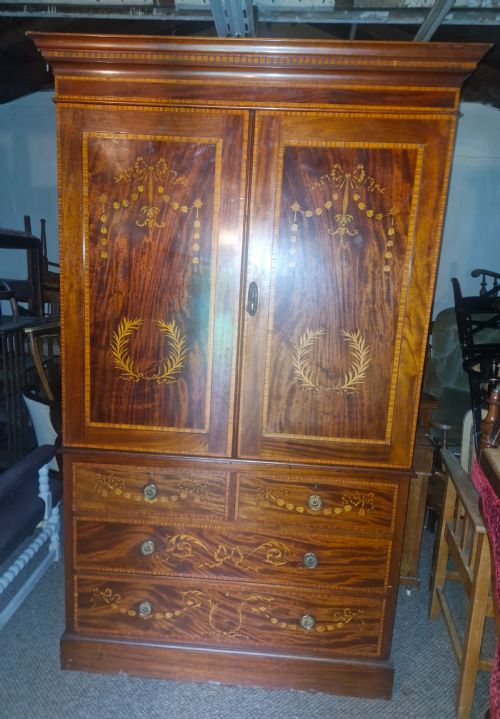
When searching for an edwardian mahogany press, a buyer encounters large case furniture designed for bedroom storage, incorporating linen slides, hanging space, and lower drawers. These pieces date predominantly from the Edwardian era and the late Victorian period, reflecting the domestic requirements of large Edwardian households.
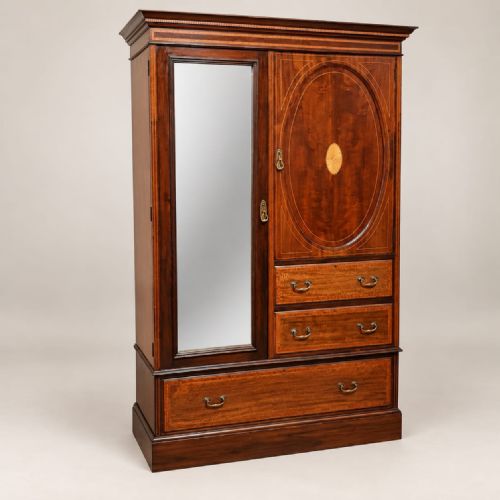
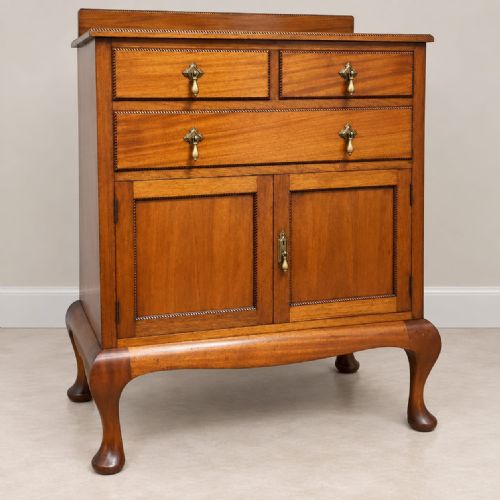
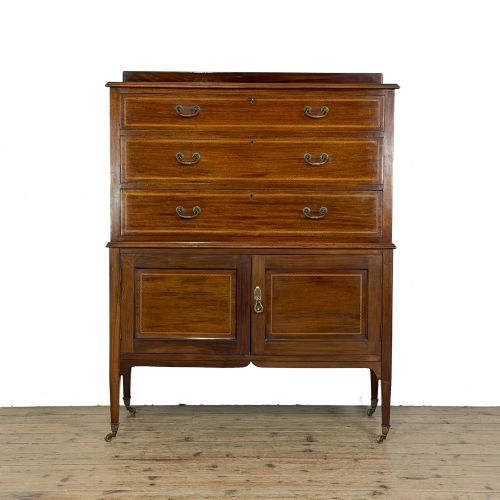
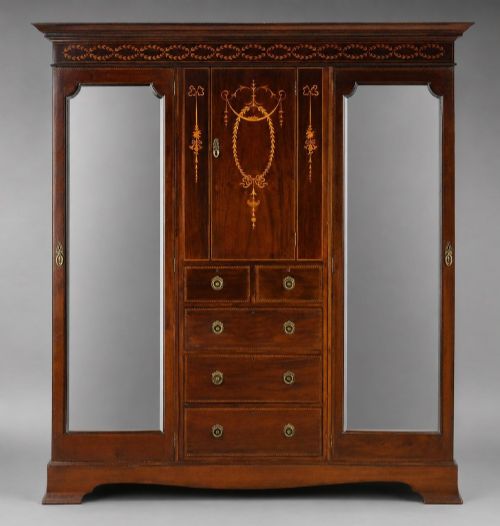
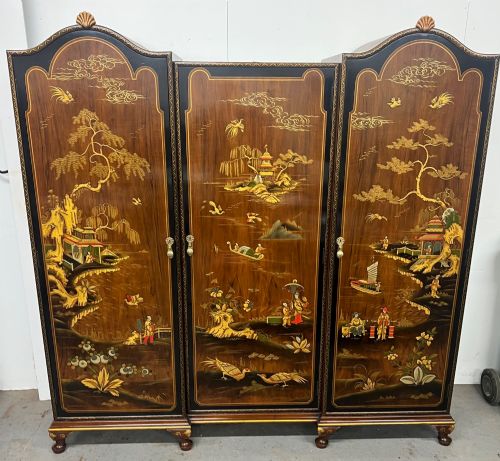
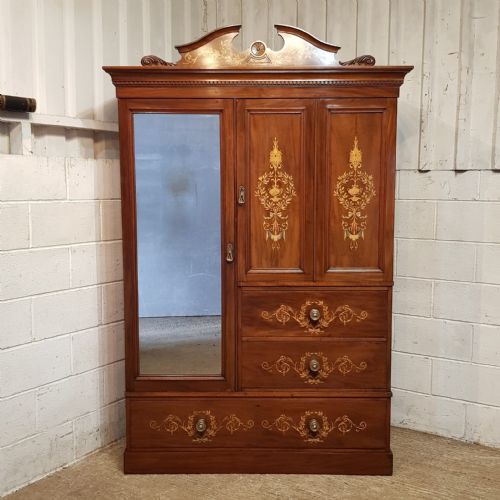
The format ranges from compact dwarf presses and tallboy chests to extensive triple wardrobes and combination compactums. Many examples incorporate glazed mirror doors or central cupboard sections flanked by hanging compartments, aligning with the revival styles popular at the turn of the twentieth century.
Materials and Construction
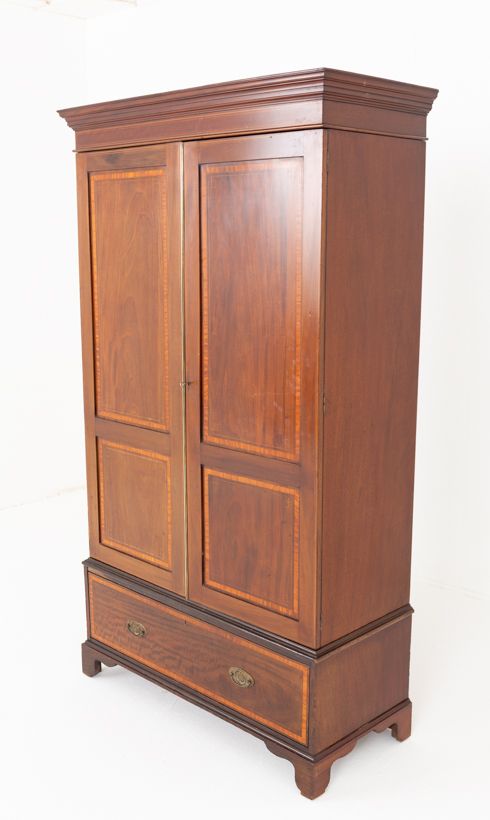
Makers utilised solid mahogany and flame mahogany veneers over secondary timbers, frequently enhanced by contrasting satinwood inlay and stringing. Brass hardware such as handles, hinges, and hanging hooks secures internal components and panel doors.
Internal sliding linen trays, known as linen slides, sit above stackable drawer configurations within the central press section. Carved mouldings, breakfront cornices, and mirrored glass door panels complete the structural assembly.
Listings feature mahogany, satinwood inlay, brass hardware, and mirror glass across Edwardian, Victorian, and Georgian periods.
Craftsmanship and Proportion
Superior examples display balanced proportions across large breakfront or triple-door carcasses, with meticulously matched flame mahogany veneers and crisp satinwood inlay. Finer pieces incorporate secondary woods like oak for drawer linings and feature hand-cut dovetail joints.
Lower quality variations rely on simpler construction methods, machine-stamped brasses, or straightforward timber panels without decorative stringing or veneer selection. The integration of fitted internal mechanisms, such as trouser presses or segmented drawers, marks more ambitious workshop output.
maples & co·Edwards and Roberts·Druce & Co.·Wylie Lochhead·Denby & Spinks·Jas Shoolbred & Co
The Edwardian Mahogany Press Glossary
- Compactum
- A large fitted wardrobe combining hanging space, linen slides, drawers, and sometimes a chest in a single multi-section unit. These pieces offer comprehensive bedroom storage within one unified carcass.
- Linen Press
- A tall piece of case furniture featuring upper sliding trays enclosed by doors, positioned above a chest of drawers. They were originally built for storing household linens flat.
- Satinwood Inlay
- Decorative contrasting timber veneer inserted into recessed channels within the primary mahogany surface. This technique creates geometric lines and neoclassical motifs.
- Breakfront
- A cabinet design where the central section projects forward from the flanking wings. This architectural arrangement adds depth and visual weight to large wardrobes.
- Tallboy
- A vertical chest of drawers stacked one above another, sometimes combining a press section at the top. They maximise storage capacity while occupying a smaller floor footprint.
Edwardian Mahogany Press: Frequently Asked Questions
What is an edwardian mahogany press used for?
These pieces function as large bedroom storage units, designed to hold folded garments on internal sliding trays alongside hanging clothes and lower drawer storage.
They accommodate the comprehensive clothing requirements of early twentieth-century households through specialised internal compartments.
How do I fit one into a modern bedroom?
Measure ceiling height and floor space carefully, as these wardrobe presses are substantial items that arrive as large carcasses or sectional units.
Ensure clearance for opening full-length doors and pulling out internal linen trays or lower drawers.
How do I distinguish Edwardian from Victorian pieces?
Edwardian examples tend to feature lighter satinwood inlay, Sheraton revival motifs, and brighter mahogany tones reflecting changing turn-of-the-century interior tastes.
Victorian pieces often display heavier proportions, darker finishes, and more robust breakfront cornices without the delicate neoclassical detailing.
Do these wardrobes dismantle for moving?
Many larger triple wardrobes and compactums break down into modular sections including a cornice, a base, and separate flanking hanging robes.
This modular construction allows them to be transported and reassembled within domestic rooms.