
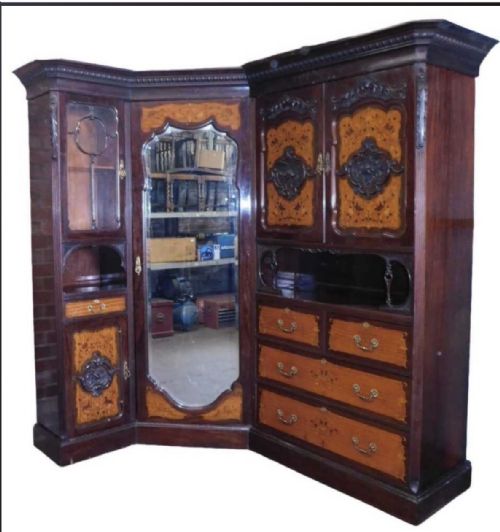


Edwardian Fitted Wardrobe
An edwardian fitted wardrobe provides substantial bedroom storage through clever internal compartments, hanging space and drawers.

Edwardian Fitted Wardrobe
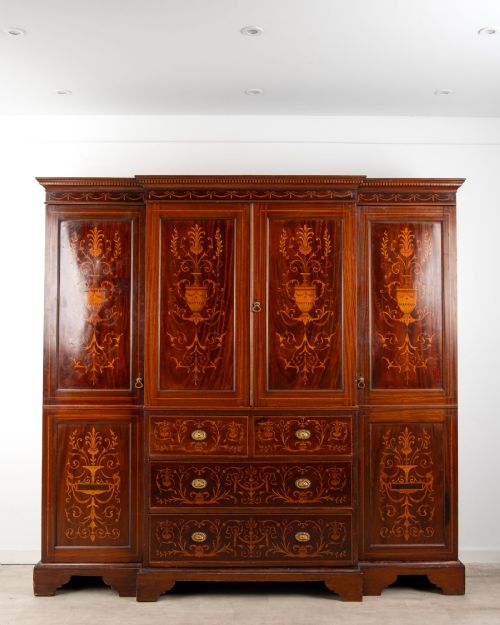
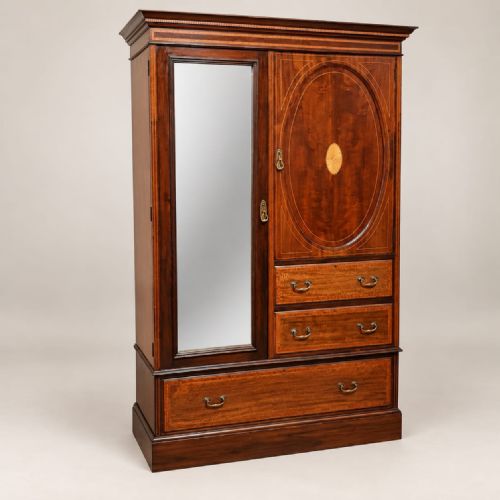
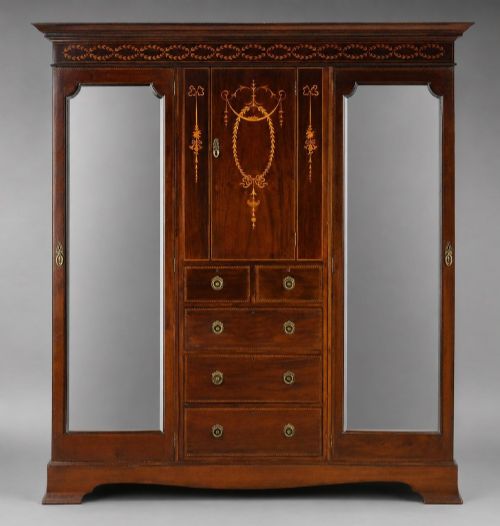
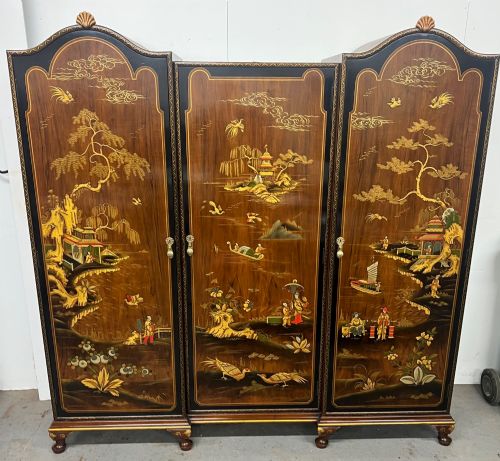
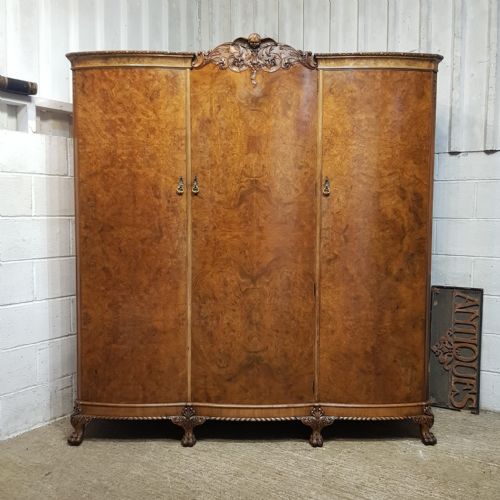
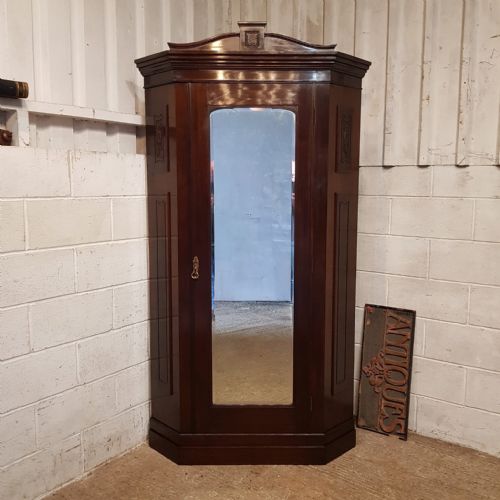
An edwardian fitted wardrobe combines hanging space with internal drawers, shelves and pull-out trays designed for gentleman's attire or general garments. These large storage pieces emerged during the late nineteenth and early twentieth centuries to satisfy domestic organisation.
How they were made
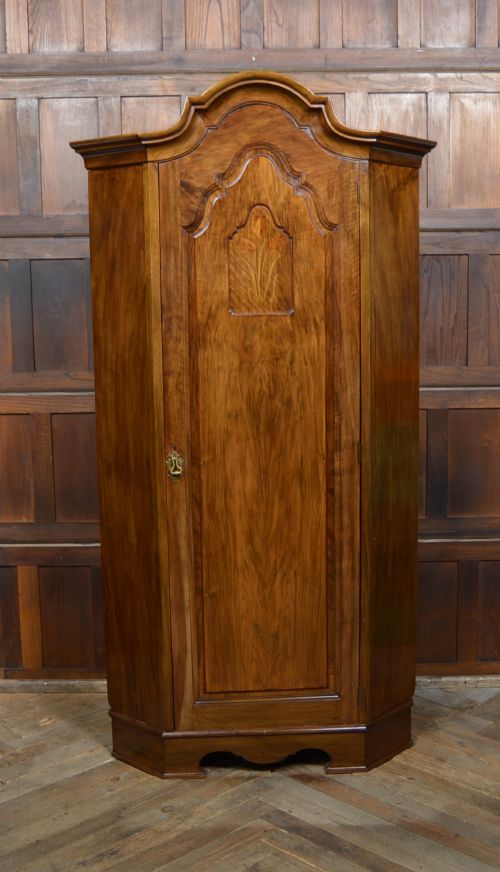
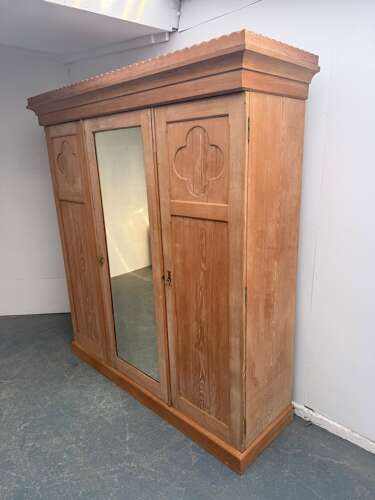
Cabinet makers utilised solid woods including mahogany, oak and walnut for structural stability, frequently applying decorative veneers such as satinwood, burr walnut and pollard oak to large panel surfaces. Marquetry inlay and brass hardware completed the exterior detailing.
Internal construction involved modular frameworks, sliding trays and fitted compartments designed to partially dismantle for transport and installation within period bedrooms.
Listings feature oak, mahogany, walnut, and satinwood across Edwardian and Victorian periods.
What varies in quality
The standard of timber selection and complexity of internal fittings dictate the hierarchy among these wardrobes, ranging from simple double doors to multi-section compactums with original sliding linen trays.
Renowned workshop attribution, sophisticated marquetry inlay, and complete, unaltered internal components elevate specific examples above standard utility pieces.
Maples & Co·Edwards & Roberts·Gillows of Lancaster·Shoolbred & Co·Louis Vuitton
The Edwardian Fitted Wardrobe Glossary
- Compactum
- A multi-compartment wardrobe combining hanging sections, banks of internal drawers and sliding shelves. This form maximises storage efficiency within a single footprint.
- Marquetry
- Decorative patterns formed by fitting contrasting veneers into prepared wood surfaces. Makers used floral and geometric motifs to adorn door panels.
- Lead light
- Glass panes held together by lead cames within window or door panels. This technique appears in select Arts and Crafts wardrobe designs.
- Pollard oak
- Timber taken from trees that were pollarded, producing dense clusters of growth rings with a highly figured grain. Cabinet makers used this decorative wood for select panels.
Edwardian Fitted Wardrobe: Frequently Asked Questions
How do I dismantle an edwardian fitted wardrobe?
Most large wardrobes and compactums from this period were constructed to separate into modular sections, cornices, plinths and doors for easier transport.
Careful removal of internal fixing screws and sliding bolts allows the main frame to divide safely without damaging the timber joints.
What is the difference between a wardrobe and a compactum?
A standard wardrobe focuses primarily on vertical hanging space behind full-length doors, sometimes with a single drawer at the base.
A compactum integrates multiple internal elements including linen trays, a bank of drawers and smaller partitioned sections alongside the hanging areas.
Where were these wardrobes placed in the home?
These large storage pieces stood principally in principal bedrooms and dressing rooms of substantial Edwardian and Victorian townhouses and country residences.
Their substantial proportions required dedicated wall space, often complementing matching satinwood or mahogany bedroom suites.
How do I care for mahogany and walnut surfaces?
Polishing timber surfaces with traditional beeswax helps nourish the grain and protects older wood from drying out in modern heated environments.
Avoiding direct sunlight prevents fading of delicate satinwood inlays and burr walnut veneers.