
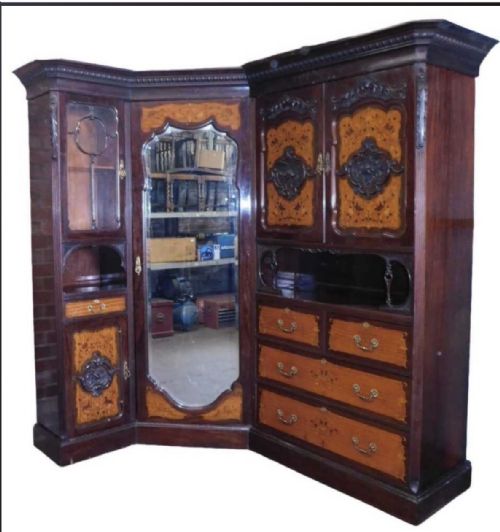


Mahogany Mirror Armoire
A mahogany mirror armoire brings scale, depth of timber and a clear glass plate to a bedroom, combining practical hanging space with a full-length reflection.

Mahogany Mirror Armoire
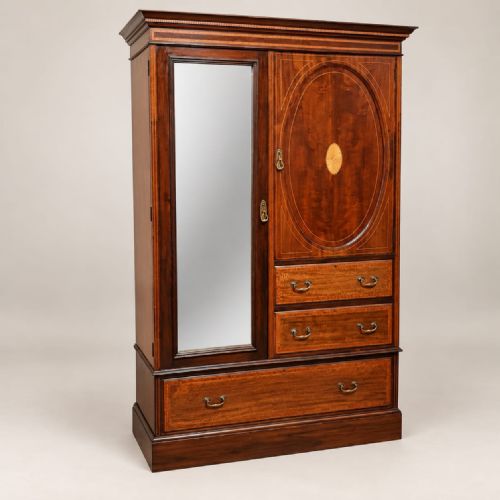
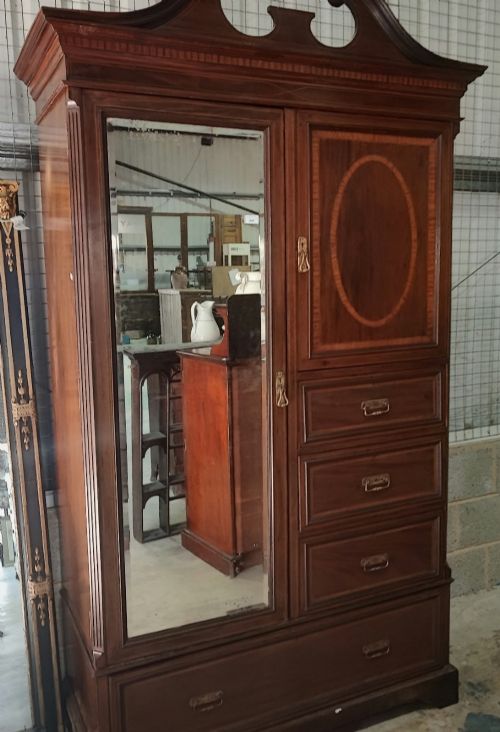
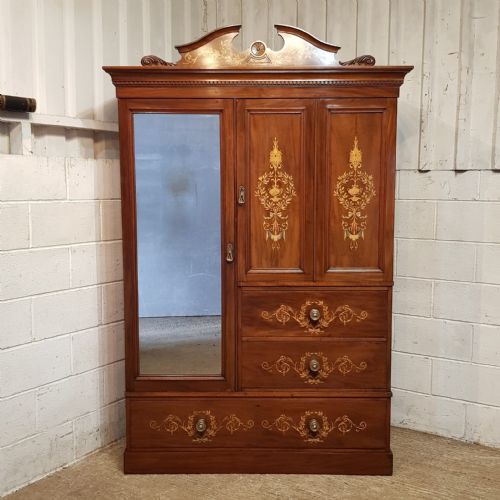
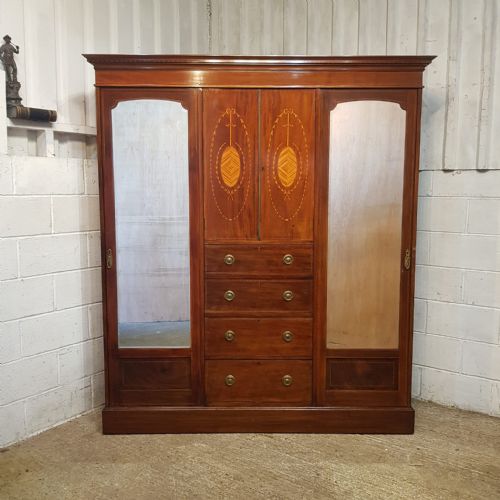
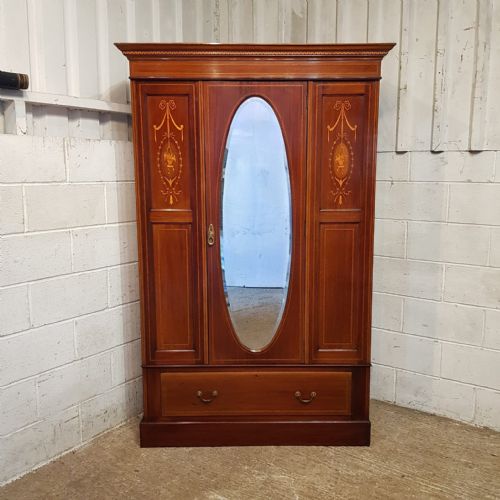
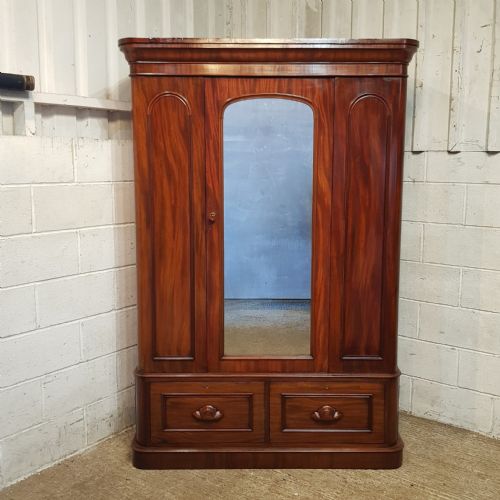
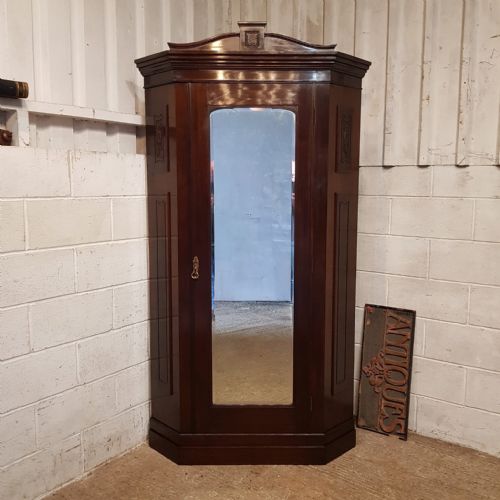
When you search for a mahogany mirror armoire, you encounter substantial timber furniture designed primarily for hanging garments, often incorporating internal drawers and shelving alongside the central door glass. These pieces span the Victorian, Edwardian and 19th Century periods, stretching from simple single-door designs up to expansive four-door breakfronts and compactums.
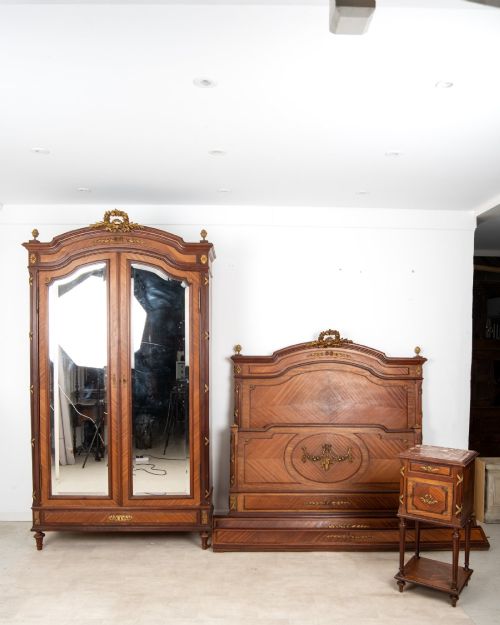
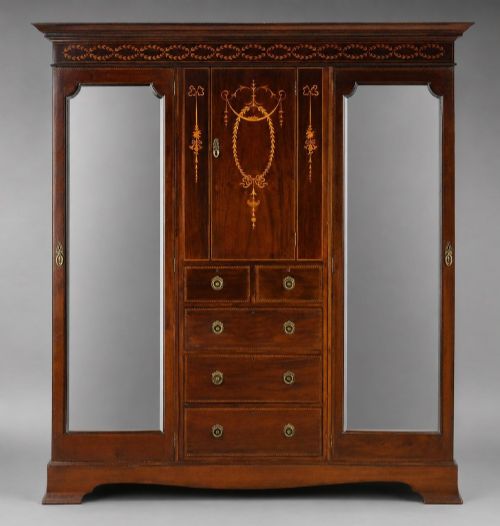
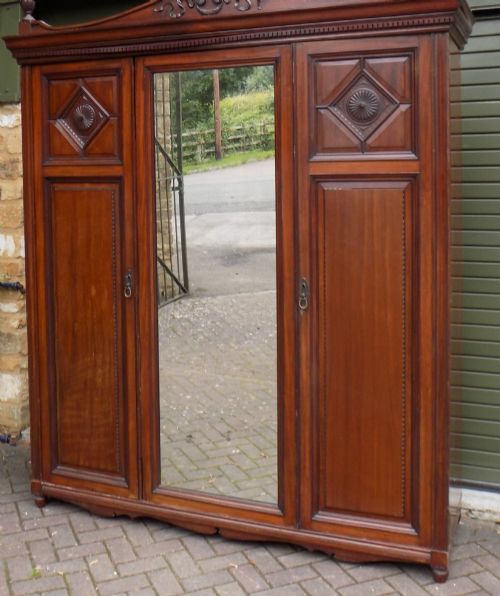
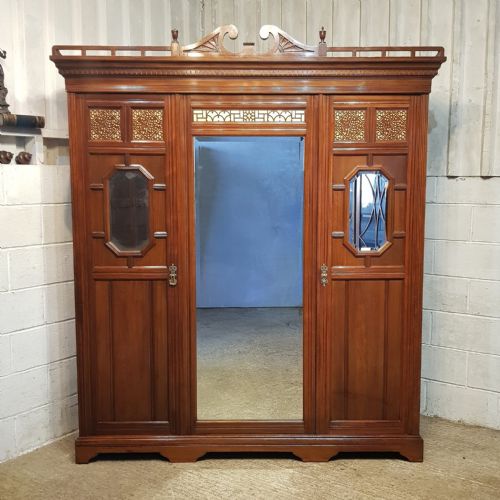
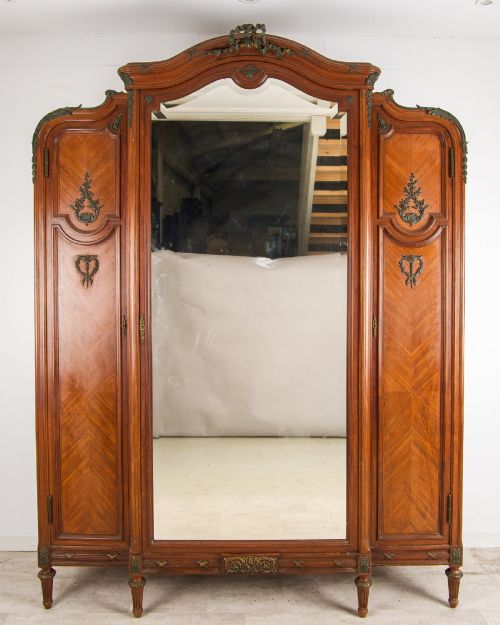
The version you are most likely to meet on this page is the Edwardian or late Victorian triple wardrobe in solid or veneered mahogany, frequently featuring satinwood inlay and a bevelled mirror plate set into the central door. Alongside English domestic pieces, the selection includes continental examples influenced by French Empire, Louis XVI Revival and Art Nouveau styles.
How they were made
Construction relies heavily on dense mahogany timber, sometimes paired with satinwood for contrasting stringing and floral marquetry, whilst architectural carcass forms accommodate heavy bevelled mirror glass within panelled doors. Cabinet makers utilised brass hardware, ormolu mounts and gilt bronze details to accent French pieces, whilst structural stability was achieved through substantial plinths and moulded cornices.
Internal configurations often combine hanging compartments with linen slides, small drawers and compartmented compactum sections, demanding precise joinery for internal partitions and sliding trays. Surface finishes were typically built up through polishing to highlight the natural grain and rich red-brown tones inherent in the timber.
Miniature mahogany wardrobes exist specifically as salesman samples, replicating every full-scale architectural moulding and door panel in miniature.
What varies in quality
The standard of a mahogany mirror armoire rests on the choice of timber figure, the crispness of any inlay or carved detail, and the integration of the mirror plate into the door frame. Pieces with finely figured crotch mahogany veneers, subtle satinwood stringing and substantial ormolu or gilt bronze mounts demonstrate superior workshop execution.
Proportion and scale also dictate distinction, separating standard utility wardrobes from ambitious breakfronts, compactums and bedroom suites designed by notable cabinet makers. The integrity of the internal fittings, from sliding trays to dovetailed drawer construction, marks the difference between basic utilitarian storage and fine cabinet work.
Edwards and Roberts·Wylie Lochhead of Glasgow·Maples and Co
The Mahogany Mirror Armoire Glossary
- Compactum
- A multi-functional wardrobe combining hanging space with internal drawers, shelves and sometimes linen slides. This format offers comprehensive storage within a single carcass.
- Breakfront
- A piece of furniture where the central section projects forward from the flanking wings. This architectural arrangement creates depth and shadow across the facade.
- Ormolu
- Gilt bronze mounts applied to furniture, particularly common on French pieces of the 19th century. The technique involves applying a gold amalgam to bronze.
- Satinwood
- A lustrous, yellowish timber utilised extensively for inlay and banding on mahogany furniture. It provides sharp visual contrast against darker primary woods.
Mahogany Mirror Armoire: Frequently Asked Questions
How do I dismantle a large wardrobe?
Most large mahogany wardrobes and armoires were constructed to be dismantled into sections, including a heavy cornice, base plinth and separate side carcasses.
Screws, bolts and wooden peg joints hold the panels together, allowing the piece to be moved between rooms before reassembly on site.
What is a compactum wardrobe?
A compactum is a specialised wardrobe that integrates multiple storage formats within a single footprint, combining clothes hanging space with rows of drawers and sliding shelves.
Victorian examples often include dedicated compartments for gentleman's attire or linen storage behind mirrored doors.
How do I care for the mirror glass?
Original mirror glass requires gentle cleaning using standard glass cleaner applied to a cloth rather than sprayed directly onto the surface.
This prevents moisture from seeping behind the bevelled edges and damaging the silvered backing over time.
Are these wardrobes suitable for modern hangers?
Many period wardrobes feature shallower internal depths than modern closets, meaning standard clothes hangers may face forward rather than sideways.
Checking the internal hanging depth ensures contemporary garments will fit comfortably inside without pressing against the mirror glass.