

Edwardian Mahogany Music Cabinet
An Edwardian mahogany music cabinet brings the refined practicality of the early twentieth century into a modern home.

Edwardian Mahogany Music Cabinet
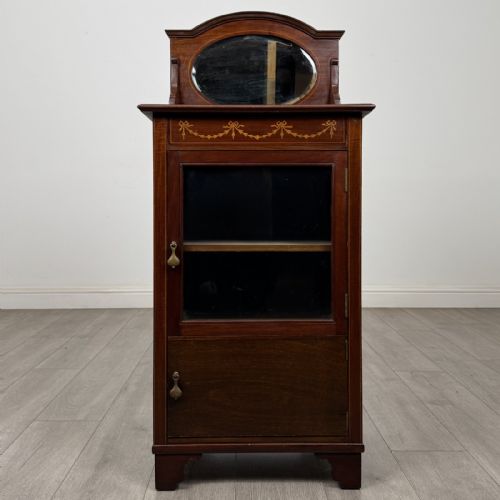
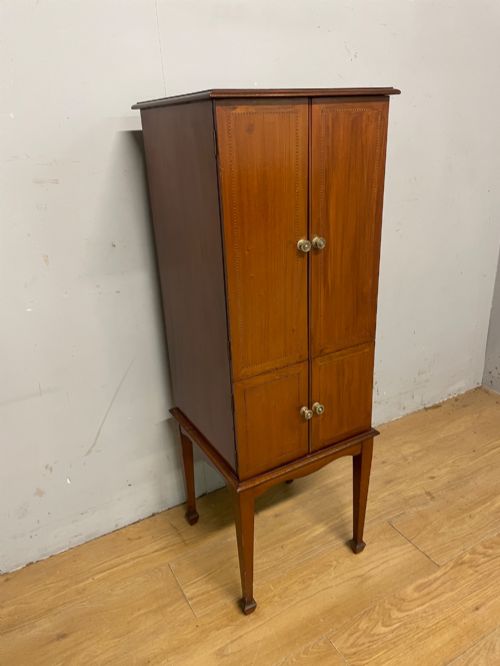
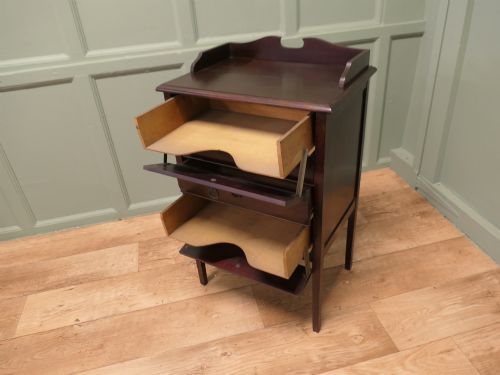
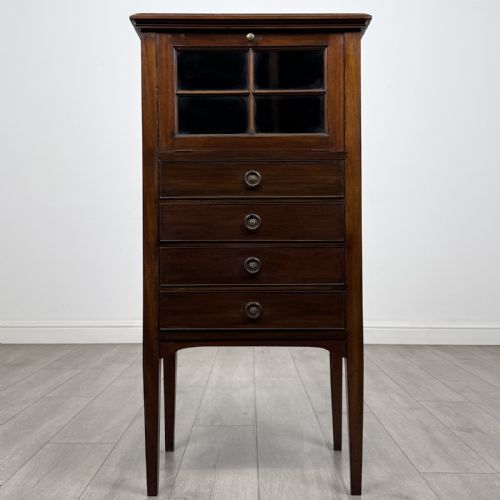
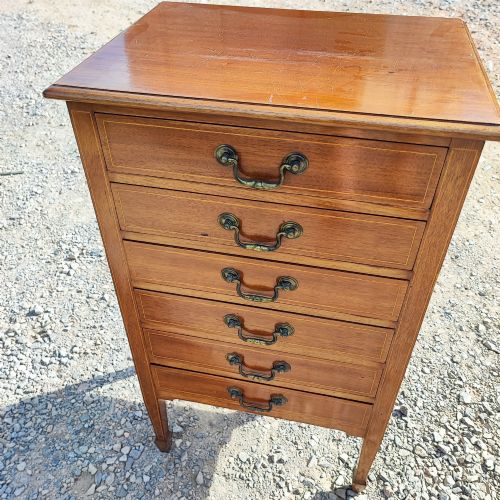
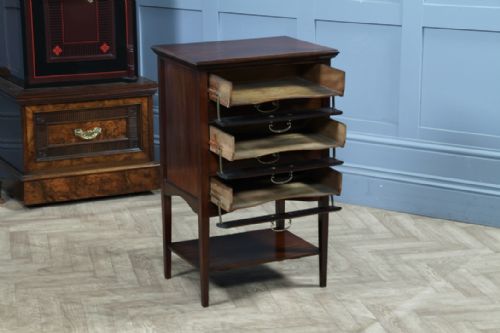
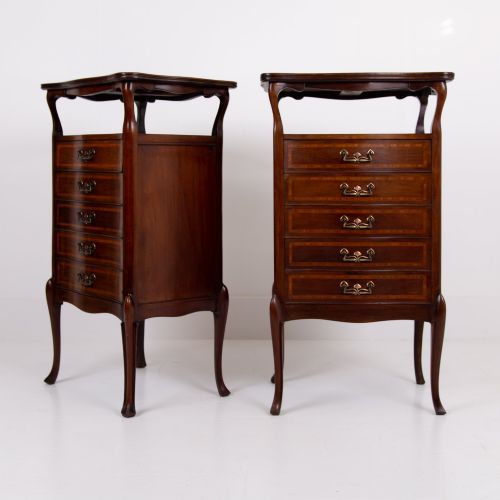
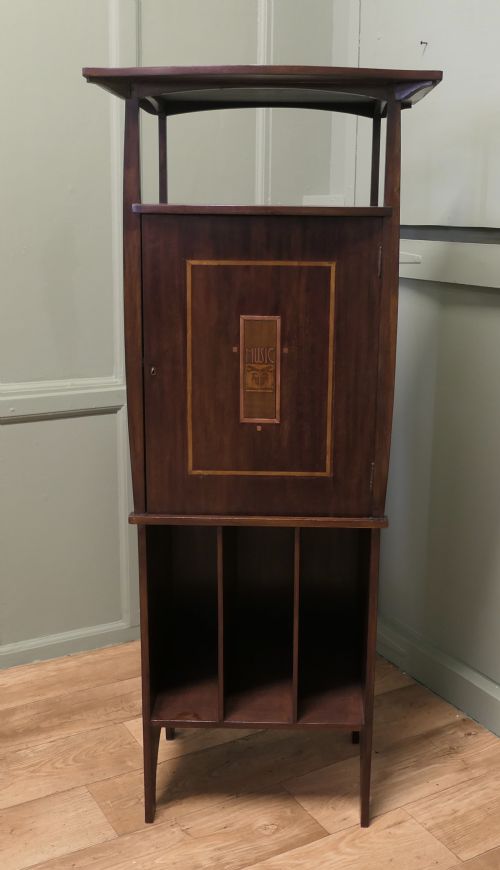
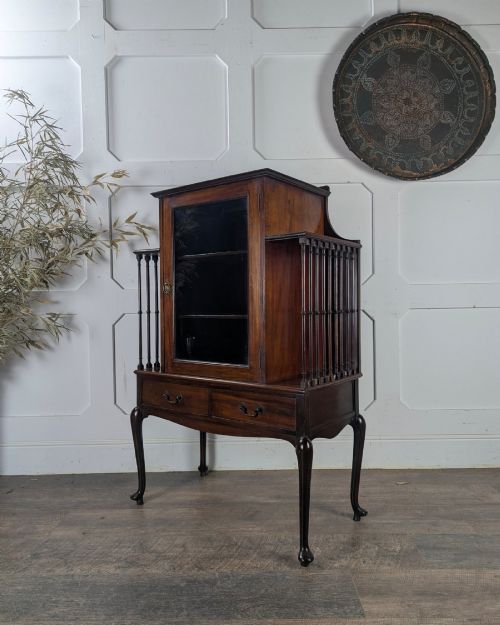
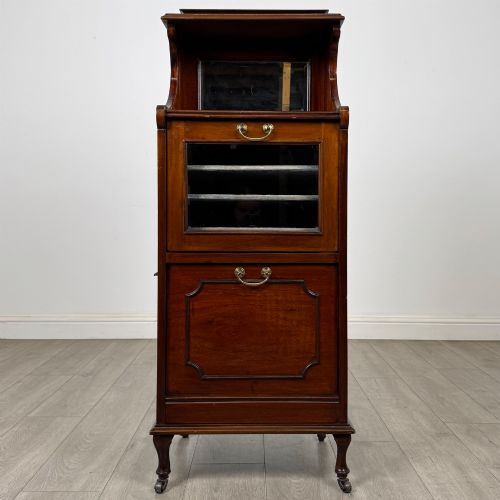
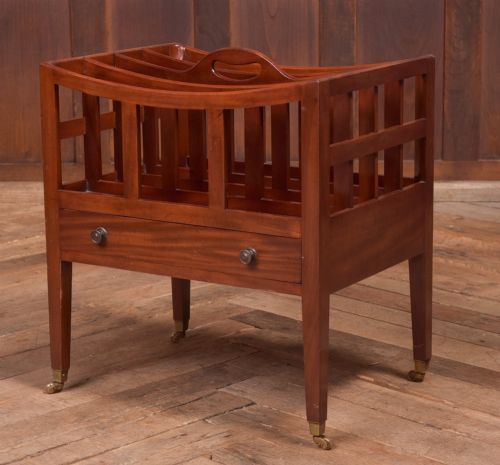
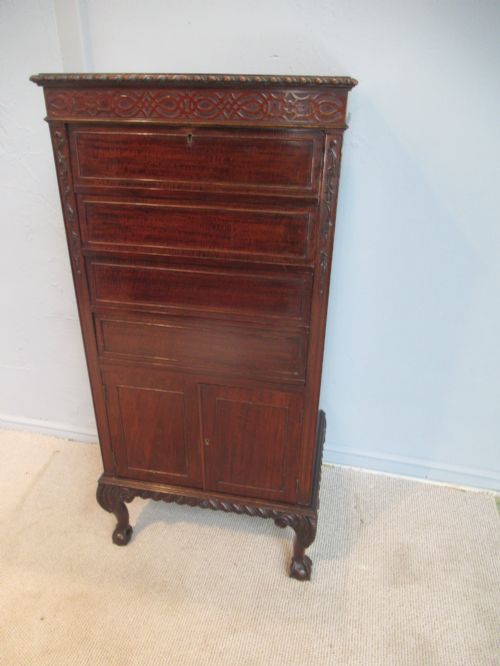
An edwardian mahogany music cabinet is a specialised storage piece originally designed to hold sheet music, folios, and piano rolls in the drawing room or parlour. These pieces emerge predominantly from the Edwardian period and the late nineteenth century, appearing on this page most commonly as upright cabinets with stacked drop-front drawers or internal shelving.
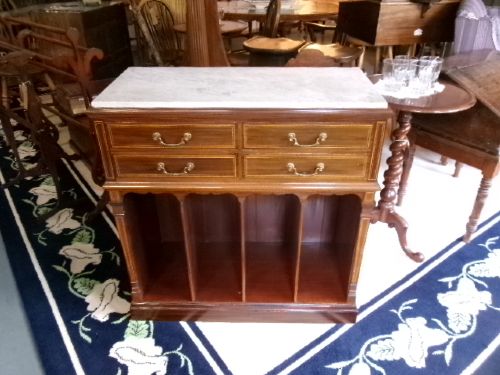
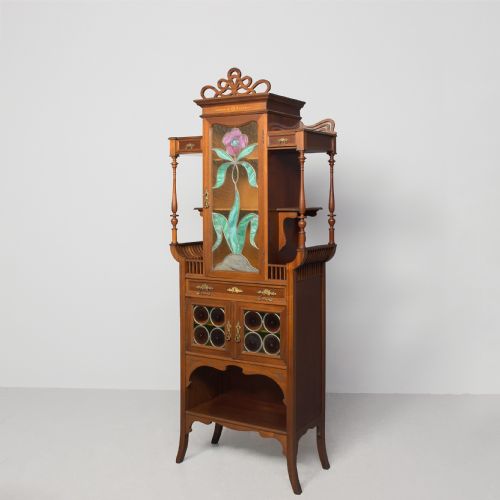
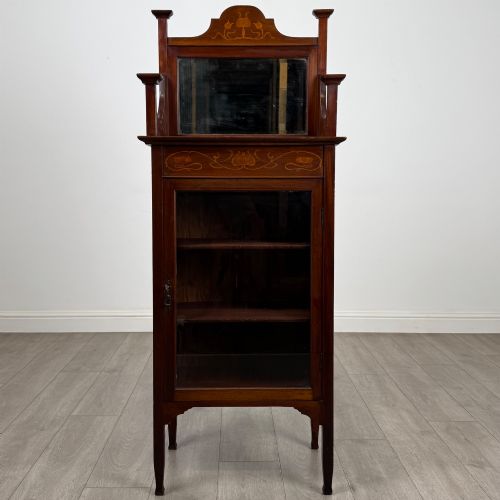
Makers adapted these forms to suit domestic musicians, incorporating subtle compartments to keep paper dry and organised. Alongside the standard multi-drawer chest, variations include variants with glass display doors, lower open shelves, or matching piano stools, all constructed to house paper scores neatly.
The architectural language leans heavily towards Edwardian restraint, though examples span into Arts and Crafts interpretations and Sheraton Revival aesthetics. Buyers encounter pieces standing tall and slim alongside compact side versions, reflecting the diverse spatial demands of period homes.
How they were made
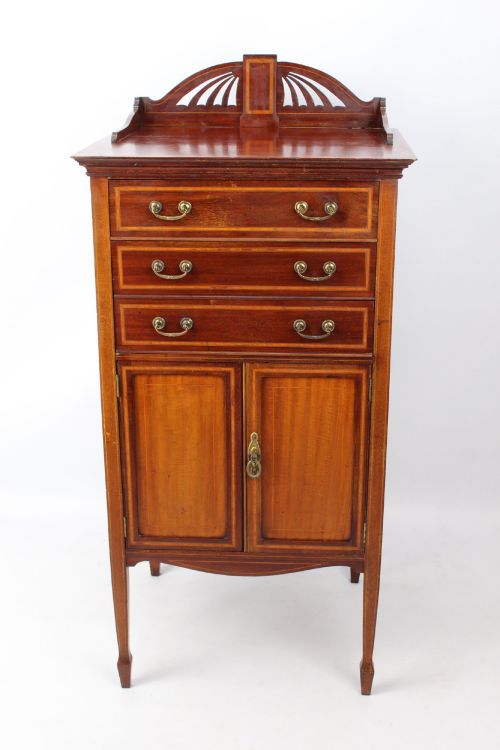
Makers constructed these cabinets using a solid mahogany core, often pairing figured mahogany veneers on the exterior surfaces with secondary timbers for internal dividers and drawer linings. Workshops frequently enhanced the primary wood by incorporating delicate stringing and contrasting satinwood or boxwood inlay.
Cabinet makers utilised brass hardware, including drop handles, escutcheons, and hinges, which contrast against the dark reddish-brown grain of the polished mahogany. Certain Arts and Crafts interpretations incorporate wrought brass or copper details alongside simpler linear joinery.
Glass panels appear in doors designed for display purposes, secured with wooden glazing bars that follow Edwardian or Late Victorian patterns. Surface finishing relied on traditional French polishing, which deepens the natural chatoyancy of the mahogany.
Edwardian Mahogany Music Cabinet Retail Price Guide 2026
Typical asking prices for edwardian mahogany music cabinet among the pieces listed under this phrase on Sellingantiques today, from the lower quarter to the upper quarter. They describe what is for sale here now, not the wider market.
Many a Victorian pianist relied on these drop-front drawers to hide less-than-masterful sight-reading attempts from critical parlour guests.
What varies in quality
The standard of timber selection largely dictates the visual merit of the piece, with finer examples displaying rich flame or ribbon mahogany grain on the primary drop-front drawers. Subtlety and precision in the execution of boxwood and satinwood inlay separate mass-produced workshop items from bespoke commissions.
Mechanical integrity within the drop-front drawer mechanism dictates daily utility, as superior brass pivots and smoothly running runners ensure the front panels lower without binding. Internal construction, such as solid mahogany drawer bases rather than thin plywood substitutes, marks the distinction between workshop tiers.
Attribution to documented makers or bearing original paper trade labels elevates certain pieces, reflecting the distinct craftsmanship of firms such as Shapland & Petter or Collinson & Lock. The crispness of carved mouldings and the retention of original brass fittings further distinguish higher-grade examples.
GM Elwood for JS Henry·Denby & Spinks·Collinson & Lock London·Keeble London·Shapland & Petter
The Edwardian Mahogany Music Cabinet Glossary
- Drop-front
- A hinged drawer or panel that tilts forward at an angle to allow easy access to sheet music stored inside. This mechanism characterises the standard music cabinet.
- Satinwood inlay
- Contrasting light yellow-gold timber veneers inserted into recessed channels within the darker mahogany surface. It forms geometric lines, swags, or floral motifs.
- Stringing
- Thin, narrow lines of contrasting wood inlay used to outline drawer fronts, tabletops, and cabinet doors. This decorative technique defines Edwardian cabinetwork.
- Folio cabinet
- A tall storage unit equipped with wide, shallow shelves designed to hold large volumes of unbound musical scores and plates. These pieces accommodate oversized orchestral sheets.
Edwardian Mahogany Music Cabinet: Frequently Asked Questions
What fits inside an edwardian mahogany music cabinet?
These cabinets house sheet music, songbooks, and thin folios within their shallow drawers or drop-front compartments. The internal dimensions suit paper scores rather than thick bound volumes.
Modern owners repurpose the drawers for organising stationery, art supplies, or flat paperwork while retaining the period aesthetic in a living space.
How do I care for polished mahogany surfaces?
Maintain the polished finish by dusting regularly with a soft, dry cloth and avoiding placement near direct heat sources or strong sunlight. Excessive warmth causes timber to shrink and veneers to lift from the core.
Apply a microcrystalline wax periodically to nourish the wood and protect the traditional French polish from moisture rings and daily wear.
Were these cabinets built for instruments?
They were built specifically to store the paper scores and folios played on pianos, violins, and other parlour instruments. The interior configuration accommodates stacked paper rather than the instruments themselves.
Some related forms combine a seating stool with internal score storage underneath the upholstered lid, serving pianists directly at the keyboard.
How do I distinguish Edwardian from Victorian examples?
Edwardian pieces tend to feature lighter proportions, more restrained stringing, and influences from Sheraton or neoclassical revivals. The mahogany often appears slightly brighter with delicate inlay.
Victorian counterparts typically present heavier proportions, darker finishes, and bolder carvings or marquetry, reflecting the more ornate tastes of the nineteenth century.