
Edwardian Mahogany Dressing Mirror
An edwardian mahogany dressing mirror brings refined proportion and warm timber grain to a bedroom, combining practical reflection with subtle period craftsmanship.
Edwardian Mahogany Dressing Mirror
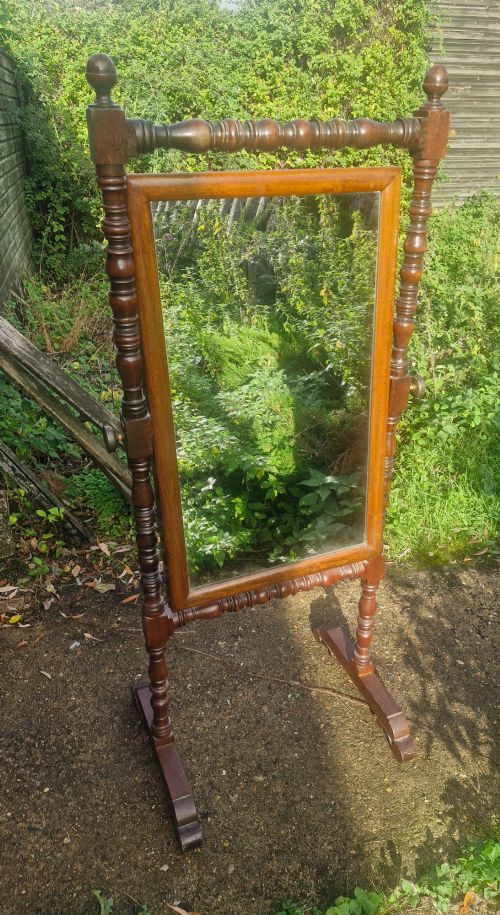
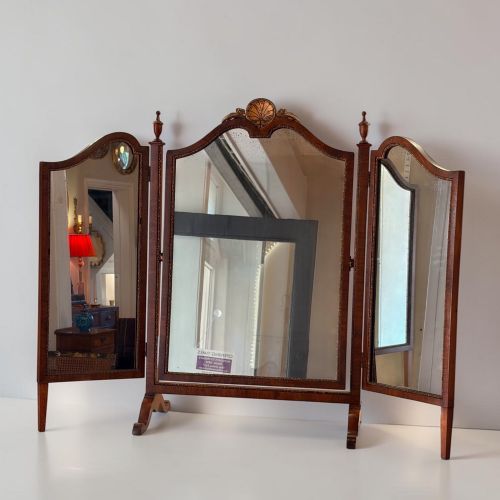
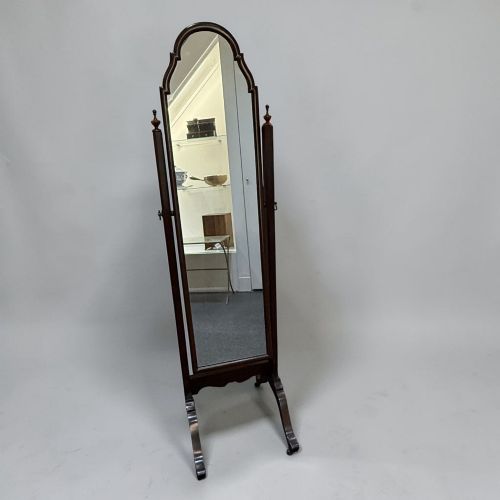
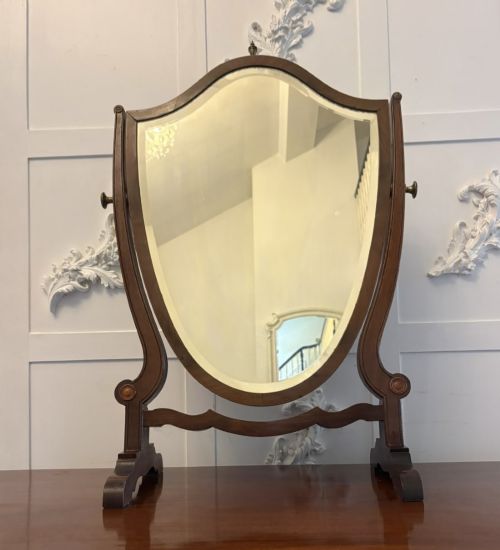
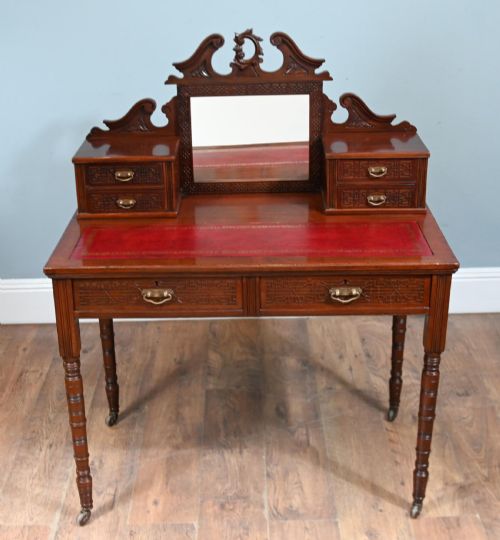
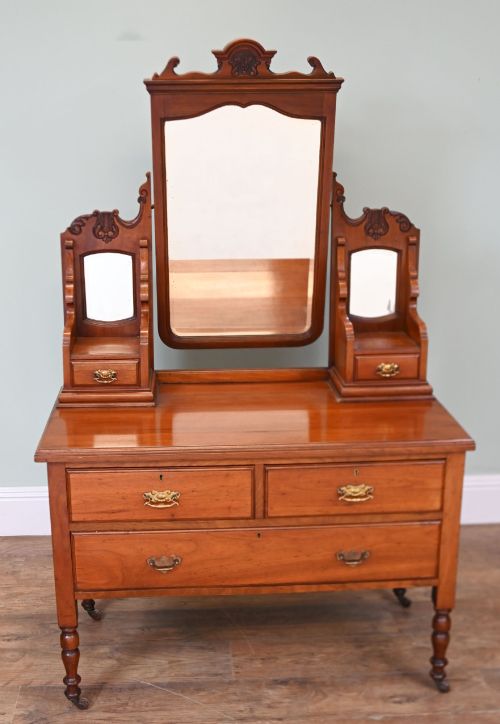
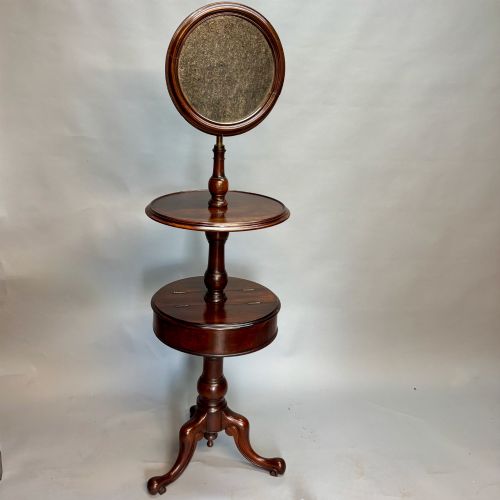
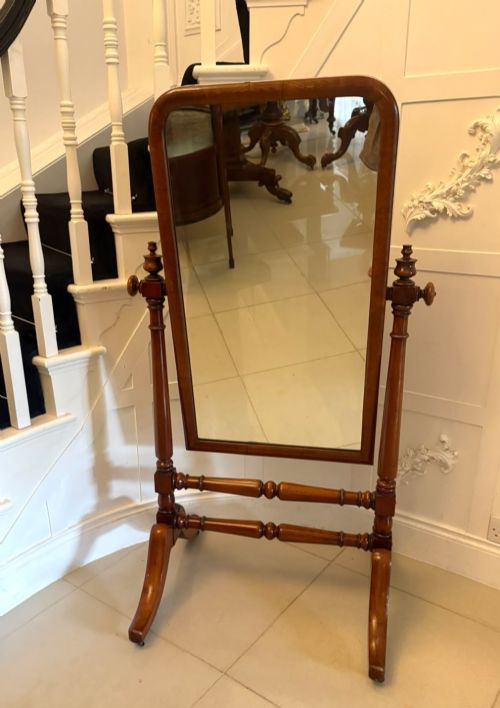
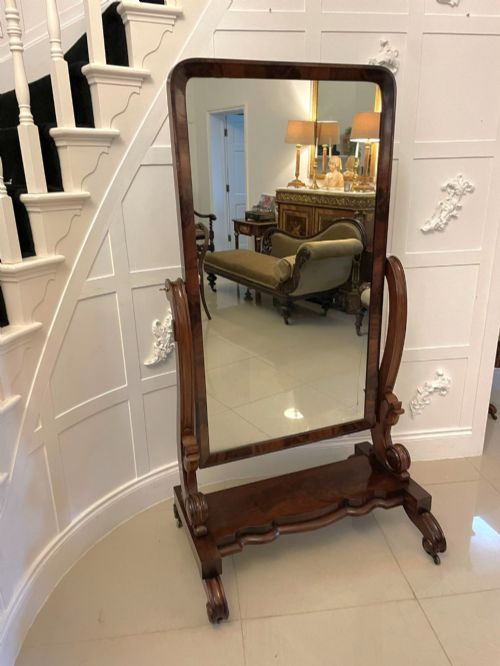
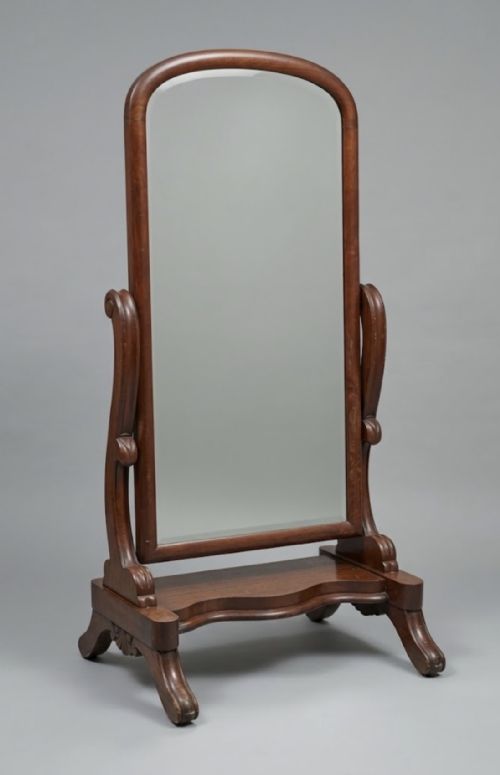
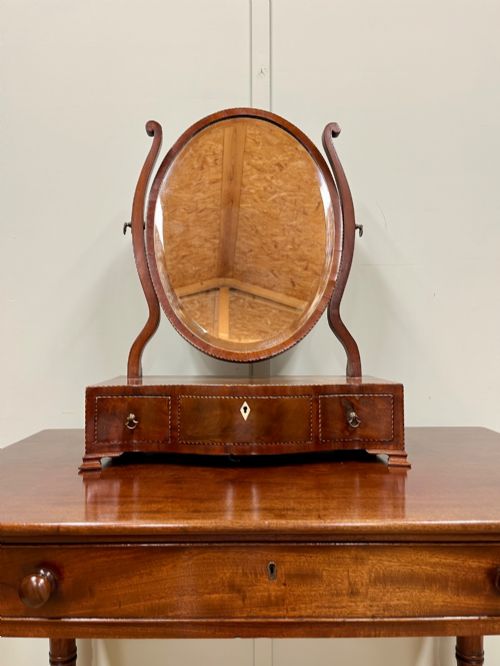
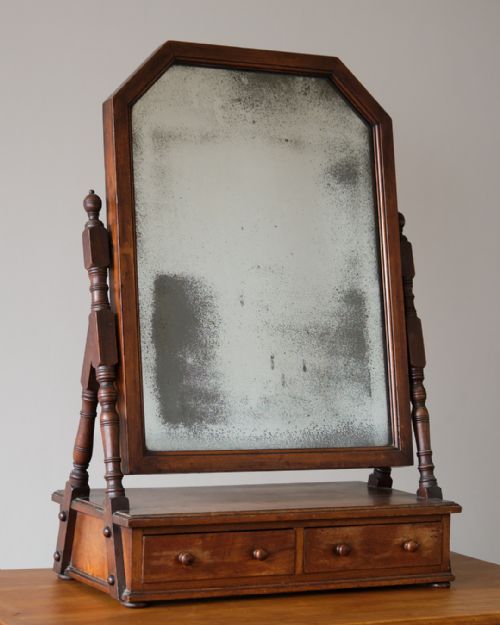
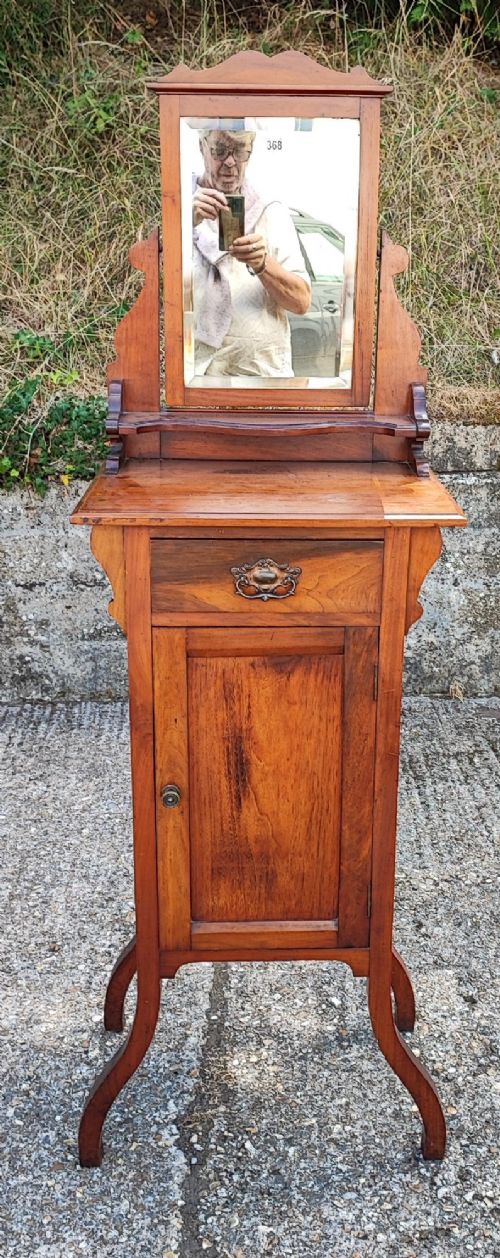
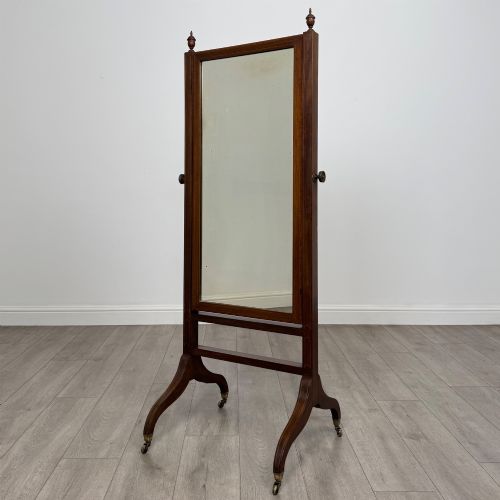
When searching for an edwardian mahogany dressing mirror, buyers encounter a variety of forms ranging from compact table-top swing glasses to full-length floor-standing cheval mirrors and multi-panel triptych designs. These pieces frequently incorporate small trinket drawers, boxwood stringing, or subtle satinwood inlay reflecting the dominant Sheraton Revival influence of the era.
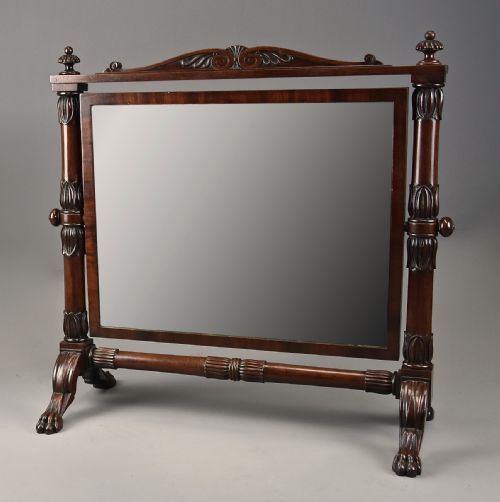
While the selection spans substantial cheval stands and dressing table attachments, the smaller swing mirror placed upon a chest or dressing table remains a common discovery. Many examples show Edwardian cabinetmakers adapting earlier Georgian and Regency proportions for lighter, more domestic bedroom settings.
Materials and construction methods
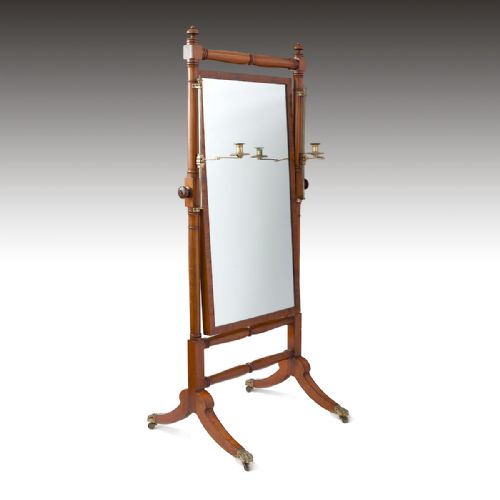
Cabinetmakers utilised solid mahogany and mahogany veneers over secondary timbers, often framing mirror glass with bevelled edges supported by adjustable brass pivots and swing arms. Frames frequently display fine inlay work, including satinwood bandings and bone escutcheons around drawer keyholes.
Floor-standing cheval frames rely on sturdy side uprights fixed to splayed legs or barley twist supports, occasionally fitted with original castors for mobility. Table-top versions use shaped upright brackets secured to plinth bases or small drawer boxes joined with period dovetails.
Many Edwardian dressing mirrors hide secret velvet-lined compartments behind the swing glass for storing delicate Victorian hatpins.
Evaluating quality and craftsmanship
Quality in these mirrors rests upon the crispness of the timber selection, the depth of the mahogany grain, and the precision of the inlaid stringing rather than mere ornamentation. Finer pieces demonstrate careful symmetry in their veneer matching and substantial brass hardware that operates smoothly without undue looseness in the swing mechanism.
The integrity of the mirror glass itself and the joinery of the supporting frame distinguish standard production items from superior workshops. Original glass plates, well-fitted backboards, and tightly jointed drawer boxes indicate a higher standard of original manufacture.
Edwards and Roberts·Heal and Sons·Gillow·P and MA Nicholson
The Edwardian Mahogany Dressing Mirror Glossary
- Cheval mirror
- A full-length floor-standing mirror suspended on a vertical frame that allows it to swing to various angles. This form appeared in various sizes from the Regency period onwards.
- Triptych mirror
- A three-panel dressing mirror featuring a central glass flanked by two smaller adjustable side wings. This configuration became particularly popular during the Edwardian period for dressing tables.
- Stringing
- A narrow inlay of contrasting wood, such as boxwood or satinwood, set flush into the mahogany surface. It creates fine linear borders around drawer fronts and frame edges.
- Swing mirror
- A table-top or chest-mounted glass hung on side pivots between two upright posts. The mirror plate tilts independently to adjust the angle of reflection.
- Crossbanding
- A border veneer applied around the edges of a panel or table top so that the grain runs perpendicular to the central section. It provides a neat decorative frame to the primary timber.
Edwardian Mahogany Dressing Mirror: Frequently Asked Questions
How do I date an edwardian mahogany dressing mirror?
Dating relies on examining construction techniques, hardware, and stylistic cues such as inlay patterns. Edwardian pieces c.1900 to 1910 often feature lighter framing, Sheraton Revival satinwood details, and bevelled mirror plates.
Earlier Victorian or Georgian precursors tend to have heavier timber sections, hand-bevelled or flat mercury glass, and different joinery methods inside any accompanying drawers.
Are cheval mirrors free standing?
Cheval mirrors are designed to stand independently on the floor supported by their own frame and legs. They do not require wall mounting and can be repositioned easily within a room.
Most examples utilise splayed legs, trestle bases, or castor-fitted feet to maintain stability while the mirror plate tilts.
How should I care for the mahogany wood?
Maintain mahogany surfaces by dusting gently with a dry, soft cloth and avoiding silicone-based sprays or harsh chemical cleaners. Keep the wood away from direct heat sources and strong sunlight to protect the polish and prevent timber warping.
Period brass fittings can be cleaned very carefully with a dry cloth, avoiding abrasive polishes that might mark the surrounding wood.