


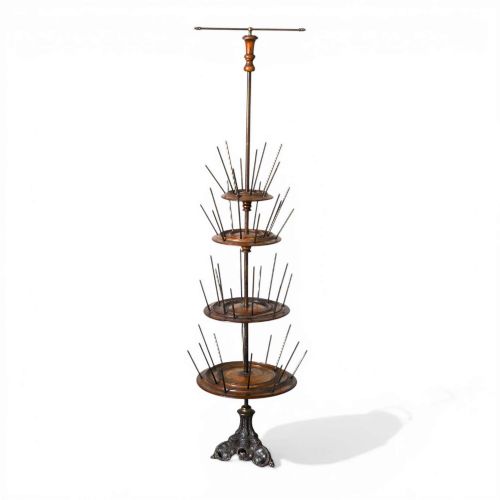


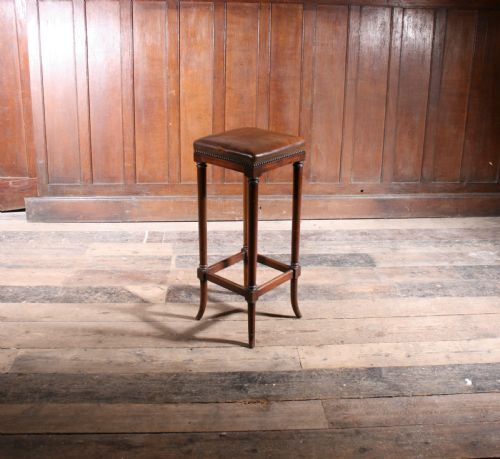


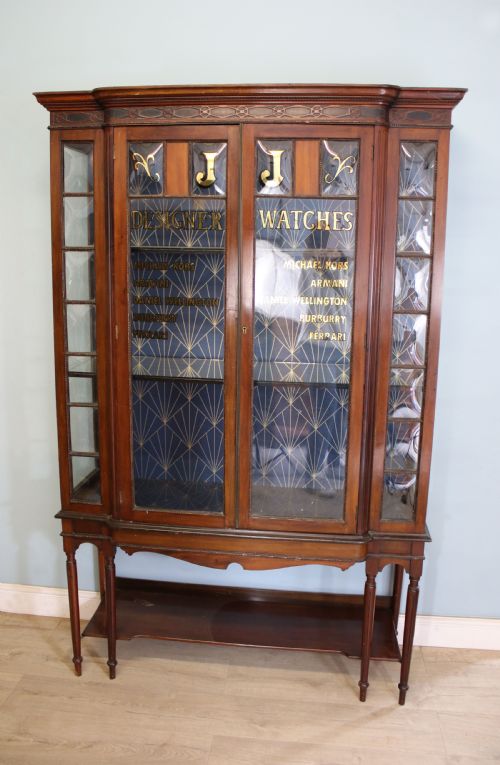

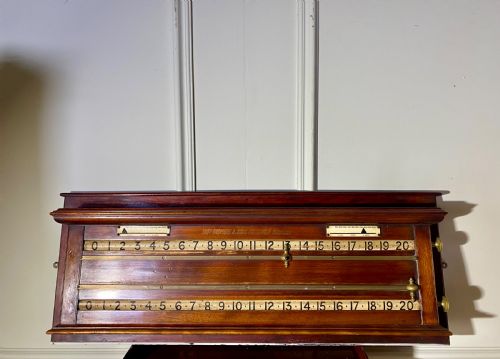
Edwardian Mahogany Counter
An edwardian mahogany counter brings practical display space and rich dark timber into a room, offering functional heritage for modern interiors.
Edwardian Mahogany Counter
When searching for an edwardian mahogany counter, buyers encounter robust shop fittings and display pieces originally built for commercial premises. These survivors include countertop display cases, larger freestanding cabinets, and shop showcases designed to exhibit wares.
The most common form met on this page is the glazed tabletop display cabinet, often featuring timber framing and glass panels to protect contents while maintaining visibility. Pieces span the Edwardian era, the Victorian period, and the early twentieth century.
Makers and retailers utilised these fixtures in confectioners, drapers, and general stores, applying branding or lettering for firms such as Fry's, Rowntree's, and Cadbury's. Surviving examples bring a distinct commercial heritage into residential and retail settings.
Materials and construction methods
Makers constructed these counters and display units primarily using solid mahogany and associated hardwoods, selected for structural strength and deep grain colour. Glazing formed a crucial element, with large glass panels and table tops fitted to enclose the display space securely.
Metal components such as brass hardware, mirrors, felt linings, and occasional gold leaf details added functional and decorative finish. Framing joints were engineered to support heavy glass sections and endure daily retail use.
Edwardian Mahogany Counter Retail Price Guide 2026
Typical asking prices for edwardian mahogany counter among the pieces listed under this phrase on Sellingantiques today, from the lower quarter to the upper quarter. They describe what is for sale here now, not the wider market.
Listings feature countertop display cases and shop fittings constructed from mahogany, hardwood, brass, and glass, spanning the late Victorian period to the 1930s.
Distinctions in construction and preservation
Quality in these commercial fixtures depends on the integrity of the timber framing, the clarity and original state of the glass panels, and the preservation of internal fittings like mirrored backs and shelving. Finer examples retain their original brass hardware and untouched structural joins without excessive modern timber replacement.
The presence of authentic period advertising signage, whether painted or applied for confectioners and tobacconists, influences the character of the piece. Untouched surfaces display a deeper patina on the hardwood, whereas over-restoration alters the historic tactile quality.
F Sage And Co London·Orme And Sons Manchester
The Edwardian Mahogany Counter Glossary
- Countertop display cabinet
- A glazed enclosure designed to sit upon a shop counter for customer viewing of small goods. These cases typically feature hinged or sliding rear doors for staff access.
- Shop fitting
- Fixtures and furniture custom-built or supplied for commercial retail interiors. Items range from wall display cases to freestanding counters and specialised shelving.
- Galleries
- Low decorative rails fitted around the top edge of tables or cabinets to prevent items from sliding off. They appear frequently on side tables and countertop units.
- Bow end
- A curved cabinet end or front profile that softens the geometric lines of a piece. This curved glazing technique requires specialised joinery.
- Patina
- The surface sheen and coloration developed by hardwood and metal over decades of handling and exposure. It serves as an indicator of age and honest preservation.
Edwardian Mahogany Counter: Frequently Asked Questions
What were edwardian mahogany counters used for originally?
Merchants utilised these glazed units on shop counters to display confectionery, tobacco, and small dry goods securely while allowing customers a clear view. The enclosed shelving protected delicate stock from handling and dust in busy retail environments.
Over time, many of these commercial fittings transitioned into domestic settings, serving as display furniture or collector's cabinets in homes. Their functional design makes them practical for exhibiting small items today.
How do I clean and maintain mahogany display cabinets?
Dust the hardwood surfaces gently with a dry or slightly damp cloth, avoiding modern silicone polishes that build up residue. Feed the timber periodically with a traditional beeswax to preserve the natural moisture and grain depth.
Clean the glass panels using a mild glass cleaner applied to a cloth rather than sprayed directly, preventing moisture from seeping into old timber frames or backing mirrors. Take care around original painted signage to prevent flaking.
How can I tell an Edwardian counter from a Victorian one?
Edwardian pieces often display lighter proportions and slightly more restrained decoration compared to heavier Victorian counterparts. The transition in trade tastes around nineteen hundred favored cleaner architectural lines in shop fittings.
However, construction methods overlap significantly between the late nineteenth century and the early twentieth century. Examining hardware styles, timber thickness, and any associated trade labels helps clarify the precise period of manufacture.
Can I use these cabinets in a modern kitchen?
Countertop display cases and smaller cabinets integrate well into modern kitchens for storing glassware, ceramics, or dry goods. The glass protection keeps items visible while shielding them from cooking residue.
Ensure the selected unit fits the depth of modern work surfaces and check that internal shelf heights accommodate your specific storage requirements. Freestanding variations offer flexible placement options on kitchen islands or sideboards.