

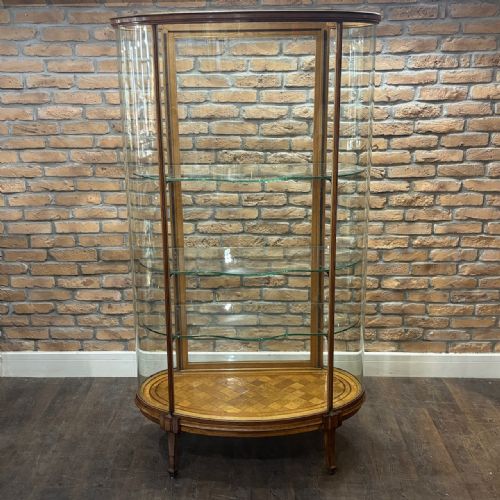


Glass Museum Counter
A glass museum counter transforms commercial display into a stage for precious objects, offering sturdy architectural presence and crystal-clear visibility.
Glass Museum Counter
A glass museum counter provides dedicated display space through a combination of wooden framing and expansive glass panels. Buyers seeking a glass museum counter encounter robust shop display counters and tabletop cases designed to showcase merchandise or private collections.
The pieces span the Victorian and Edwardian eras into the 1920s, reflecting late 19th-century French styles as well as early 20th-century commercial designs. Oak and mahogany form the structural backbone of these cabinets, frequently paired with brass hardware and velvet or fabric linings.
Formations range from large floor-standing counters and triple shop display cabinets to smaller tabletop showcases and vitrines. Specific stylistic revivals, such as Louis XVI and Adam, appear alongside commercial works and Art Deco influences.
Materials and construction methods
Makers utilised dense hardwoods like mahogany and oak to construct durable frames capable of supporting heavy sheets of glass. Ebonised wood and cedar also feature in the construction, providing contrasting dark tones or aromatic interiors for specific display purposes.
Brass fittings secure the opening mechanisms and joints, while gold leafing occasionally highlights carved wooden details. Interiors lined with velvet or fabric create a soft contrasting surface to cushion delicate artefacts and items within the glazed compartments.
Glass Museum Counter Retail Price Guide 2026
Typical asking prices for glass museum counter among the pieces listed under this phrase on Sellingantiques today, from the lower quarter to the upper quarter. They describe what is for sale here now, not the wider market.
The documented pieces span from the mid-nineteenth century through the 1930s, encompassing Victorian, Edwardian, and Art Deco design periods.
Distinctions in construction and design
Quality rests in the structural integrity of the timber framing and the clarity of the large glazed areas. Pieces produced by established shopfitters demonstrate superior joinery and refined proportions compared to standard commercial utility items.
The inclusion of specialised decorative elements, such as gold leafing or distinct revival styling like Adam and Louis XVI, elevates the visual presence. Original brass hardware and well-preserved velvet or fabric linings further distinguish the finer examples.
F. Sage & Co·E. Pollard & Co. Ltd·Quincy Showcase Works
The Glass Museum Counter Glossary
- Vitrine
- A glass display cabinet or showcase designed specifically for protecting and exhibiting objects of art or curiosity. These pieces rely on extensive glazing to maximise visibility from multiple angles.
- Showcase
- A glazed counter or cabinet utilised in retail and institutional settings to protect merchandise or specimens. They range from small tabletop versions to large floor-standing commercial counters.
- Ebonised wood
- Timber treated with a dark stain or chemical finish to imitate the appearance of ebony. This dark finish provides a formal, contrasting border around the glazed display areas.
- Display counter
- A low, glass-topped piece of furniture positioned to allow customers or visitors to view items from above. They combine functional working height with secure display storage.
Glass Museum Counter: Frequently Asked Questions
What are glass museum counters used for?
These pieces function as secure display enclosures for retail merchandise, scientific specimens, and private collections. The large glass panels allow observers to inspect objects clearly from above or the sides while keeping them protected from dust and handling.
Historically utilised in shops and institutional displays, today they serve effectively in domestic interiors for showing ceramics, silver, books, and curiosities.
How do I date a glass museum counter?
Dating relies on observing the combination of timber, hardware, joinery techniques, and stylistic markers present in the piece. Victorian and Edwardian examples often feature solid mahogany or oak frames with traditional hand-cut joinery.
Later pieces from the 1920s and 1930s frequently incorporate commercial shopfitting badges, brass detailing, and distinct stylistic influences such as Art Deco legs or simplified geometric lines.
Where should I place a display counter?
Floor-standing counters require sufficient perimeter space to allow comfortable viewing and access around the perimeter of the cabinet. Placing them away from direct sunlight protects both the wooden framing and any sensitive items displayed inside.
Tabletop display cases sit well on existing credenzas, sideboards, or dedicated tables, bringing height and structural interest to a room without occupying floor space.
How do I maintain the wood and glass?
Routine maintenance involves dusting the wooden surfaces with a dry cloth and cleaning the glass panels with a suitable non-ammonia glass cleaner. Care should be taken to avoid spraying liquid directly onto wooden frames or internal fabric linings.
Periodic application of appropriate wax keeps hardwood surfaces nourished, while checking brass hardware ensures doors and sliding panels operate smoothly.