


Edwardian Mahogany Cheval Glass
An Edwardian mahogany cheval glass is a freestanding mirror built to pivot in a frame, offering a full-length reflection that every dressing room requires.
Edwardian Mahogany Cheval Glass
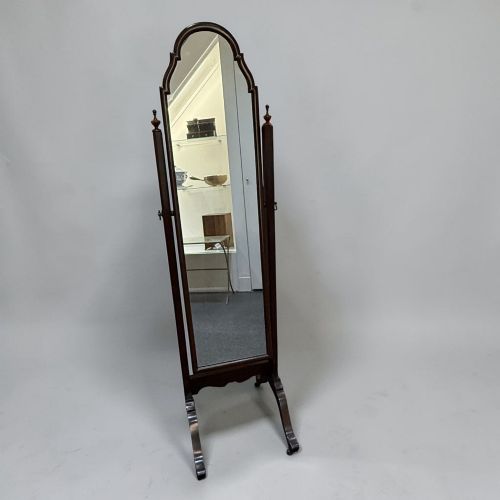
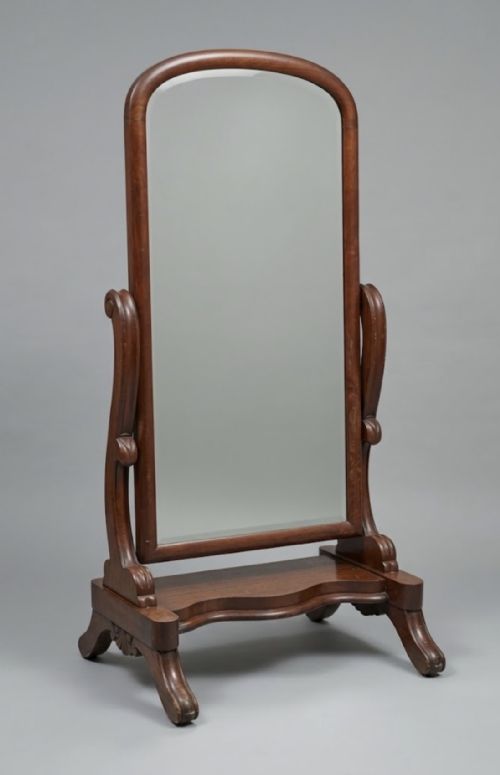
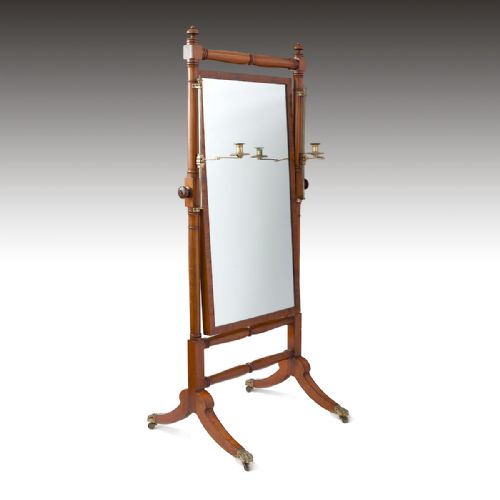
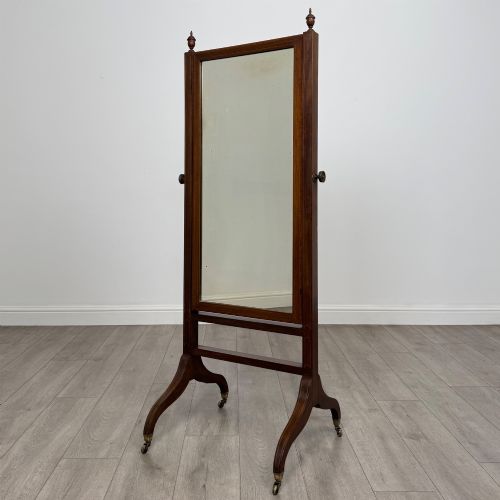
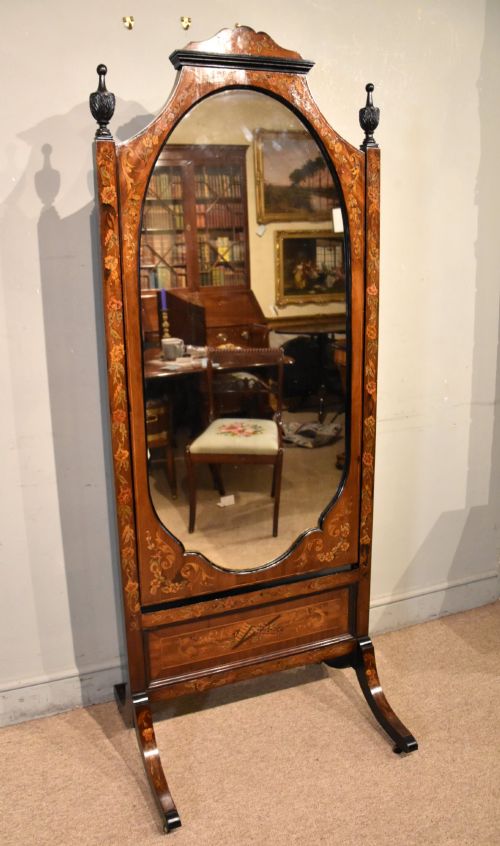
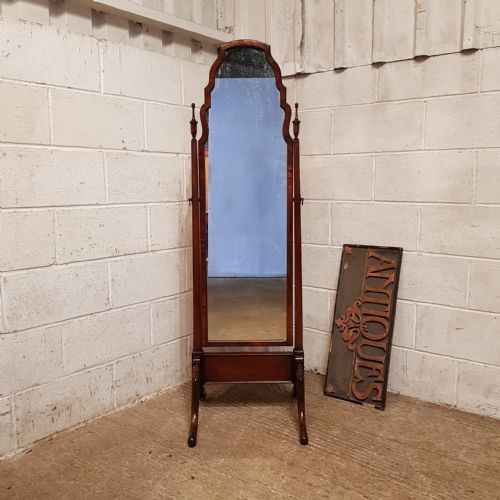
An Edwardian mahogany cheval glass is a tall, floor-standing mirror designed to tilt within a vertical wooden frame. The examples you encounter on this page span several periods, with Edwardian and Victorian pieces appearing most frequently alongside earlier Regency and Georgian designs.
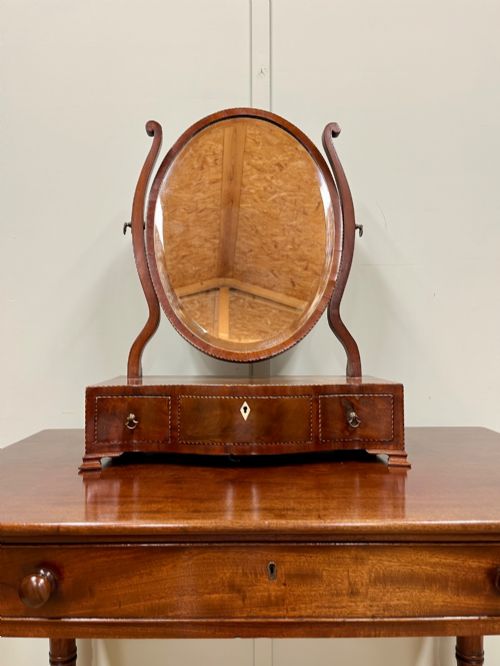
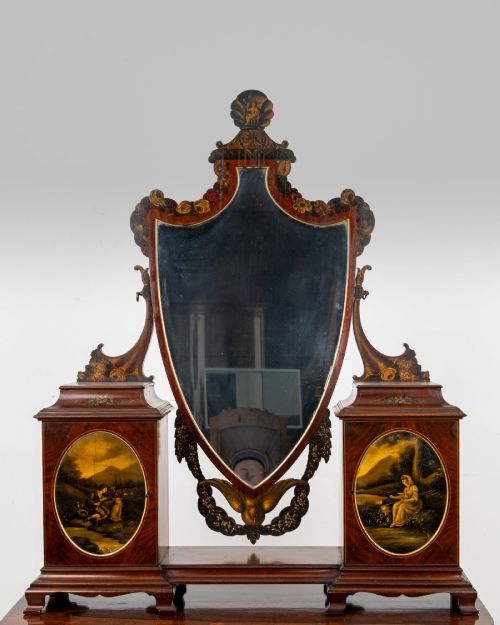
These mirrors serve primarily as dressing pieces, allowing a full-length view that table mirrors cannot provide. While the majority of listings comprise substantial floor-standing units, smaller table top variations also emerge from the Edwardian era.
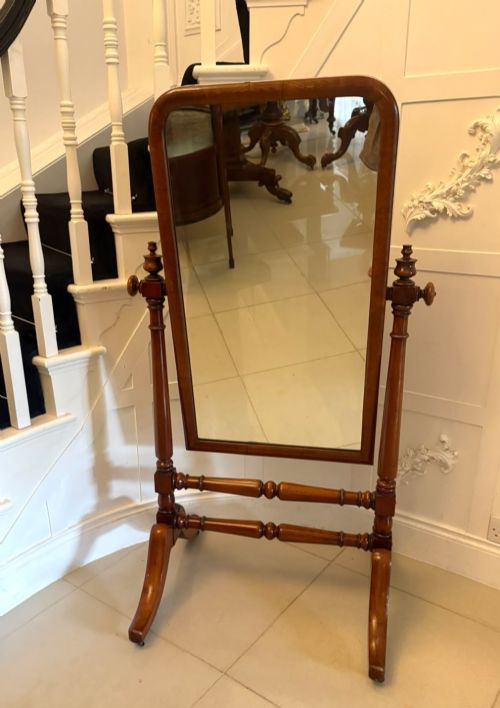
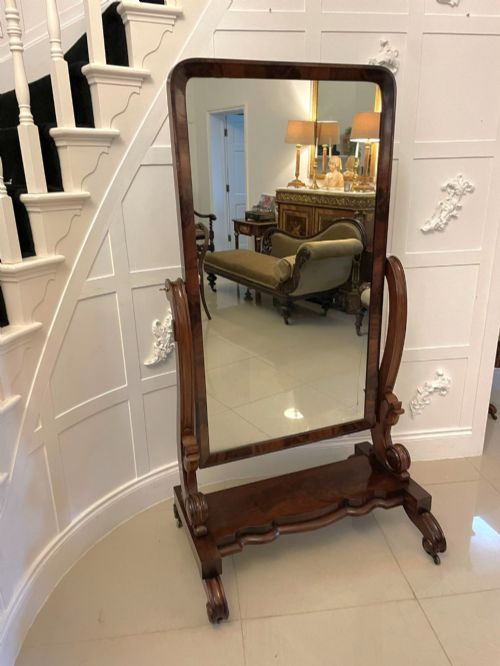
The form relies on stability, typically featuring robust upright supports mounted on splayed legs or heavy bases. Brass castors often assist movement across carpets, whilst pivot pins allow the glass to angle to the user's preference.
How they were made
Cabinet makers constructed these frames predominantly from mahogany, occasionally selecting satinwood or walnut for contrast. Timber selection focused on rich grain patterns, sometimes enhanced through marquetry inlay or delicate banding.
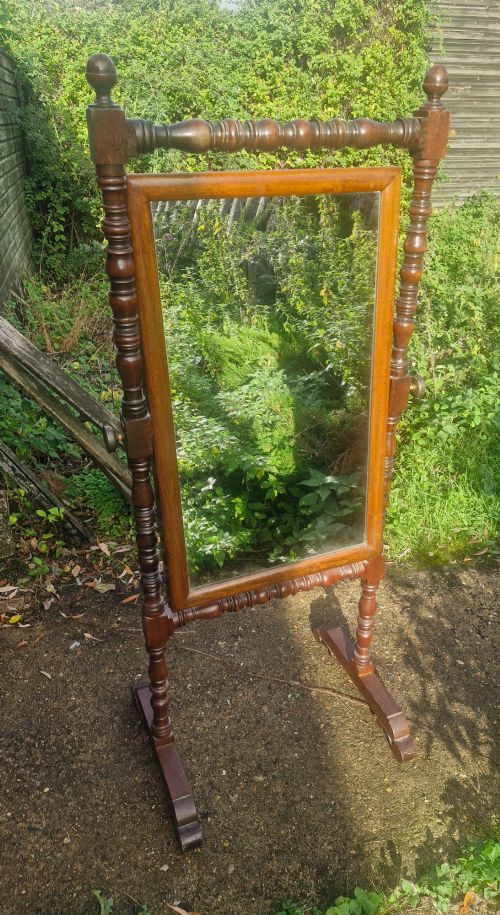
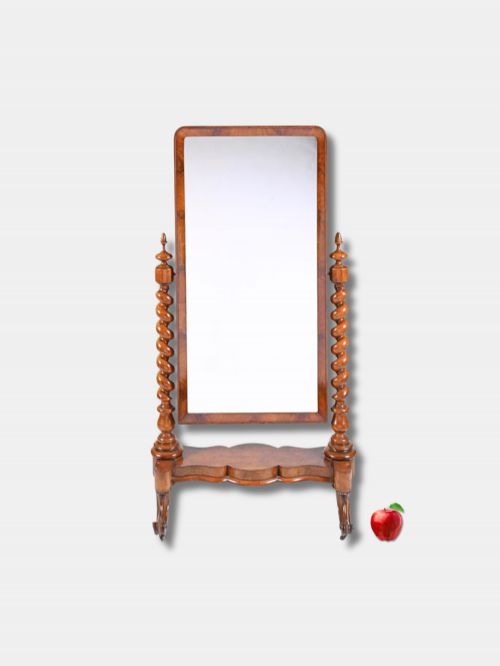
Hardware played a functional and decorative role, with brass brackets, pivot screws and castors securing the moving parts. Mirror glass was housed within an adjustable frame, supported by turned uprights or barley twist columns.
Mahogany, glass, brass, mirror glass, satinwood, bone, marquetry inlay and walnut appear across these listings.
What varies in quality
Quality reveals itself in the solidity of the frame and the precision of the pivot mechanism. Finer pieces maintain rigid uprights that prevent the swinging glass from wobbling or sagging over time.
The refinement of the timber and the crispness of any inlay or turned woodwork separate standard utility items from grand country house examples. Original brass hardware and clear, undistorted mirror glass further distinguish the superior pieces.
The Edwardian Mahogany Cheval Glass Glossary
- Cheval glass
- A tall mirror hung on vertical pivots within a frame so it can swing. This design allows the user to adjust the angle for a full-length view.
- Barley twist
- A type of turning shaped like a spiral rope, found on the vertical supports of certain Victorian frames. It adds textural depth to the woodwork.
- Marquetry inlay
- Decorative patterns formed by fitting contrasting pieces of wood veneer into the primary surface. Edwardian makers utilised this technique for subtle ornamentation.
- Castor
- A small wheel attached to the base of the legs to ease movement. Brass examples are standard on better quality freestanding mirrors.
Edwardian Mahogany Cheval Glass: Frequently Asked Questions
Where should a cheval glass be placed?
These mirrors suit bedrooms and dressing rooms where full-length reflections are practical. Positioning them near a light source helps maximise their reflective function in the room.
Because they stand independently on the floor without wall fixings, you can reposition them easily to catch the best angle of daylight.
How do the pivot mechanisms work?
The glass hangs on two central side screws or pivot pins that attach the mirror frame to the upright supports. Tightening these fixings holds the mirror at your chosen tilt.
Older mechanisms rely on brass thumb screws which allow simple manual adjustment without tools.
Are all these mirrors full length?
Most floor-standing cheval mirrors provide a full-length view from head to toe. However, the selection also includes smaller table top variations designed for dressers.
Check the proportions in the listings to distinguish between grand floor-standing models and compact toilet mirrors.
How do I spot an Edwardian piece?
Edwardian mirrors frequently display lighter mahogany tones and may feature subtle inlaid details or satinwood banding. Their frames often lean towards simpler, refined Edwardian or late Victorian aesthetics.
Comparing the turned details and foot designs against known 19th-century styles helps clarify the date of manufacture.