


Edwardian Mahogany Barometer
When you look for an Edwardian mahogany barometer, you find domestic weather instruments set in rich timber cases that record atmospheric pressure for the home.
Edwardian Mahogany Barometer
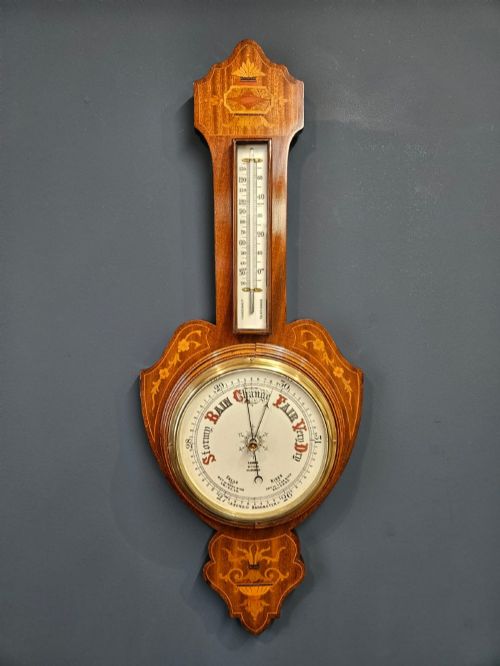
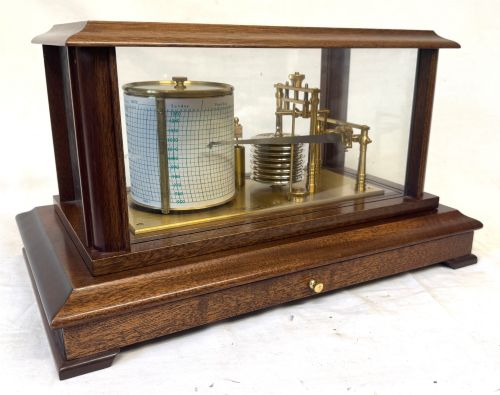
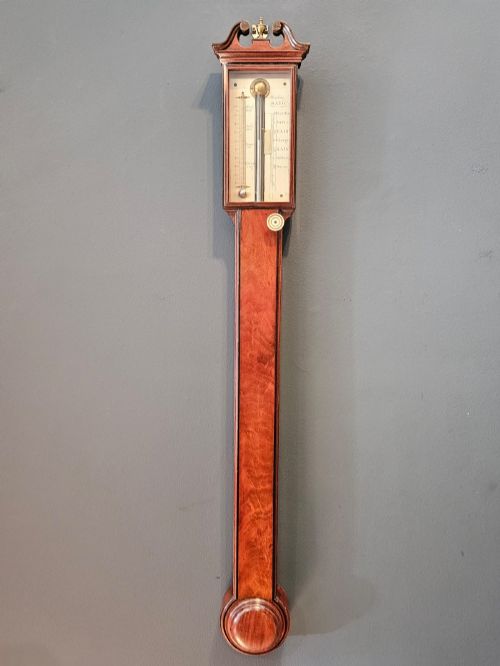
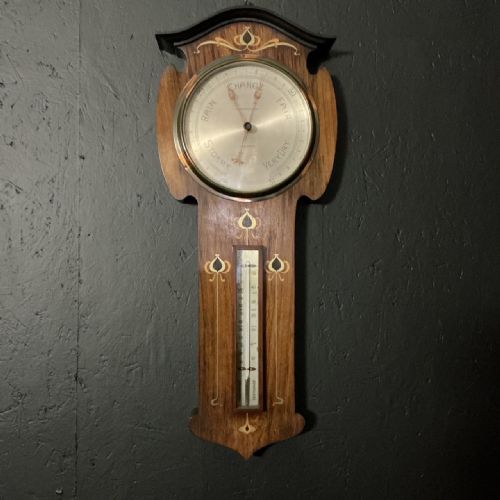
An edwardian mahogany barometer is a domestic scientific instrument housed in a rich timber case, designed to measure atmospheric pressure and forecast weather changes in the home. These pieces appear frequently as banjo barometers or wall-mounted aneroid dials, alongside architectural stick barometers and recording barographs.
The materials recorded in the evidence combine solid and veneered mahogany with brass bezels, silvered metal dials, and glass viewing panels. Many examples incorporate delicate satinwood stringing and contrasting wood inlays, reflecting the cabinet-making standards of the early twentieth century and earlier revival periods.
While the search term points specifically to the Edwardian era, surviving pieces connect across nineteenth and twentieth-century styles including Victorian, Georgian Revival, and Arts and Crafts. Makers and retailers ranging from Negretti and Zambra to Short and Mason supplied these instruments to households that relied on daily barometric readings.
How They Were Made
Cabinet makers constructed the cases using dense mahogany planks, often shaped into curved banjo profiles or rectangular glazed boxes designed to protect the delicate internal mechanisms. Workshops applied fine wood inlay and satinwood banding to the primary surfaces, contrasting the dark grain with lighter decorative motifs.
The internal mechanics rely on sensitive brass aneroid capsules or mercury-filled glass tubes linked to pivoted levers and indicators. Graduated silvered metal dials display the pressure scales, protected behind heavy bevelled glass held within cast brass bezels.
Some barographs still retain forgotten paper weather charts marked with ink traces from households recording storms a century ago.
What Varies in Quality
Quality rests in the crispness of the cabinet work, from the precision of the wood inlay to the structural integrity of the mahogany case. Superior examples display balanced proportions and hand-carved or polished details rather than mass-produced uniformity.
The mechanical components reveal differences in craftsmanship, where signed brass movements by established makers retain greater clarity on their silvered dials and smoother operation in their indicator needles. Original glass panels, intact mercury tubes, and surviving documentation or chart drawers elevate the historical standing of an instrument.
Russell Norwich·Negretti And Zambra·Short And Mason·Casella London·Alexander Wright·R Fuess·Robson Of Newcastle·Antoine Redier·Harrods Of London
The Edwardian Mahogany Barometer Glossary
- Banjo barometer
- A wall barometer shaped like a musical instrument, featuring a large circular dial at the base and a long trunk holding a thermometer or hygrometer. This form dominated domestic interiors through the Victorian and Edwardian periods.
- Aneroid barometer
- An instrument that measures air pressure using a flexible metal box called an aneroid cell, which expands or contracts without the use of liquid. This design allowed barometers to be mounted on walls in various orientations.
- Stick barometer
- A vertical instrument that uses a column of mercury in a glass tube to indicate atmospheric pressure against a calibrated scale. These tall instruments represent the traditional form of scientific weather recording.
- Barograph
- A mechanical barometer that records barometric pressure over time onto a rotating drum fitted with paper charts. They are typically housed in mahogany cases with multiple glass panels to display the movement.
- Silvered metal dial
- A brass or copper face treated with a silver solution to create a matte metallic finish, onto which graduations and lettering are engraved. These dials offer high legibility and durability for scientific instruments.
Edwardian Mahogany Barometer: Frequently Asked Questions
How do I read an aneroid barometer?
The pointer indicates the current atmospheric pressure in inches or millibars, while the secondary setting hand is manually aligned over it to track movement. Changes in the position of the primary needle over hours indicate rising or falling pressure.
Weather forecasts inscribed on the dial, such as rain or set fair, offer a general guide to expected conditions based on those pressure trends.
Where should I hang a banjo barometer?
These instruments belong on interior walls away from direct sunlight, radiators, and exterior doors to protect the wood case and wood inlay from extreme temperature shifts. Stable indoor conditions help preserve the delicate internal mechanics.
Secure mounting is essential because the weight of the mahogany case and glass components requires a solid fixing point on the wall.
Did Edwardian homes use barographs?
Households with an interest in meteorology used barographs housed in mahogany and five-glass cases to maintain continuous weekly weather records. These instruments sat on tables or desks where residents could change the paper charts.
Retailers supplied these recording barometers to affluent homes alongside traditional wall barometers and mantel clocks.
How do I distinguish an Edwardian barometer from a Victorian one?
Edwardian examples tend to feature lighter mahogany tones and restrained Sheraton revival inlay work, reflecting the decorative preferences of the early twentieth century. Victorian pieces often display heavier proportions, darker wood finishes, and more ornate carvings.
Examining the dial typography and internal mechanical signatures helps confirm the production period when stylistic cues overlap.