




Edwardian Landscape Drawing
An edwardian landscape drawing captures atmospheric rural or urban views on paper, prized for subtle tonalism and delicate handling.
Edwardian Landscape Drawing
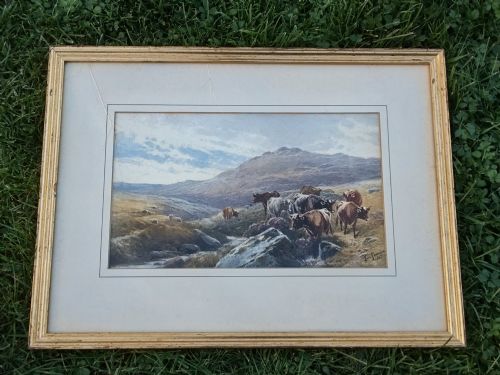
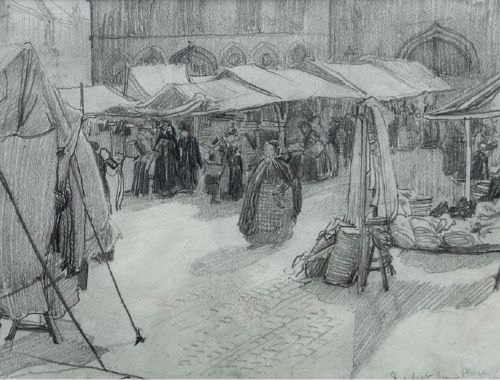
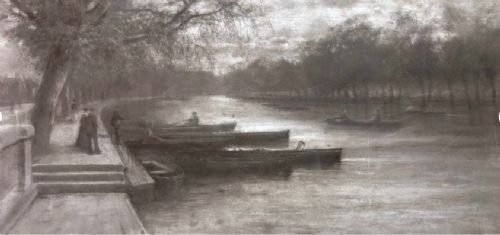
An edwardian landscape drawing centres on works executed on paper, encompassing original charcoal, pencil, and watercolour pieces. These works frequently depict British scenes, ranging from urban street views to quiet riverbanks.
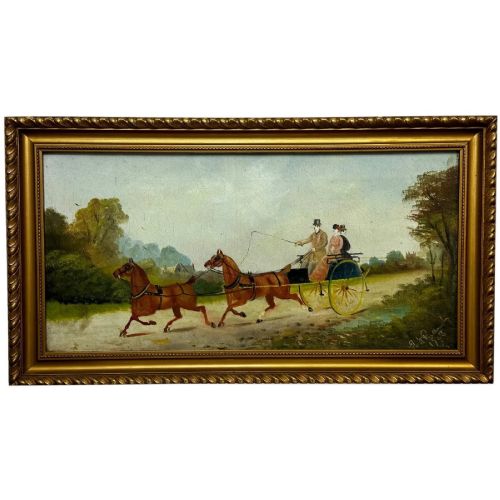
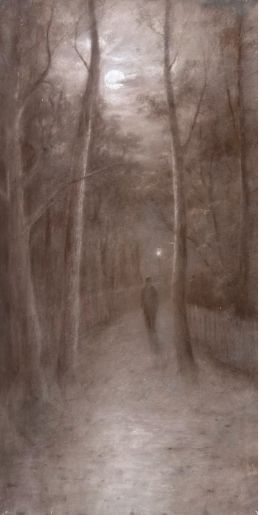
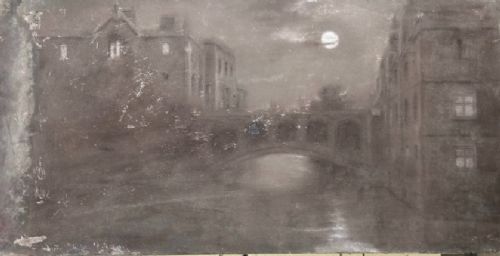
The pieces on this page span the late nineteenth century through to the early twentieth century. Buyers encounter atmospheric street scenes, moonlight compositions, and traditional British school subjects.
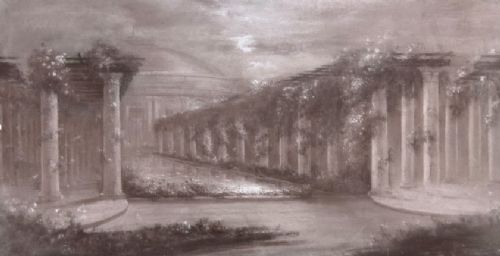
Many examples reveal the distinct influence of Whistler and Grimshaw, capturing dusk, twilight, and winter settings. The selection includes both finished watercolours and spontaneous charcoal studies attached to canvas stretchers.
What varies in quality
Quality rests in the atmospheric depth and the confidence of the draughtsmanship. Stronger pieces use light and shadow with precision to evoke a specific time of day.
Condition of the paper surface and the preservation of delicate charcoal or watercolour pigments influence the overall desirability. Strong provenance and clear attribution to recorded artists elevate individual pieces.
Listings feature works created using paper, watercolour, charcoal, ink, and pencil across the nineteenth and early twentieth centuries.
Henry Percy Huggill·William Manners·Charles James Lauder·Frank Saltfleet·Matthew Hale
The Edwardian Landscape Drawing Glossary
- Tonalism
- An artistic style where mood and shadow predominate over sharp outlines, often depicting misty or twilight scenes. This approach defines many works influenced by Whistler and Grimshaw.
- Canvas stretcher
- A wooden frame used to tauten and support paper or canvas before or after execution. Several charcoal drawings utilise this method for structural backing.
- English School
- A broad designation for artists trained or working within British artistic traditions. It links diverse landscape and topographical works across the nineteenth and early twentieth centuries.
- Graphite
- A form of crystalline carbon used as a drawing medium in pencils. It allows for fine linear work as well as smooth tonal shading.
Edwardian Landscape Drawing: Frequently Asked Questions
What defines an edwardian landscape drawing?
These works are original drawings and watercolours on paper produced around the turn of the twentieth century. They often feature atmospheric British scenes with strong tonalist influences.
Subjects range from city streets and bridges to quiet rural paths, frequently captured in twilight or moonlight.
How should I display these drawings?
Paper works from this period require conservation framing with UV-filtering glass to protect delicate watercolours and charcoal from fading. Keep them away from direct sunlight and damp environments.
Proper mounting ensures the paper breathes without resting directly against the glass.
Are these drawings signed by the artist?
Some pieces bear signatures or inscriptions by the original hand, while others remain attributed to specific artistic schools or influences. Documentation often links works to known regional painters and exhibition pieces.
Unsigned drawings frequently share stylistic traits with recorded practitioners of the period.
What mediums were commonly used?
Artists utilised charcoal, pencil, pen and ink, and watercolour on paper supports. Some larger charcoal works are secured onto canvas stretchers for added rigidity.
Pastel also appears in atmospheric evening compositions from the late nineteenth century.