



British River Scene Art
British river scene art captures the quiet bends and busy industrial banks of waterways across the Isles through centuries of painting and drawing.
British River Scene Art
British river scene art encompasses oil paintings, watercolours, and charcoal drawings depicting landscapes centred on waterways, from rural streams to urban bridges. Buyers seeking this category encounter works spanning the nineteenth century into the mid-twentieth century, capturing the changing moods of British topography.
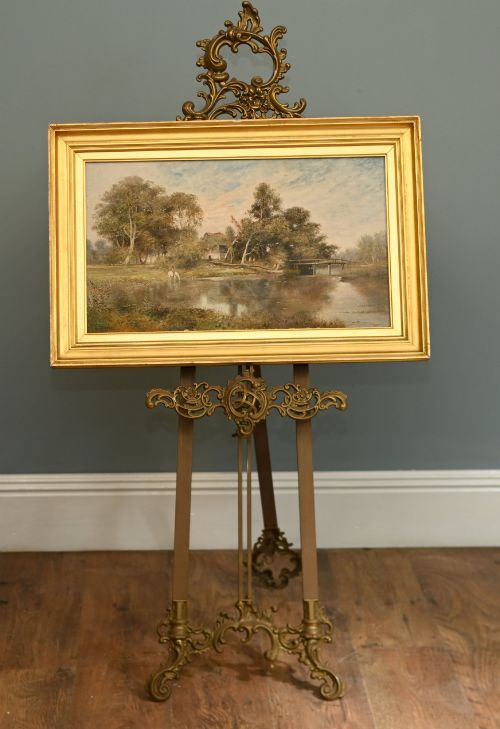
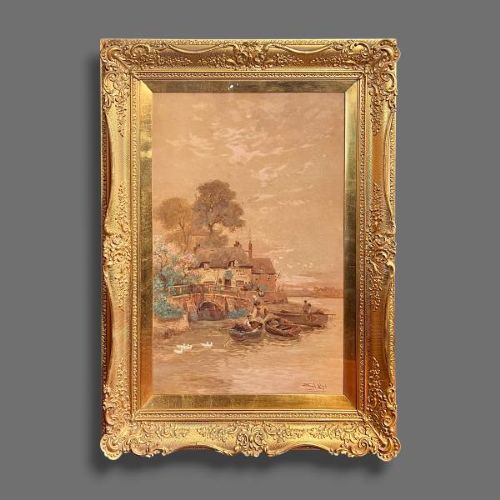
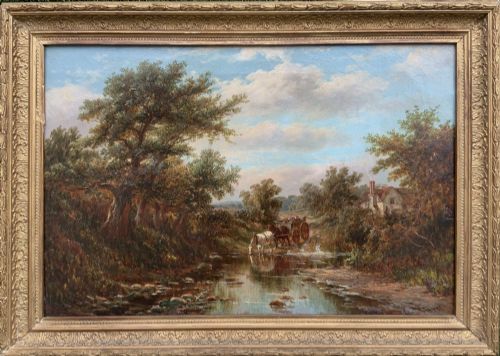
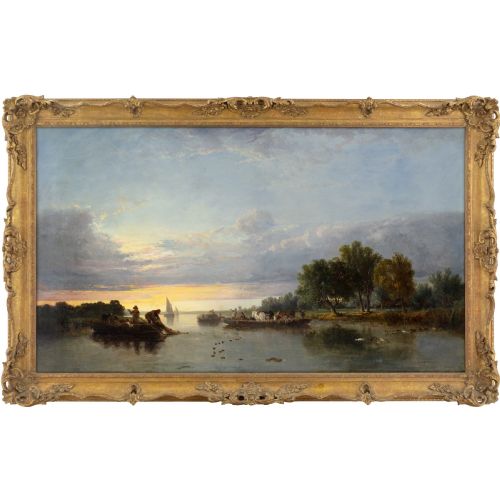
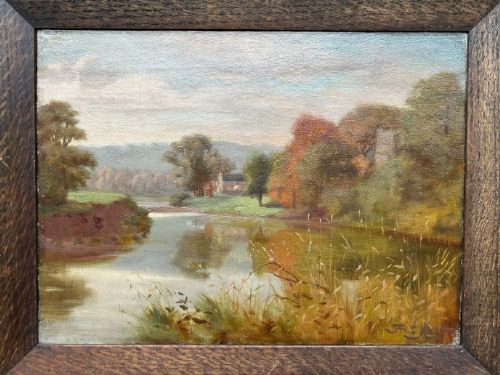
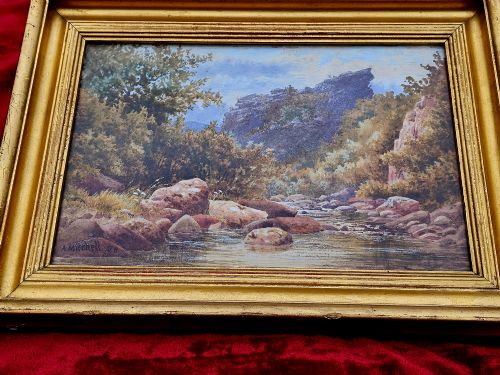
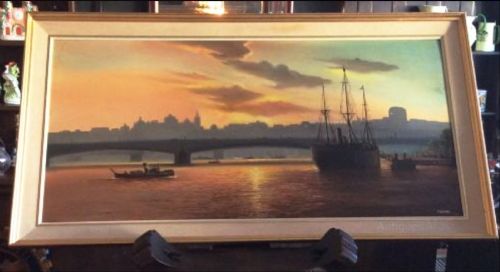
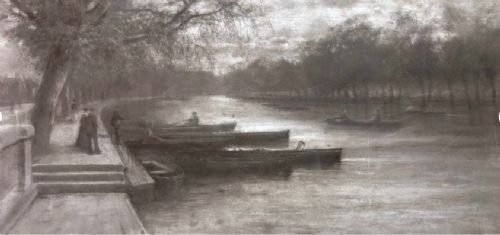
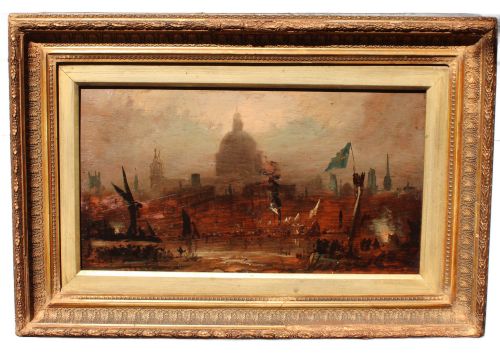
The most common pieces on this page are nineteenth-century and early twentieth-century watercolours and oil paintings on canvas or board. These works range from grand Thames panoramas near London to intimate depictions of Welsh and English riversides, often featuring figures, barges, or livestock.
Stylistically, the selection moves from traditional academic landscapes and Victorian pastoral scenes through to British Impressionism and post-century developments. Works often reference specific regional waterways such as the Thames, the Severn, the Tees, and various rural tributaries.
Materials and Techniques
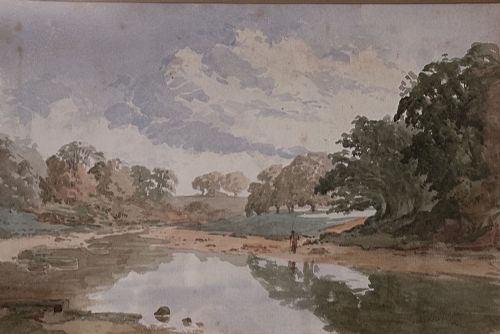
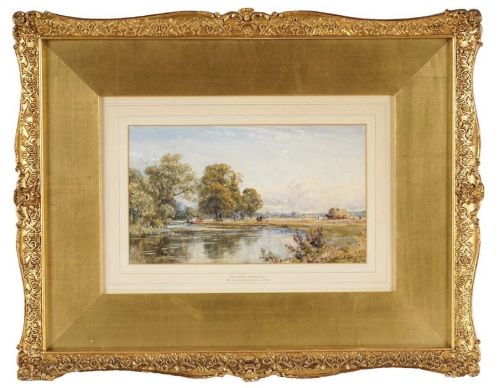
Artists relied primarily on oil on canvas, oil on board, and watercolour on paper, frequently supported by wooden panels or giltwood frames. Canvas and wood provided durable surfaces for layered oil pigments, while watercolour allowed for fluid washes suited to capturing the shifting light on water.
Techniques varied from tight, detailed academic brushwork to looser impressionistic strokes and charcoal sketching. Pigments were applied to render atmospheric effects like mist, sunset reflections, and the damp textures of riverbanks.
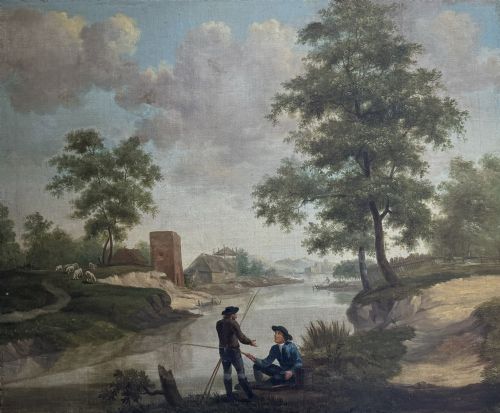
Several artists captured quiet moments of boys fishing under willow trees by the water.
Assessing Quality
Quality in these river scenes rests upon the artist's command of light, atmosphere, and spatial depth, distinguishing accomplished compositions from stiffer topographical records. Superior handling of water reflections and atmospheric perspective elevates a piece beyond mere illustration.
The subtlety of the palette and the strength of the draughtsmanship determine the visual impact of the work. Finer examples demonstrate confident brushwork and a balanced composition that draws the eye naturally along the course of the river.
Alfred Young Nutt·Frederick Marriott·Robert W. Macbeth·Robert Thorne Waite·Thomas Baker of Leamington·Henry John Kinnaird
The British River Scene Art Glossary
- Watercolour
- A painting method where fine pigment is suspended in a water-based, translucent solution applied to paper. This technique yields luminous effects well suited to capturing sky and water.
- Oil on Canvas
- Pigment bound in an oil medium spread across a woven textile stretched over a wooden frame. It allows for rich colour saturation and textured impasto application.
- Giltwood
- Wood carved and coated with a thin layer of gold leaf or metallic gilt. It frequently forms the decorative frames enclosing period paintings.
- Gouache
- An opaque water-based paint that includes a binding agent and white pigment to create solid, flat colour fields. Artists sometimes combined it with watercolour for added highlight.
- British School
- A stylistic classification used for works produced by artists trained or working within Britain. It groups pieces sharing regional subject matter and academic traditions.
British River Scene Art: Frequently Asked Questions
What periods do these river paintings cover?
The works span from the late eighteenth century through the Victorian era and into the mid-twentieth century. Most examples date from the nineteenth and early twentieth centuries.
During this timeframe, artistic approaches shifted from formal topographical studies towards more atmospheric interpretations of the British landscape.
How should I care for an antique watercolour?
Watercolours require careful placement away from direct sunlight to prevent the pigments and paper from fading over time. Glazing with conservation-grade glass helps protect the delicate paper surface from moisture and UV damage.
Keeping the artwork in stable environmental conditions prevents warping of the paper and degradation of the underlying materials.
Are these artworks signed by the artists?
Many pieces feature visible artist signatures, monograms, or period inscriptions on the front or reverse. Some works remain unsigned or indistinctly signed while still bearing strong stylistic attribution to specific regional schools.
Documentation often relies on period framing, gallery labels, or known stylistic traits recorded in historical exhibition archives.
What subjects besides rivers appear in these works?
Artists frequently included architectural landmarks such as London bridges, chapels, and locks alongside the natural scenery. Human elements like fishing boats, barges, livestock, and figures resting on the riverbank are also common.
These additions provide a social and economic context for the rural and urban waterways depicted.