

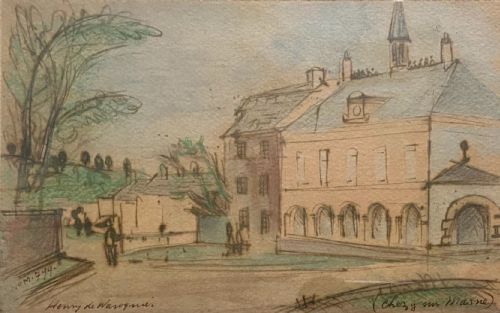


Green Landscape Drawing
A green landscape drawing captures the quiet structure of fields, rivers, and trees through the immediate hand of the artist.
Green Landscape Drawing
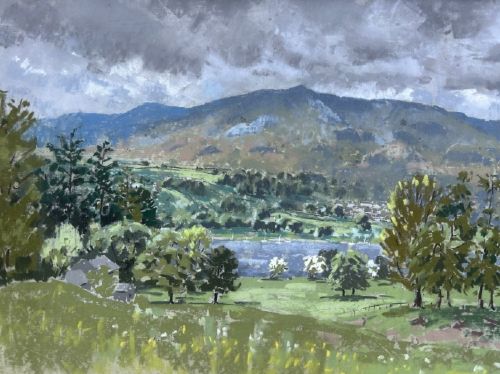
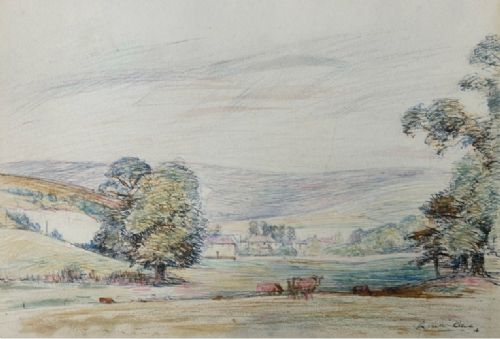
A green landscape drawing encompasses works on paper executed in mediums like watercolour, pastel, ink, and coloured pencil. These pieces span from the Georgian period through the Victorian era into mid-century modern and early twentieth-century British movements.
Buyers exploring a green landscape drawing will encounter framed waterpaintings, original artwork, and mixed media studies depicting pastoral scenes, river valleys, and village views. The selection ranges from nineteenth-century English school watercolours to mid-century pastels on paper.
How They Were Made
Artists create a green landscape drawing primarily on paper supports, applying water-based pigments, ink washes, or dry pastels to build atmospheric depth. Many works utilise watercolour pigment combined with pen and ink or gouache to define both fine architectural details and broad pastoral expanses.
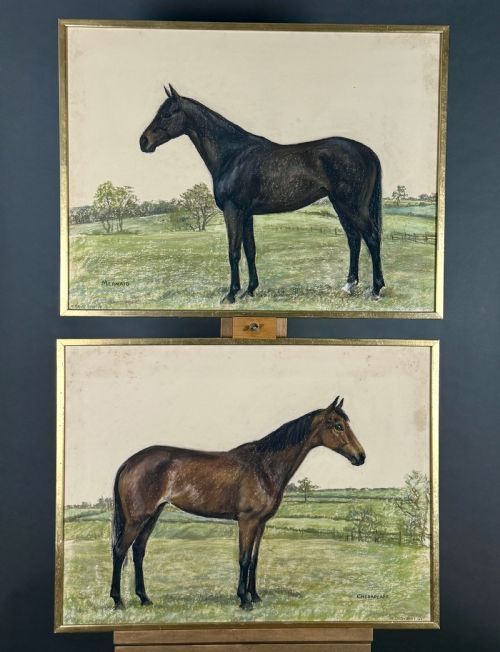
Framed presentation often involves glass protection paired with gilt wood mouldings, preserving fragile paper surfaces from atmospheric moisture and handling over the decades.
The selection includes pieces associated with established schools such as the English School and Mid-Century Modern movements.
What Varies In Quality
The distinction between ordinary and exceptional works rests upon the surety of the draughtsmanship and the artist's command over tone and light. A stronger green landscape drawing demonstrates confident handling of pigment and paper, where washes or pastel marks convey immediate atmosphere rather than hesitation.
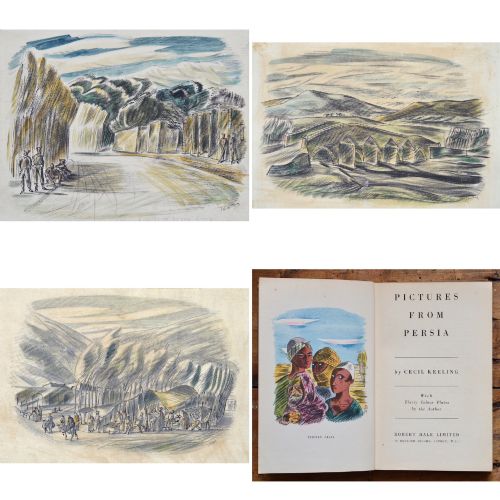
Provenance and documentation further separate pieces, particularly when a drawing is linked to published book illustrations, named exhibitions, or recognised academic artists from periods such as the Georgian era or the early twentieth century.
Cecil Keeling·Alfred Young Nutt·Russell Sidney Reeves·Henry de Waroquier·Amos Green·Donald Wood·Angus Rands·John Baragwanath King·Reginald Mills·Thomas Rowlandson·John Joseph Cotman·Fred Lawson
The Green Landscape Drawing Glossary
- Watercolour Painting
- A work executed with water-soluble pigments on paper. This medium allows for translucent washes that capture shifting light and natural scenery.
- Pastel
- A dry drawing medium consisting of powdered pigment and a binder, formed into sticks. It offers vibrant, velvety colour directly applied to paper.
- Gouache
- An opaque water-based paint that provides solid, flat areas of colour. It is frequently combined with transparent watercolour in landscape works.
- Works on Paper
- A broad category encompassing drawings, watercolours, prints, and pastels created on a paper support. This term highlights the fragile nature of the primary medium.
- Gilt Wood
- Timber framing finished with a thin layer of gold leaf or metallic gilding. It serves to frame and protect traditional paper artworks.
Green Landscape Drawing: Frequently Asked Questions
How are antique drawings on paper best displayed?
Display works on paper away from direct sunlight to prevent the fading of delicate watercolour pigments and pastel chalks. Maintaining stable indoor humidity protects both the paper substrate and any gilt wood framing.
Ensure that framing incorporates conservation-grade backing and glass to prevent airborne pollutants from damaging the surface over time.
What periods do these landscape drawings cover?
The available selection spans from the Georgian era through Victorian landscape art and into early twentieth-century British movements. Pieces also extend into mid-century modern and post-war artistic traditions.
Each period brings distinct stylistic approaches to depicting the natural world, from detailed topography to expressive pastoral impressions.
What materials were used to create these artworks?
Artists utilised paper as the primary support, applying watercolours, ink, pastel, coloured pencil, and gouache. Some works incorporate mixed media to achieve varied texture and depth.
Protective elements frequently include glass glazing paired with traditional gilt wood frames.
How do watercolours differ from pastel drawings?
Watercolours rely on transparent liquid pigments applied in washes to build tone and luminosity across the paper. Pastels utilise dry pigment sticks that rest upon the textured surface of the paper, creating a soft and matte finish.
Both mediums require careful preservation under glass to prevent smudging or fading.