





![Pen and Ink Sketch - Female Nudes by William Edward Frost [1810-1877]](https://www.sellingantiques.co.uk/photosnew/dealer_kendallhouse/dealer_kendallhouse_full_1758970795762-8493507346.jpg)

Original 19th Century Drawing
An original 19th century drawing captures the immediate hand of a past maker, offering intimate access to Victorian, Georgian, and continental sketching traditions.
Original 19th Century Drawing
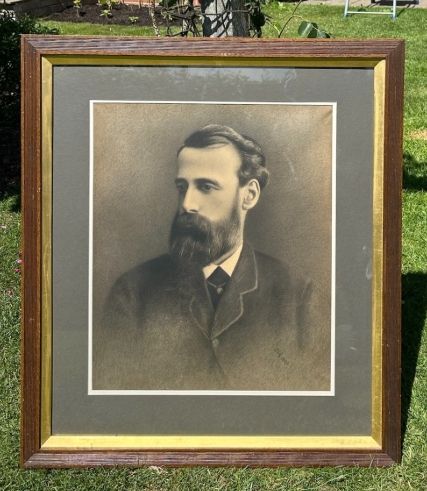
When searching for an original 19th century drawing, buyers encounter works created on paper using media such as graphite, charcoal, ink, and chalk. These pieces range from rapid preparatory sketches and architectural studies to finished portraits and marine landscapes.
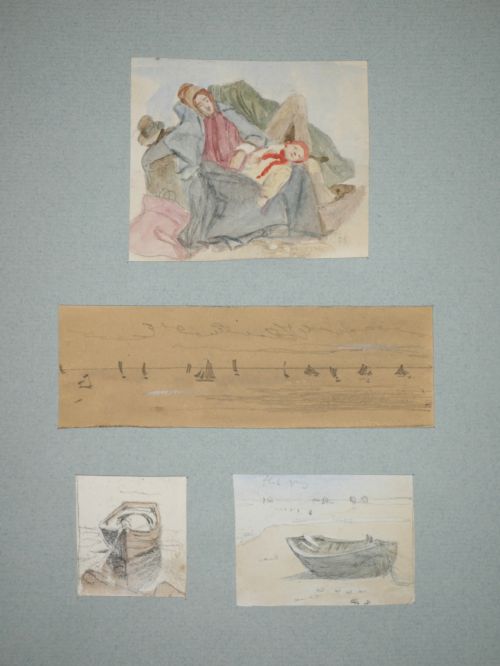
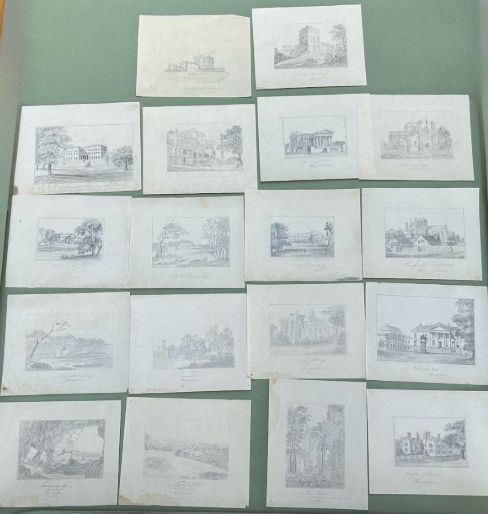
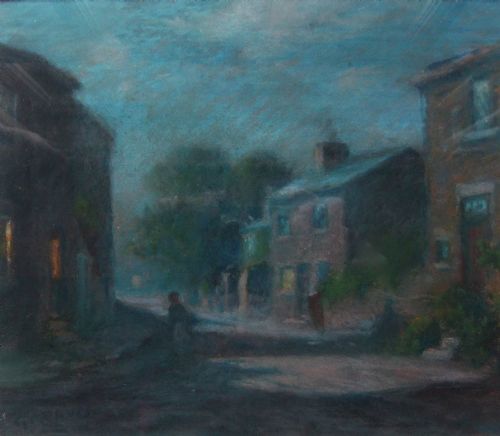
The selections available span the entire century, encompassing early 1800s rustic scenes and academic life studies alongside late Victorian and Belle Epoque works. Portraiture of gentlemen and ladies frequently appears alongside topographical views of abbeys, rivers, and streetscapes.
Many items derive from British and French schools, reflecting academic realism, Pre-Raphaelite sensibilities, and romantic Gothic influences. Collectors will find single sheets as well as paired figure studies and bound book illustrations executed by named artists and anonymous hands alike.
How They Were Made
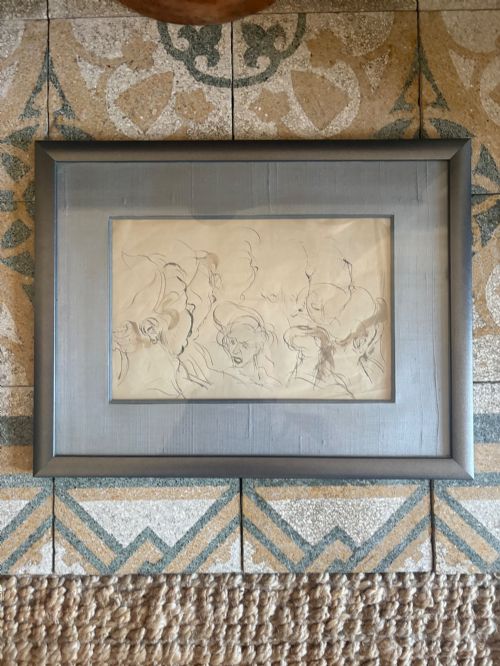
Makers utilised various grounds of paper, vellum, and card, applying dry media like graphite pencil, charcoal, and coloured chalk to build form and tone. Pen and ink drawings frequently incorporated wash techniques, utilising diluted pigment or ink applied with a brush to create depth and shadow.
Watercolour and pastel pigments were handled with varying degrees of opacity, occasionally heightened with white bodycolour to catch the light on architectural stonework or drapery. Mixed-media approaches combined pencil framing lines with ink strokes or pastel shading to achieve textured portrait and landscape effects.
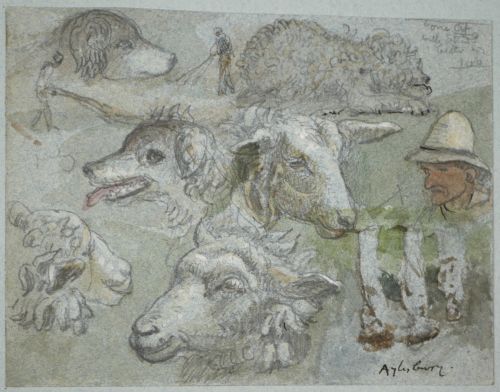
Several Victorian pencil sketches preserve the attentive expressions of domestic spaniels alongside their human owners.
What Varies In Quality
Quality rests upon the sureness of the draughtsmanship and the economy of line used to establish perspective, anatomy, and light. A preparatory life study or architectural rendering demonstrates superior mastery when proportions are exact and spatial depth is conveyed without hesitation.
The preservation of the paper ground and the vibrancy of fugitive media, such as pastel and chalk, dictate the visual impact of the work. Skilled handling of tonal gradation, particularly in grisaille and wash studies, separates utilitarian student exercises from accomplished gallery pieces.
Alfred Young Nutt·James Smetham·Albert Ludovici Jnr·William Greaves·Henry Arthur Roberts·William Frederick Settle·Alfred Dehodencq·William Edward Frost·Robert Richard Scanlan·Sir Francis Leggatt Chantrey·Charles H Poingdestre·John Macallan Swan·George De Paris·Henri Josephe Hesse·C Mitchell And Co
The Original 19th Century Drawing Glossary
- Grisaille
- A painting or drawing executed entirely in shades of grey or neutral monochrome. This technique often served as a preparatory study for oil paintings or as a finished tonal exercise.
- Wash
- A thin, transparent layer of diluted ink or watercolour applied to paper with a brush. It provides broad areas of tone and atmospheric depth beneath or over linear drawing.
- Heightened with white
- The practice of adding touches of opaque white pigment, such as bodycolour, to a drawing on toned paper. This method highlights illuminated areas and creates striking contrasts.
- Academic life study
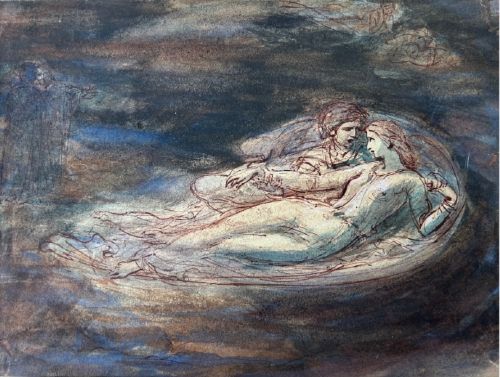
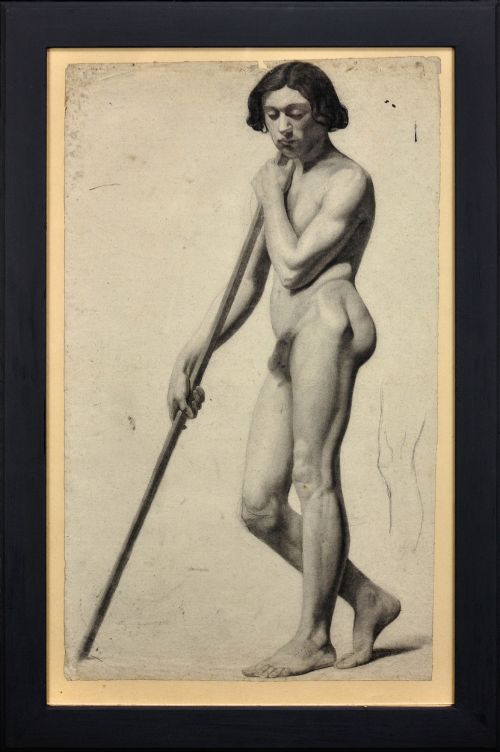
- A detailed drawing of a human model, usually nude or classically draped, produced within an art academy setting. These exercises tested an artist's grasp of anatomy and proportion.
Original 19th Century Drawing: Frequently Asked Questions
How should I frame an old drawing?
Works on paper require conservation-grade mounting materials that keep the sheet from touching the glass directly. Acid-free backboards and museum glass help protect delicate graphite, chalk, and watercolour pigments from environmental degradation.
Keeping the framed artwork away from direct sunlight prevents the fading of ink and paper. Proper sealing guards against ambient moisture and dust accumulation over time.
Were these drawings meant to be finished art?
Many surviving pieces began as private preparatory studies, travel records, or academy exercises rather than exhibition-ready works. Artists used sketchbooks and loose sheets to capture quick compositions, anatomical details, or landscape lighting.
Over time, collectors came to value these spontaneous notations for revealing the direct creative process. Finished watercolours and formal pastel portraits, conversely, were created specifically for display.
How do I identify the period of a drawing?
Stylistic clues such as costume, architectural motifs, and framing help narrow down the date of execution. Academic life studies and romantic landscapes often carry handwritten dates, monograms, or signatures that link them to specific decades.
Paper characteristics, including watermarks and manufacturing textures, offer further chronological markers. Comparing handwriting styles on inscriptions with historical records frequently confirms the era.
Can I hang drawings in a brightly lit room?
Drawings executed in graphite, ink, and watercolour are sensitive to ultraviolet light and fading. Placing them on walls away from direct sunbeams preserves the integrity of the paper and pigments.
Utilising specialty conservation glass with UV-filtering properties provides an extra layer of defence. Rotating pieces periodically also minimises continuous exposure to ambient indoor light.