


Impressionist Pastel Landscape
Impressionist pastel landscape works capture light and atmosphere through layered pigment on paper.
Impressionist Pastel Landscape
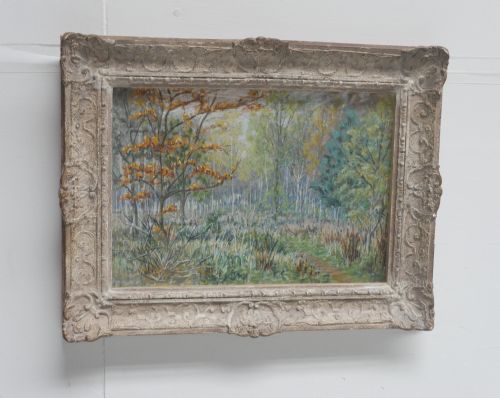
An impressionist pastel landscape captures natural scenery through the specific medium of dry pigment applied to paper, recording transient effects of light and weather. These works span from the late nineteenth century through the mid twentieth century, encompassing British Impressionism, Modern British Impressionism, and Canadian Impressionism alongside broader European traditions.
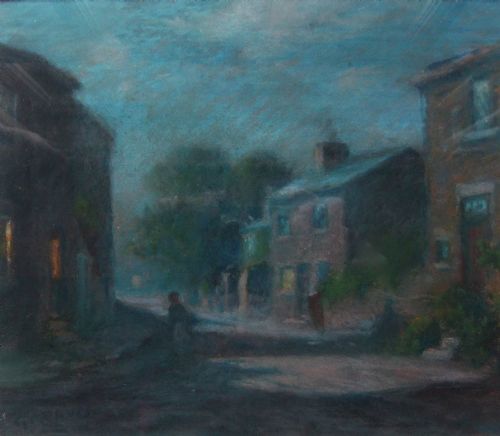
The pieces on this page include woodland scenes, coastal views, river landscapes, and Mediterranean street scenes executed by artists working in pastel, often framed under glass for protection. Alongside pure pastels, buyers encounter works combining pastel with watercolour or oil paint upon paper.
Subjects range from Norfolk marshes and Yorkshire dales to Cornish harbours, French coastal towns, and Venetian waterways. The artists employ the loose, rapid marks characteristic of the impressionist and post-impressionist movements to render sunsets, winter light, and summer days.
Materials and technique
Artists apply pastel directly onto paper, utilising compressed pigment sticks that allow for swift, direct marks and subtle colour blending. Many works rely on the textured surface of the paper to hold the chalk particles and provide visual grain beneath the strokes.
Certain pieces incorporate mixed media, combining pastel with watercolour washes or oil paint to build depth in sky and water. Glazing with glass protects the friable pastel surface from disturbance and environmental moisture over time.
Whistler's friend Delâtre contributes a sunset glow, proving that even nineteenth-century pastel artists enjoyed good company.
Judging quality in pastel landscapes
Quality rests upon the artist's ability to command the medium's fugitive marks to construct light and spatial depth with economy. Superior examples demonstrate confident handling where individual strokes describe foliage, water, or architecture without heavy overworking.
The preservation of the pigment layer significantly affects the piece, as pastels are vulnerable to loss if subjected to impact or dampness. Original framing under glass and stable mounting help maintain the crispness of the original application.
William Greaves·Gyrth Russell·Berthe des Clayes·Henry Wimbush·Walter Holmes·Augustus William Enness·Delâtre·Angus Rands·Lamorna Birch
The Impressionist Pastel Landscape Glossary
- Pastel
- A dry painting medium consisting of powdered pigment combined with a binder, formed into sticks. It offers direct application of pure colour onto paper.
- Impressionism
- A nineteenth-century art movement characterised by relatively small, thin yet visible brush or pastel strokes, open composition, and an emphasis on accurate depiction of light.
- Post-Impressionism
- A predominantly French art movement that developed from about 1886 to 1905, extending impressionism while rejecting its limitations and focusing on symbolic content and heavier weight.
- Gouache
- An opaque water-based paint sometimes used alongside pastel or watercolour in mixed media works on paper to provide solid highlights.
- Framed
- Set within a protective border and usually placed beneath glass to shield delicate paper and pastel surfaces from atmospheric damage.
Impressionist Pastel Landscape: Frequently Asked Questions
How do I care for a pastel landscape?
Keep the artwork behind glass and away from direct sunlight to prevent fading of the delicate pigments.
Avoid hanging pastels in damp rooms, as moisture damages the paper support and encourages mould growth.
Are these works painted on paper?
Yes, pastels require a textured paper or card surface to grip the dry pigment particles during application.
Some pieces also incorporate watercolour or gouache on the same paper support.
When were these landscapes produced?
The pieces span from the late nineteenth century through the mid twentieth century, covering various impressionist schools.
Dates range from the eighteen-nineties up to the nineteen-sixties across British and international artists.
How do I identify a pastel painting?
Pastels display a matte, chalky texture where individual pigment strokes remain visible upon the paper surface.
Unlike oil paintings, they lack gloss and are typically displayed under glass for physical protection.